Software
Houzz Logo Print
beth_gw

Is Colorado marble, like Lincoln, as 'durable' as Italian marble?

6 years ago
last modified: 6 years ago

I put 'durable' in quotes because I know the negatives of marble. However, I've been told it's not all created equal. One dealer told me to only use a particular marble in my bathroom and not my kitchen due to it being more delicate than an Italian marble.

Does anyone know if Lincoln is as good for a kitchen as a Calacatta or another Italian marble is?


To clarify.. I realize all marble stains and etches, and I like the patina of marble. I'm just trying to make sure I don't buy a marble that isn't going to hold up like most marbles in Italy (not saying those are durable).. I just want it to be relatively durable..... knowing it's all going to stain and etch too..

Comments (21)

  • 6 years ago

    If durability is important, I would use granite.

  • 6 years ago

    What do you mean by delicate? Hardness? Porous surface?


    All marble is fairly soft and porous. It all needs a very good install on a suitable substrate and a very good sealant applied it you don't want it to crack, flake, or stain.

  • 6 years ago

    Thanks.. I like the patina of marble and know I'll be happy with Italian marble.. I am trying to make sure Colorado marble is at least as 'durable' as Italian marble.. durability of granite is not important to me.. but thanks for pointing that out!

  • 6 years ago

    Lumen.. I don't know exactly what I mean :). The dealer, who sells marble for kitchens, advised me against a particular marble for my kitchen because that one was from turkey and he said it's much more delicate than the other marbles and more suitable for a bathroom. I assume he meant chipping (or perhaps even more porous) because of the use of a kitchen vs bathroom

  • 6 years ago
    last modified: 6 years ago

    Marble is marble. None of it doesn’t behave like marble, despite the marketers who want to create a category for “hard marble” or “durable” marble. Marble is marble. Either you love the staining, scratching, etching, and all the rest. Or you don’t.

    If you don’t, and you try all manner of plastics and preservatives and serums to turn it into what it isn’t? You’ll still be disappointed. Marble is marble.

    And Quartz is Quartz. It’s not a miracle surface either. Pick what you love, and that includes accepting its drawbacks.

  • 6 years ago

    Thanks live wire.. OH, to be clear.. I love marble and am ok with the patina.. I just didn't want to buy one from a region if their marble is not of the same quality.. I assumed it wasn't all created equal because the marble salesman steered me away from buying one kind and lost a sale.. he was not steering me away from marble itself..


  • 6 years ago

    I agree 100% with Super Lumen.

  • 6 years ago

    thx lumen.. Your comparison is GREAT!!! There are some sugar marbles that crumble when the fabricator tries to cut it (don't ask me how I know!), so I'm simply trying to avoid something that is a mistake.. meaning, I'm ok with 20 chips on my counter but I'd rather not have 180 chips.


    It sounds like you all are saying it's all the same.. good to know.. than that sugar marble must have just been a freak thing.. still not sure why the salesman told me not to get that one kind for a kitchen though. I'll call and ask the question again.

  • 6 years ago

    live wire.. as you say, quartz has drawbacks too. I don't have this experience, but my friend used it for its bullet proof characteristics and she says every bit of oil from fingers leave dark spots she can't get out.

  • 6 years ago

    Well "quartz" is a synthetic product. It is made from natural stone combined with pastic resins. Different fabricators have different recipies. Not all quartz is created equally when it comes to stain resistance.

  • 6 years ago

    There are stones coming to market that are more fragile during transport than the ones that used to make it. In the old days, they broke when you tried to ship them. These days, they are resin impregnated and fiberglass mesh backed to add stability during transport.


    None of that has much to do with how they wear as a countertop once fabricated and horizontal in your kitchen. Their properties there have to do with their geologic class, and how well the wholesalers cull out the pieces that have issues like giant fissures or inclusions. Which are normal parts of stone. And minor fissures and inclusions are no reason to be dissatisfied with the counter that you end up with.


    But if the inclusion is a fist sized chunk of iron contaminate in the middle of white marble? That should be culled at the quarry. Then the wholesaler buying for upper end markets performs another selective cull for upper those specialty choices. The whole books of Venetian Gold that are bought by the entire container? Very little culling at all. The 25K per slab Calacatta marble? Lots of hands and inspections. And it’s still 99.9% the same chemical makeup as the $600 Turkish slab. And both will behave the same in your kitchen.

  • 6 years ago

    I have read that some marble is less porous than others - Danby marble in particular is supposed to be a bit more sturdy. It would be great if you could get a sample of the marble you like to test it before you buy. It sounds like you know what you’re getting into with marble - I love marble too. Good luck and please share pics when you’re done with your project.

    Beth Garden thanked cyc2001
  • 6 years ago

    cyc.. glad to know I'm not crazy.. I had heard they aren't equal also.. I haven't seen Danby in person, but I'll see if I can find it

  • 6 years ago

    That’s just marketing. Not true.

    Beth Garden thanked User
  • 6 years ago
    last modified: 6 years ago

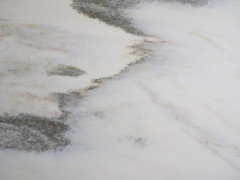
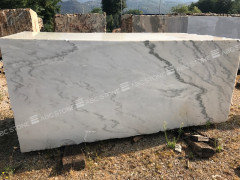
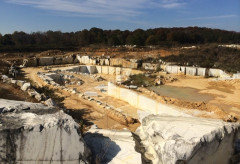
    If you’re looking for a domestically quarried marble on par with those quarried in Italy, look at Alabama White (a.k.a., Sylacauga) marble. These two images are from ABC Stone:


    “One of the most important characteristics of Alabama White marble is its strength,” said Jacob Swindal. “Even in a 2 cm slab, Alabama White requires no epoxy injection of fiberglass mesh backing. The material also displays translucent qualities in these thinner applications, which can be quite appealing to the design community here in the U.S. and abroad.”

    -Excerpted from Alabama White Marble’s Comeback

    SYLACAUGA, Alabama – The belt of white marble that runs beneath this central Alabama city once yielded gleaming columns, panels and other architectural elements found in monuments, government buildings, hotels and banks across the nation.

    For several decades, however, creamy Alabama marble has been in short supply for high-profile commercial and government projects. A new venture spearheaded by Bessemer businessman Roy Swindal and his family, along with international backing, intends to change that.

    Their plans for Sylacauga Marble Quarry would return Alabama white marble to its heritage as a prized construction material, used in the interiors of the U.S. Supreme Court, the ceiling of the Lincoln Memorial and in many other notable structures.

    -Excerpted from Sylacauga Marble Quarry venture plans rebirth for Alabama white marble


  • 6 years ago
    last modified: 6 years ago

    I believe what you are euphemistically calling a "patina" is the etching of marble. The problem is it doesn't happen evenly as a patina might. Its less noticeable in a honed finish.


  • PRO
    6 years ago

    IMO a honed marble is just asking for staining and etching a factory polish is the way to go and as for the difference in the 2 I have no idea I always use Italian factory polished marble for clients. Many never need sealing BTW

  • 5 years ago

    I installed Lincoln Calcutta in my bathroom and had major adhesive stains that after 30 days have not gone away! When they were installing and had to make adjustment cuts the crew said it was delicate like powder sugar. I would not use it again!

  • 3 years ago

    Actually Danby marble from Vermont is more dense and is less susceptible to etching and staining. Honed marble is also easier to maintain. This brand of marble can withstand active use with minimal upkeep, just seal it with a good sealer annually. If you do have an issue, the site shows you how to make a Comet slurry to remove it. I’d suggest using a sink with an apron front to
    minimize dings from dishes traffic. Ours is 6 years with no major issues.

    Downside that no one tells you about quartz is that it’s not heat resistant, and it does stain. Know someone that has a huge pink stain on their countertop from a school paper that was left out overnight and somehow got wet.

  • 3 years ago
    last modified: 3 years ago

    “Actually Danby marble from Vermont is more dense and is less susceptible to etching and staining.”

    @bets1211 - that is a myth, or really more of a confusion about Danby marble. Danby marble is less prone to chipping, so in that way it is more durable than some marbles. But it will etch and stain like any other marble. A marble is intrinsically calcium carbonate. Calcium carbonate reacts with acidic foods and liquids which is what etching is. Calcium carbonate is also porous, which is how it gets stained. You can apply sealant to prevent stains on marble. To say that Danby marble is less prone to etching and staining would be saying it’s not made of calcium carbonate. But if it’s marble, it is made from calcium carbonate, whether Danby or not.