Software
Houzz Logo Print
webuser_226684729

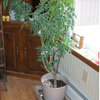
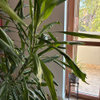
Pothos having trouble.

6 years ago

I have 3 different pothos plants that are doing the same thing. They shrivel so I water them with distilled water( until it drains) then its leaves turn yellow and fall off. I tried spraying them same thing happens. All of my other plants are fine I have a prayer plant that's great. I don't know what to do

Comments (3)

  • 6 years ago

    We don't have enough information about their growing conditions to be able to help you. Pictures and details about how these plants are cared for on a daily basis will be helpful.

  • 6 years ago

    The pot does have a drain hole - yes? If not, your problem is most likely over-watering.

    I agree with Dori, that there isn't enough info to make a specific diagnosis; however, loss of turgidity (wilting) is almost always a manifestation of too much or too little water in the root zone, and the condition can be exacerbated by other cultural factors (low humidity, high light levels, a high level of dissolved solids [salts] in the soil). How wilting occurs when there is a water deficit is obvious, but, even when you think you're watering correctly, the entire soil mass may not be getting moistened. As container media dries down it often shrinks away from the wall(s) of the container. When this is the case, water can flow over the top of the medium and quickly move downward and out of the drain hole by way of the pathway between the soil mass and pot wall(s); this, w/o having adding any significant amount of moisture to the medium. If this is the case, you might need to water more often to prevent the medium from becoming so dry it becomes hydrophobic (it repels water). You can also put the planting in a tub of water, making sure the level of the water is just a little below the top of the soil when the pot rests on the bottom.

    If you are a chronic over-waterer, you can break the habit and get back on track by using a "tell" to "tell" you when it's time to water. You'll find something I wrote about using a tell just below the link.


    You might find this helpful.

    Using a 'tell'

    Over-watering saps vitality and is one of the most
    common plant assassins, so learning to avoid it is worth the small
    effort. Plants make and store their own energy source –
    photosynthate - (sugar/glucose). Functioning roots need energy to
    drive their metabolic processes, and in order to get it, they use
    oxygen to burn (oxidize) their food. From this, we can see that
    terrestrial plants need air (oxygen) in the soil to drive root
    function. Many off-the-shelf soils hold too much water and not enough
    air to support good root health, which is a prerequisite to a healthy
    plant. Watering in small sips leads to a build-up of dissolved solids
    (salts) in the soil, which limits a plant's ability to absorb water –
    so watering in sips simply moves us to the other horn of a dilemma.
    It creates another problem that requires resolution. Better, would be
    to simply adopt a soil that drains well enough to allow watering to
    beyond the saturation point, so we're flushing the soil of
    accumulating dissolved solids whenever we water; this, w/o the plant
    being forced to pay a tax in the form of reduced vitality, due to
    prolong periods of soil saturation. Sometimes, though, that's not a
    course we can immediately steer, which makes controlling how often we
    water a very important factor.

    In many cases, we can judge whether or not a
    planting needs watering by hefting the pot. This is especially true
    if the pot is made from light material, like plastic, but doesn't
    work (as) well when the pot is made from heavier material, like clay,
    or when the size/weight of the pot precludes grabbing it with one
    hand to judge its weight and gauge the need for water.

    Fingers stuck an inch or two into the soil work ok
    for shallow pots, but not for deep pots. Deep pots might have 3 or
    more inches of soil that feels totally dry, while the lower several
    inches of the soil is 100% saturated. Obviously, the lack of oxygen
    in the root zone situation can wreak havoc with root health and
    cause the loss of a very notable measure of your plant's potential.
    Inexpensive watering meters don't even measure moisture levels, they
    measure electrical conductivity. Clean the tip and insert it into a
    cup of distilled water and witness the fact it reads 'DRY'.

    One of the most reliable methods of checking a
    planting's need for water is using a 'tell'. You can use a bamboo
    skewer in a pinch, but a wooden dowel rod of about 5/16” (75-85mm)
    would work better. They usually come 48” (120cm) long and can
    usually be cut in half and serve as a pair. Sharpen all 4 ends in a
    pencil sharpener and slightly blunt the tip so it's about the
    diameter of the head on a straight pin. Push the wooden tell deep
    into the soil. Don't worry, it won't harm the root system. If the
    plant is quite root-bound, you might need to try several places until
    you find one where you can push it all the way to the pot's bottom.
    Leave it a few seconds, then withdraw it and inspect the tip for
    moisture. For most plantings, withhold water until the tell comes out
    dry or nearly so. If you see signs of wilting, adjust the interval
    between waterings so drought stress isn't a recurring issue.

    Al

  • 6 years ago
    last modified: 6 years ago

    It sounds like some kind of drainage problem. Does the soil feel hard to your touch? Sounds like the water isn't penetrating the rootball.

    The others are right, we really need pix & more care info. to help you.

Sponsored
Landscape Management Group
Average rating: 4.9 out of 5 stars33 Reviews
High Quality Landscaping Services in Columbus