Software
Houzz Logo Print
miguel_palacios59

Plaster? Drywall? Need help!!!

6 years ago
last modified: 6 years ago
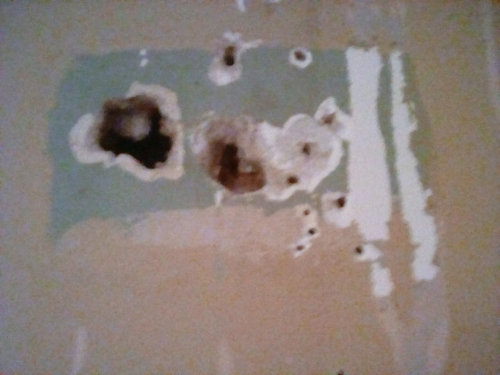
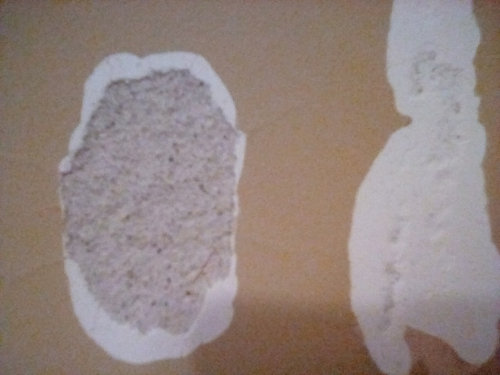
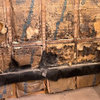
hello everyone. I am having trouble right now with my walls in my livingroom. So when we first moved into the house, it had that cheap faux wood panelling on it from the 70s and it had just been painted over by the last owner. We decided to hold off on removing it right away and we just painted our color of preference over it. Well today I finally went for it and removed the panelling and I was horrified by the condition of the wall underneath. What is most disconcerting to me is that it's not like any drywall I've ever seen. I wasn't sure if maybe it was a different material of sheetrock or something. The best way to explain it is that it is very weak and crumbly. It's gray like cement and when we drill into it, it just crumbles like gray sand. I have never ever seen anything like this before so I do not know what it is. I started looking online and I cant find anything that fits this description. I was a little scared because I thought it might be plaster but from what i've seen on youtube, if it was plaster, you would see the laths wherever it crumbles. In the holes I've seen, theyre completely empty. It's almost like if they were made out of a very weak cement. I was planning on removing it and replacing it with modern drywall but I want to make sure I know how to properly remove this material before I jump in. I don't want to make anything worse. I already purchased the drywall to install but now I am wondering if I should just go over what's there now with 1/4 drywall. I feel like the previous owner didn't want to deal with getting the walls redone so they just had cheap panelling go over it. I'll post a pic of an area where you can see holes and corners cracking. It's terrible.


Comments (15)

  • PRO
    6 years ago

    What is the era of the house? I suspect the same thing, it’s a hybrid system used from about 1940 through the 1960’s. It was comprised of narrow strips of gypsum board (basically drywall) finished with 3/8” of grey scratch coat then a very fine finish coat.

    Some caveats. It’s VERY heavy because it’s so thick. It’s also held to the studs with lots of nails. The removal is messy and backbreaking.

    When you put the Sheetrock on, you have to furr out all the walls so the drywall sits flush with the jambs so the trim sits flat.

    Could you just repair what you have? It’s usually easier.

    Miguel Palacios thanked HALLETT & Co.
  • 6 years ago

    The house was built in 1951. I originally had just planed to repair it but once I got all the panels off and saw the extreme poor condition, that plan went out the window. Also its just so difficult to hang things on it because it just makes a huge crumbly mess. I would rather never have to deal with it again. Unfortunately, the entire house has the same walls so I think I'm not gonna mess with those since nothings really wrong with them. But even if I wanted to repair the holes in the living room walls, theres the glue and mess all over them as well that I would have to get off somehow too. I think either way, it's going to be hell. thanks for your input!

  • PRO
    6 years ago

    Scrape all the high chunks off, then skim the entire wall with drywall mud. As horrible as that sounds it’s not as bad as the full demo!

    My current abode has these exact walls so I’m very familiar. We removed it in the kitchen because we had to do so many repairs to framing and wiring, but everywhere else got skimmed. As to holes, have you tried ooks brand of picture hooks? They work well with limited damage.

  • 6 years ago

    Whenever I try to scrap stuff off, the gray stuff just crumbles... and then what about the edges like around the doors and windows? its all cracked and fallen apart. I have not tried that brand of picture hooks. thanks for the input.

  • 6 years ago

    I have that in our house. In my bathroom it crumbled and fell off in dust and pieces. If it doesn't ever get wet it stays pretty firm.
    The best thing to do in bad areas is to bite the bullet and pull it off and replace with drywall. It'll give you an opportunity to check your electrical and make any repairs/changes, add blocking for wall hung TV or shelving. You may have to shim it out to match the thickness at doors, windows and baseboard.

    Miguel Palacios thanked Seabornman
  • 6 years ago

    Does anyone know if it has asbestos in it?

    Miguel Palacios thanked houssaon
  • PRO
    6 years ago

    I'd try to avoid removing this stuff. Repair please.

    Miguel Palacios thanked Joseph Corlett, LLC
  • 6 years ago

    "I am wondering if I should just go over what's there now with 1/4 drywall."

    I'm not an expert at these matters, but if it were my house, that's what I'd do.

    Miguel Palacios thanked DavidR
  • 6 years ago

    "Scrape all the high chunks off, then skim the entire wall with drywall mud. "

    You'll get a much better result and nicer, more durable finish by skimming it with plaster. All of the defects will disappear.

    Miguel Palacios thanked rwiegand
  • 6 years ago

    The edges around doors and windows is covered when the trim is installed. That stuff is incredibly heavy and all that weight gives a certain solid feel to a house that just can't be duplicated with drywall. I ended up removing the plaster when we redid the kitchen and I would have preferred to keep it but it was easier to do the electrical and insulation.

    Miguel Palacios thanked Lyndee Lee
  • 6 years ago

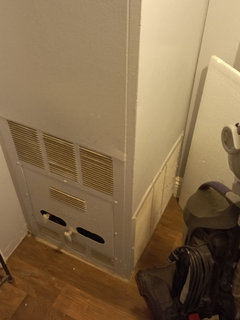
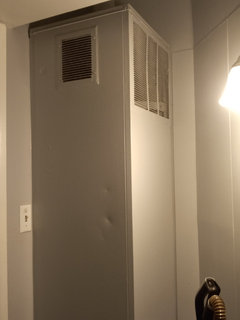
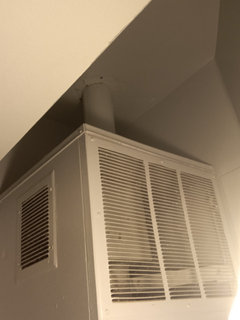
    Does anyone know what this thing is? It is in the our hallway and has inlet and outlet vents in one of the living room walls. We don't use it and never knew what it was. We would like to take it out and drywall over the areas that the vents were in. It looks like a heater of some sort but not exactly sure. Looks like theres an inlet valve at the bottom that you can either shut off or turn on with a twist of a handle which made me think of natural gas. Please let me know if this looks familiar to any of you. thanks


    .

  • 6 years ago
    last modified: 6 years ago
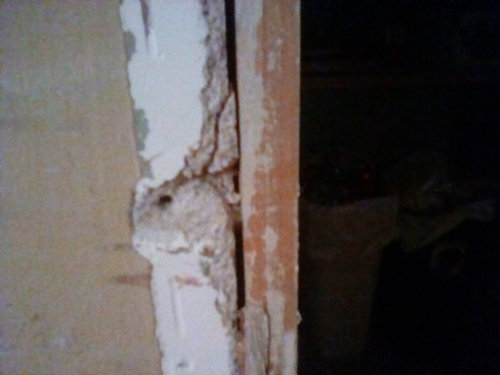
    that's an old style heater. call in a HVAC guy to remove it and make sure your ducts and vents are clean

    as for the plaster walls, do you think it has/had water damage? any leaks in that area or above?

    Miguel Palacios thanked Beth H. :
  • 6 years ago

    Thanks for the input Beth, and about the walls, it's been determined that they're not plaster but an older form of drywall. I don't think there has been any kind of water damage to them but they have sustained heavy damage from the last owners nailing in the wood panels. Holes everywhere... what a nightmare. And they're big nasty holes too not just little holes that could easily be covered with spackle. Like I mentioned before, with this material, it's been really difficult to hang anything without damaging the walls because whenever we start to predrill a hole, it's like it just turns to sand. That's why I am more on the side of tearing it down and replacing it with the new drywall. I feel that even if I scrape off all the muck and spread mud over the holes and cracks and make it look nice again, we will still have the problem of hanging frames and stuff.

  • 6 years ago

    right. you can always grab an asbestos test and test it first. If it's clear to go, I think taking it down and redoing w/drywall where you need it would prob suit you better.

    Miguel Palacios thanked Beth H. :
Sponsored
Custom Home Works
Average rating: 4.6 out of 5 stars10 Reviews
Franklin County's Award-Winning Design, Build and Remodeling Expert