Software
Houzz Logo Print
lkplatow

Bloomerang Lilacs keep dying - why???

6 years ago

Maybe 7 years ago, we planted a mass planting of bloomerang lilacs in a raised sloping bed, in full sun, against a stone wall near a patio. There are maybe 20 shrubs involved. Starting with their second year, every year, we have had at least one or two entire shrubs or large parts of a shrub that just don't come back in the spring - the branches are simply dead. This wasn't a huge deal when the plants were small - we just dug them out and replaced them - but now they are a good 4-5' tall and wide. This spring it looks like basically 2 full bushes are dead - each one has maybe a branch or a shoot coming out the bottom but the rest of it is just dead. Cutting them down to just the 2 "live" branches will look ridiculous (the trunks on some of these are a good 5" in diameter.) Even if we dig them out, it's going to look stupid to replant them with tiny immature shrubs. And I'm tired of replacing plants every year.


I can't figure out what is going on - there doesn't seem to be any fungus. The plants that don't die are doing great - there is no in between. On some bushes, half the shrub will be dead and the other half doing great. They are in full sun and the bed is raised and on a slope so the soil should be about as well drained as it is possible for any bed to be. We have had a crazy amount of rain for the past few summers so I haven't needed to irrigate but in drier years I have used a drip hose. We are in zone 6 (they are hardy from 3-7 supposedly) but on top of a hill so I usually consider us zone 5 to be safe due to wind. Could it be the wind? This year the one on the end is dead so that makes me think wind but then one that is squarely in the middle of the row and relatively protected is also dead so I dunno. The plants look fine all summer and into fall and then they just don't come back next spring - there's no signs that they are struggling during the growing season. The bed was installed by a landscaper when they made our patio so it should be good high quality soil. We keep it mulched though I don't really fertilize - should I be?


At any rate, if I can't solve this, I'd like to start replacing the dead bushes with something else that will look good and hopefully survive better. So I'm posting for both suggestions on what might be killing them and what other shrubs might look good scattered in a mass hedgerow type planting of bloomerang lilacs!


Thanks for any help/guidance you can offer!

Comments (24)

  • 6 years ago

    There are very, very few questions asked here that are not location-dependent. Nearest large city is usually good enough, but we need somewhere to start.

  • 6 years ago

    Sorry about that. About an hour northwest of Philadelphia.

  • 6 years ago

    What's your soil pH? Lilacs like the same pH as lawn grass.

    lkplatow thanked mad_gallica (z5 Eastern NY)
  • 6 years ago
    last modified: 6 years ago

    there doesn't seem to be any fungus

    How did you make this determination? Because with lilacs doing something like this the first thing I would consider is honey fungus. It attacks woody plants at or in the vicinity of the root crown to produce effects that make it look as though the plants were being pinched or strangled.

    lkplatow thanked Embothrium
  • 6 years ago

    I do not know my soil pH. How would I find out?


    I guess I assumed because I don't see any fungus on the leaves - like I have other plants that have issues with powdery mildew or anthracnose and those are pretty obvious. With the lilacs, they look wonderfully healthy until they are dead. There's no signs of struggling. But I will look up the honey fungus and see if that could be the culprit!


    I am not much of a gardener - I prefer to plant and go. So something that requires a lot of fussy spraying or tending probably isn't a great choice for me! It's all I can do to keep up with the powdery mildew spraying.

  • 6 years ago

    Yes good point. But the whole thing was supposed to be a mass hedge planting and I feel like it's going to look weird to just start ripping out dead ones and putting in something else. And every year I decide I don't really want to rip out 18 healthy plants to accomodate 2 dead ones. So it has kind of turned into a cycle. But you are right - it's probably time to give up, LOL! I'll get some photos shortly.

  • 6 years ago

    In a normal year, local garden centers would do pH tests. It isn't a difficult or expensive test to do. There is a pH map here that you can look at to get a rough idea of the pH in your area. It looks like a lot of SE PA is 5.2, which is what I remember from when we lived outside of Philly. Lilacs prefer something around 7.

    There are fragrant azaleas.

  • 6 years ago

    Hmmmm....I uploaded a ton of pics and don't see them. Not sure where the post went. :-(


  • 6 years ago
    last modified: 6 years ago

    When not in flower lilacs are less than exciting. If you could tear yourself from the idea of all lilacs there's no need to destroy the healthy ones. Just start turning the lilac monoculture with one short season of interest into a mixed planting with something to look at all year round. Are the dead ones all in the same place? Or spread throughout the row? If you could post a picture maybe you could get some suggestions.

  • 6 years ago

    lilac monoculture with one short season of interest

    Bloomerang is a registered trademark used to sell lilacs that flower on both new and old wood, with this trade name being an obvious pun based on the word boomerang.

    https://www.provenwinners.com/plants/syringa/bloomerang-purple-reblooming-lilac-syringa-x


  • 6 years ago

    Right. I didn't know that. Is the repeat flowering worth it compare with introducing other shrubs?

  • 6 years ago

    "Is the repeat flowering worth it compare with introducing other shrubs?"

    No. The reblooming feature is half-hearted at best. You get a primary flush in spring at the normal bloom time for lilacs and then just a sporadic scattering of flowers off and on through summer.

  • 6 years ago


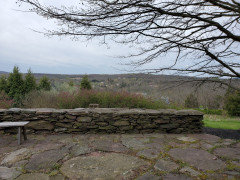
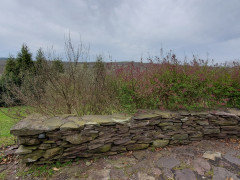
    I uploaded like a zillion photos but they never showed up. So I'll try one at time. You can see the hedgerow here. They are planted in front of a stone wall just like the one in the photo that borders a lower level of the patio. There's a hot tub down there that you can just barely see - the cinderblock is sitting on the hot tub over to weigh it down because it's been insanely windy lately. The idea behind the lilacs is that they grow to the right height (and are dense enough) to provide privacy for the hot tub (there's a house behind us on the other side of the arborvitae row you see) without blocking the view of the mountains from the upper patio/house. Stay tuned for more photos.

  • 6 years ago

    I tried uploading another photo and it ate the post again. I haven't used Houzz much since it moved over from the old gardenweb - is this a common thing?


  • 6 years ago


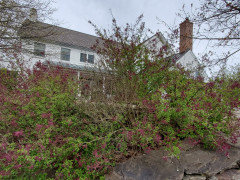
    This is a photo from the west end of the bed. The lilacs are fine here.

  • 6 years ago
    last modified: 6 years ago


    This is a photo standing on the lower patio. The left side lilac is 99% dead - maybe a leaf or two. It is the one on the eastern end of the bed, so maybe wind exposure? The other dead one is in the middle of the bed, just to the right of this photo. You can see the dead branches sticking out at the very right in the photo in the post right above this one.

  • 6 years ago


    Here's a different bed - this one is along the stone steps that lead from the upper patio to the lower one. You can see that half the middle lilac is dead, while the surrounding lilacs look fine.

  • 6 years ago


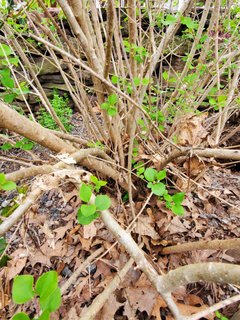
    This is a closeup of the base of that half-dead lilac from the previous photo. I don't see any evidence of fungus or trunk damage or anything. The large trunk to the left in this photo leads to the half of the plant that is dead. Some of the smaller branches on the left side also are dead.

  • 6 years ago


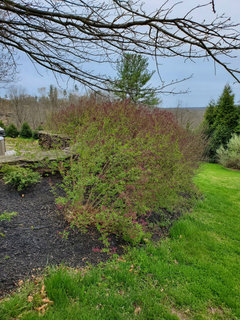
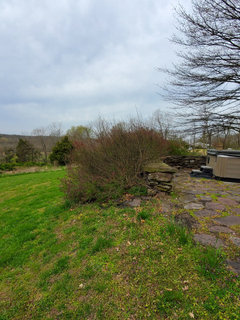
    This is a photo taken from the eastern side of the bed, showing the dead lilac on the end. You can see the slope of the lawn and bed here. I can't imagine it is a drainage issue. This hillside is a full sun southern exposure with a few oak trees that might partially block some sun at certain times of the day.

  • 6 years ago

    To check for honey fungus uncover the root crown.

  • 5 years ago
    last modified: 5 years ago

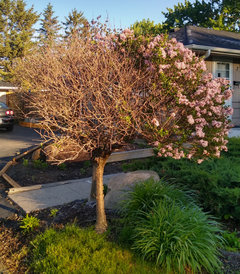
    My issue was fertilizer stakes to close to the trunk on the bloomerang tree. I realized this within a month after I drove them in now a good half of the tree is dead now going on the 3rd year after I destroyed it. I keep hoping it would come back but I think its time to take it down. This tree was perfect before I used the stakes too close in. I did this around exactly where the tree was dying because I couldn't get around the entire tree.


  • 5 years ago

    That tree is a grafted standard, isn’t it? I have a similar one that is declining and was told that it was typical graft failure. The graft is at the top of the straight trunk.

  • 5 years ago
    last modified: 5 years ago

    Don't know if was grafted or not. My son had planted that tree about 10 years ago and the last 3 years it has failed to put on any foliage on that one side I always trimmed it in the late fall for a rounded shape it love that and bloomed better than anything. I knew in a month after I drove that fertilizer stake into the ground after the leaves started dying.

    I even tried digging up the rest of that stake out but was too late. After that the tree started to die branch by branch. I love that tree and I'm sad to cut it down but can get another 6 ft one for about $300.00 not sure I should plant it in that same spot though. I can pull the entire tree out roots and all with my truck.