Software
Houzz Logo Print
edubya

Questions about Aging in Place?

6 years ago


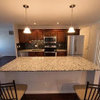
ClaranDesign Accessible Kitchen-Diner · More Info


We're talking to a Houzz Pro next week about designing for aging in place as part of our Houzz TV Live series.


Do you have specific questions you would like to ask about aging in place or particular challenges you have around this topic that you would like to have discussed?


Tell us about it in the comments!

Comments (29)

  • 6 years ago
    last modified: 6 years ago

    Injury or illness can make a person unable to get their soak in the tub. I've seen the 'walk-in tub', which seems to solve the problem.

    Healthy and middle-aged, is there any prep for bathroom that could make that installation go better - any small tidbit to consider in current plans?

    Does the team think the walk-in tubs work well - what to look for?

  • PRO
    6 years ago

    My question is does aging in place always assume illness and disability?

  • 6 years ago
    last modified: 6 years ago

    Small thing if walk-in tubs require a faucet at a certain height... things like that -- our plumber seemed to pick random place for faucet - maybe I could've said different.

    I might have a walk-in without the more serious conditions - mine are enough. yikes...true.

  • 6 years ago
    last modified: 6 years ago

    Or a curbless shower - an expert might have guideline for future - like a 'rough-in' functions as prep for future.

  • 6 years ago

    To my mind "aging in place" isn't the same as "disabled". I'm more interested in design considerations that address the gradual limitations that come with aging. Topics like sensible storage, lighting for various tasks, bathroom safety, the pros and cons of different flooring, landscaping for aging bodies, using technology around the house, etc. are more interesting to me than what I might need when I'm 95 and dependent on others for my care.

  • 6 years ago

    To me it means wide doors, no throw rugs, taller toilets, wide hallways, bigger spaces around furniture, fewer steps, less yard work, less clutter.

  • 6 years ago

    I would love to see examples of innovative designs to facilitate the installation of an elevator in the future. We discussed that when designing our house and then dropped it, but in retrospect, I wish we would have explored roughing it into a couple of closets or something in case it would be helpful later

  • 6 years ago

    I think of safety when I think of aging in place - wether that be grab bars in showers, less steep stairs, and flooring that is level and non slip. Balance issues tend to be most critical as we age.

  • 6 years ago

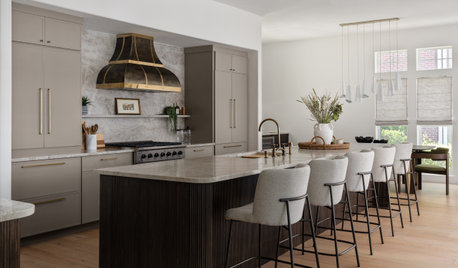
    That photo, while it has some helpful features, also has major issues for aging-in-place. For starters, those upper cabinets are going to be hard to reach during the shrinking years of old age.


    I think of "aging in place" as "senior real". It's not about being disabled necessarily.


    My home is "aging-in-place", and was built on a tiny budget. It recently won my state's award for affordability and innovation (one aspect of the innovation being the "aging in place" features, another being the eco features). What I found is that there are ways to be thoughtful with standard materials and ways of doing things that wouldn't appear on a "pro" radar. They didn't cost extra money; they just took foresight.


    Consider this COVID wrinkle: if you do your "aging in place" features right, you can self-isolate a whole lot more safely. It's much more difficult for you to be checked up on because of the virus, but if you've really thought through the safety features, there's not such a need for intervention.


    On the walk-in tub thing..... IMO it doesn't solve the problem of tripping. You still have to step over the door frame to get into it. Very bad idea. Also, isn't the whole point to have a nice warm bath? You've got to sit in it in the altogether while the thing takes forever to fill. When you're done, you have to sit there 'til the whole thing drains out. Shiver. Sludge lines down a nice clean body as the water lowers.

  • 6 years ago
    last modified: 6 years ago

    @yvonnecmartin The floor in the photo makes me dizzy. It is not appropriate for anyone with slightly deteriorating eyesight.

    Totally agree. This is not an "aging in place" kitchen for real people. The whole thing is an idea from a designer, and very impractical. It's all about the specialized stuff you can buy (like the cabinets with extra foot room), but the designer hasn't considered poor mobility, which is a key feature of "aging". Imagine, for instance, trying to open that wide lower cabinet door while using a walker.


    IME good "aging in place" design doesn't have to cost $$, and IMO your ideas might very well be better than a "designer's".

  • 6 years ago

    COVID is the new "aging in place". I got a lot older in the last 3 months.

  • 6 years ago

    To me, aging in place is much more than grab bars, toilets and non-slip floors, although they're important. It's about space -- do I want to clean extra bathrooms, a big kitchen, a huge master bedroom? As much as I love to garden, how much yard work will I be able to manage in ten years? Then there's design . . . who is going to change the light bulbs in cathedral ceilings? Get dishes/supplies down from high cabinets? Not me. If I were designing a house for this phase of life I'd be thinking about things like bringing groceries into the house, managing laundry, getting things in and out of closets and cabinets, easy maintenance . . . practical everyday living.

  • 6 years ago
    last modified: 6 years ago

    The most important piece for aging in place? Will you be able to afford your home when you’re 90? If not, none of this discussion matters.

    Will you be able to afford the taxes? What about utility bills? Could they put you out of a home? Will you have to replace a roof or other major item?

    Designers don’t address this. They’re about STUFF. But you don’t need design if you aren’t going to be able to afford your house.

  • 6 years ago

    IMO Elevators are not an aging-in-place solution. There are too many situations when they can't be used, including fire, cognitive issues, maintenance, and leg wobbles. An aging-in-place solution is putting the main bedroom and bathroom on the ground floor.

  • PRO
    6 years ago

    IMO, a lot of these concerns (safety, having enough money, easy maintenance, sensible storage, good lighting) are applicable to all ages, not just the aging. And when you talk about walkers, yes, you are talking disability.

  • 6 years ago
    last modified: 6 years ago

    I'm late... just found designer on houzz that writes:

    "We are a Certified Aging-In-Place Specialist, which is a certification developed by the National Association of Home Builders (NAHB), in collaboration with AARP. "

    https://www.houzz.com/pro/sdremodeler/cairnscraft-design-remodel

    -----------------------------

    Info - do any sell stock plans?

  • 6 years ago
    last modified: 6 years ago

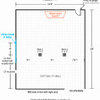
    "The final transformation option for the Away Room is a long term one. Should it ever be necessary for the homeowners to live on one level, this room can be turned into a full time main level bedroom. And with minor remodeling, the mudroom can become the master closet, and the bathroom MADE MORE ACCESSIBLE by removing the pocket door wall, as shown in the diagram below. It’s this kind of multi-use thinking that will allow us to reduce the size of our homes without losing functionality, and that will allow us to AGE IN PLACE rather than be forced to move."

    /////// I'd be interested in hearing more from houzz; list of such architects with plans that include minor changes that allow staying at home.

    https://susanka.com/the-libertyville-not-so-big-showhouse/

  • PRO
    6 years ago

    Specializing in Architecture with Heart including design for special needs of all sorts, willing to serve on your panel of experts - contact me. Would love to help.

  • 6 years ago
    last modified: 6 years ago

    Aging in place" is a general catch-all phrase that is not realistic as you won't know your actual needs as you age. You think you can plan but realistic those things that you do may not be enough or overkill in the long run. I've been going through this with both my elderly parents and my partners who are in their mid 80's. Both sets still live in their homes but both have very different needs for aging in place. To have outfitted their homes for "aging in place" earlier in their lives would not have necessarily met their needs now or would have been overkill. What we've done to help them age in their home has been done as they needed it. Grab bars for my parents, not my partners. Rug removal for my mom's walker, rugs still are down in the other parents home. Hand rails added at entrance at one parents home. I don't see these as "aging in place" but to address their current actual needs.

    My partners parents live in a 3 level home but at 87 yrs old they can still manage the stairs. They built this house in their mid 70's and when we discussed aging in place during the build, they told us that if they got to the point of not being able to use their house, they would move. They were more concerned about building the home they wanted and not concerned of what "may" happen in the future.

    A few years back I was going to build a home with "aging in place" in mind. To achieve this, this included, bathrooms basically doubling in size and wider hallways to accommodate a wheelchair, if necessary, and zero steps in the garage to the house.

    Realistically if you want a "AIP" home, isn't this really a home that addresses the same issues as a home for a person with disabilities, especially with one to accommodate a wheelchair, so are we just trying to reinvent the wheel or just adding a fancy name to it?

    My take away from my experiences is that if you want a home for "aging in place" have a single story house and deal with the rest when the time comes. As you may find later on that you what you thought your needs and wants would be for when you got older are no longer the same. You may find yourself wanting a different type of life style and/ or house situation or even a different city or state. Active Senior Retirement Community or condo, anyone?

  • PRO
    6 years ago

    Agree. FYI, design for various forms of accessibility does not have to look institutional in any way - there are designer towel bars on which a gorilla can do chin-ups. Your residence does not have to meet ADA standards of 1 1/2" stainless steel bars. Many such things can help create universal design.

  • 6 years ago
    last modified: 6 years ago

    There are general guidelines for any house - why not list them? wide doorways are just one.... etc.

    No guarantee that forethought will ensure living there until you die.

  • PRO
    6 years ago

    so well said, tedbixby!

  • 6 years ago

    following

  • 6 years ago

    @everdebz IME much that Aging in Place certified folks do is common sense, and you could probably do much better! The kitchen in the Photo at the top of the thread seems to have been designed by such a ”specialist”, and, as noted It might be a designer’s rule book concept of appropriate, but lacks common sense. Might even get someone injured. Totally wouldn’t work for even minor impairments, like having a short reach.

    My home is “age in place”. I designed the interior and details myself. I joke that it’s for “dying in place”, since I have no thought to leave.

    I came up with many ideas from reading about the kinds of accidents people have in their homes. #1 is the bathroom, especially associated with the tub.

  • 6 years ago

    Thanks tangerinedoor for a vote of confidence but I've never 'aged in place' -- and I don't design at all. If houzz were to gather tips from a number of such pro's, I'd read it and put what strikes me in my memory bank....

    hey what's the tub experience ?

  • 6 years ago

    To make a home adaptable for a wheel chair and walker, etc. , I feel that a house needs wider doors, no throw rugs, a shower with grab bars and a bench or portable stool with arms in the shower, a toilet stool with a riser with arms and grab bars, no stairs or steps down to another room, i.e. garage or outside, ,and enough room to walk around your furniture. Make your house clutter free and easy to clean unless you can have help to do it. No questions but find Visiting Nurses can give a lot of tips for living in your home for as long as you are able.

  • 6 years ago

    I think where you choose to live should be considered as well. Living somewhere where you can go outside and walk, living where you have support of either family or friends, living near quality healthcare, are all things that become much more important as we age.

  • 6 years ago

    @everdebz The tub experience? Mine? I don't have a tub and I won't: way too easy to trip and have a nasty accident.

    Also, I did design my home interior, but I'm not a designer-y kind of person. It just worked out that way. I'm shocked to discover I designed a house!

    There were a lot of things like socket height and light switch shape that I got from somewhere as the design evolved.

    The biggest things for me were things like not wanting to have drafty rooms or musty smells. I wanted to wake up every morning and not have a shiver-y moment or feel my nose twitch from ancient dust. I wanted not to have to worry about finances if I needed to turn the thermostat up a notch. I wanted not to have hot tomato soup fly in my face if the microwave was mounted too high. I wanted to be able to see out of every window even if I was seated or in bed. I wanted to be able to move around easily in the bathroom, not make it too large (big bathrooms get drafty IME), and not have to work around a hinged door....too much gymnastics going in and out.

    Anyway, this is the kind of thing I meant by aging-in-place features, not just the bullet points designers learn in certificate-school. Designers are about stuff. I was about what I want to feel like and be able to do. When I'm 90.

Sponsored
Hope Restoration & General Contracting
Average rating: 4.7 out of 5 stars35 Reviews
Columbus Design-Build, Kitchen & Bath Remodeling, Historic Renovations