Software
Houzz Logo Print
michael_mcdaniel68

Palisades Zoysia grass - red tips

6 years ago
last modified: 6 years ago

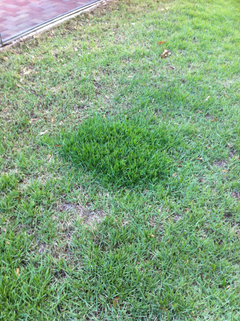
Hello, I purchased Palisades Zoysia in March 2020. I am also in Florida zone 2. Recently I started seeing a reddish brown tips on the grass blades. About a month ago I started using trugreen a lawn maintenance service to treat weeds and apply fertilizer since I don't know what I need to do to maintain it. They have put several applications down already. I am watering about an inch per week, now regularly only removing 1/3 blades.Can someone provide insight on what I am seeing?
See the Google photo link below for a photo of what it looks like.
https://photos.app.goo.gl/t3NBjQaqRmYDkP9EA

Comments (7)

  • 6 years ago

    The lawn has a fungal disease. Great picture, by the way. You can post images right here in Houzz, so next time you don't have to go outside.

    What is your watering schedule. How often and for how long do you water? I'm guessing you water 1/7-inch every day of the week. That's what most people in FL do. Before I launch into the full watering mantra, please answer the watering question and also tell us where you live in FL. Your zone is meaningless except for selecting plants for winter hardiness.

  • 6 years ago

    Thank you for the info! I live in north Florida, Tallahassee.
    I am watering about 2 times a week up to 1 inch of water. This was recommended by my lawn care service. I have a irrigation system that runs around 6 am.

    Should I change the water cycles? I assume I should call my lawn treatment service for this?

  • 6 years ago

    Do you not know what to do, or would you rather pay someone else to do it? Because it's not that hard to do, but you do need to know the right things. Here's an outline

    • Watering: deep and infrequent.
    • Mowing: Mulch mow once a week at the highest setting for your zoysia
    • Fertilizing: Once on Memorial Day, once on Labor Day, and once on Thanksgiving.
    • Weed control: Once in April. Maybe (maybe) again in mid September.

    If your lawn care company has already done several treatments, something is wrong. All I've done is weed control about 3 weeks ago. Well, I have mowed and I watered once already. We're expecting a storm tonight, so I probably won't water again for 3 weeks to a month.

    Here's the theory on watering: by watering deeply and infrequently, the water seeps down into the soil and keeps the soil at more of a constant temperature. The deeper moisture takes longer to evaporate, so, assuming the plant roots are deep also, the plants will remain hydrated while the surface of the soil dries out. The surface can become actually pretty dry and hard while the grass still looks great. After a time the soil will dry out such that it needs more water again. Then you water. Here is a practical approach to watering.

    One inch is enough to call it deep watering. You can measure 1 inch by setting some cat food or tuna cans around the yard and turning on your sprinkler. Time how long it takes to fill all the cans. That will be your watering time from now on. Don't let your lawn care company talk you out of that. As for frequency, this depends mostly on air temperature. I just looked at the Tallahassee 10-day forecast, and you should be deep watering no more than once per week and I'm thinking you could stretch that out to once every 2 weeks. Generally here's how it goes. With temps lower than 70 degrees F, deep water once per month. With temps between 70 and 80, water once every 3 weeks. With temps between 80 and 90, water once every 2 weeks. With temps between 90 and 100, water once per week. With temps between 100 and 110, water once every 5 days. This is a guide, not the gospel. The important part is to know how long it takes to get 1 inch. You might be watering 2 inches per week. Your grass is acting like it's wallowing in muck.

    I would not recommend letting the lawn care company touch your sprinklers. I'm not impressed with their results so far. As noted above, lawn care is not hard or complicated. Well, watering looks complicated, but reread it through and it's pretty simple. Don't water as frequently when it's cold. That's all.

  • 6 years ago

    Thanks for the tips! I did exactly what you said and placed a tuna can out.

    I did hire the lawn company because I am unsure of how to properly treat my lawn. I have read some articles on the care of zoysia grass but it seemed over my head.

    What would cause this fungus on my grass? Is it improper watering?
    Is there a fungicide that you recommend for treating this fungus?

  • 6 years ago
    last modified: 6 years ago

    Yes, I absolutely do not mind treating my yard myself. I love working in the yard and I want my yard to look the best in the neighborhood! I only subscribed to a lawn service because I was ignorant when it comes to taking the necessary steps to keep it healthy. You are providing a wealth of knowledge for me and I do greatly appreciate it.


    I watered on Friday morning for about an hour (based on your tuna can suggestion) and have mowed my grass at a height of about 1.75" using a reel mower. I have read that it should be about 2.25" but the mower settings only allow for a maximum of 1.75". I will need to purchase a different mower if I am truly supposed to be cutting it at 2.25"


    What is your take on Scott's brand fertilizers and other treatments? I have read that they are some of the best since each individual granular is packed with identical ingredients.

  • 6 years ago

    Don't get a new mower. If you read a different university's recommendation it will say 2.0583634 inches. It ain't that critical as long as you don't scalp it. Zoysia will adjust to the mowing height.

    You are perfect for this forum. You are curious and willing to learn. There is not that much to learn. I tend to write a lot which can become confusing. I came to this forum with 37 years of incorrect experience in lawn care. I had a lot to unlearn. And I fought tooth and nail to support my wrong ideas. Thankfully I was successfully converted in about 10 years (shouldn't have taken that long, but I'm stubborn). If you want to know why I do what I do, I am armed with more detail than most care to read. I have reasons for just about everything.

    RE Scott's: One of the first things I unlearned was that chemical fertilizers were the best. I converted 100% to organic fertilizers, cold turkey, in 2002. I tried using corn meal and my lawn transformed in 3 weeks. It was awesome. Here is a picture I harvested here in 2011 from mrmumbles. He threw a handful of alfalfa pellets (a common ingredient in organic fertilizers) onto his zoysia lawn in mid May. The picture was from mid June.


    It's pretty easy to see the improvement in color, density, and growth. This one picture is responsible for the feed stores in Texas becoming familiar with lawn care products hidden in their plain brown bags. So I really cannot tell you anything about Scott's products. On a cost per square foot basis, the organics and chemical products are close enough for me. Chemicals are somewhat cheaper so if you have large acreage, you'll probably want to do most of your fertilizing with chemicals. Scott's sells their (4 or 5)-step program which has you applying fertilizer too early in the spring, broadcast herbicide in places where you don't need it, insecticide when you don't need it, etc. If you follow the steps I outlined above, and ask questions here, you'll be much happier. Even if you decide to go 100% with chemical fertilizers, I would urge you to use organics at least once a year. The organic fertilizers improve the health of your soil where chemical fertilizers cannot do that at all - even slightly. The application rate for alfalfa pellets is 15-20 pounds per 1,000 square feet. One of the other things I like about using organic fertilizers is that if you accidentally spill the bag on the ground, you can spread it out with a broom, or vacuum it up with a shop vac, and the lawn will love it. You can apply 50 pounds per 1,000 if you have the budget for it. You can do that every week if you have the budget for it. All it does is improve the soil and turf. My wife uses alfalfa pellets in her vegetable garden, rose garden, butterfly garden, cactus garden, and all her specimen plants. We live in deer country with deer roaming the front yard every night and have no additional issues using alfalfa or even corn meal in the garden. Our yard is not picked out for their dining pleasure any more than the neighbors' yards. Same for the jack rabbits and squirrels.

    What else are you wondering about?