Software
Houzz Logo Print
jessica1464

Bermuda grass? tips... anything.

6 years ago

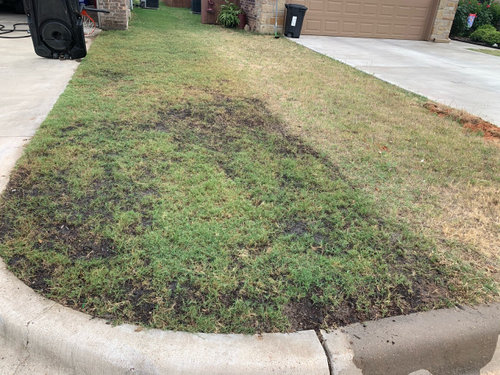
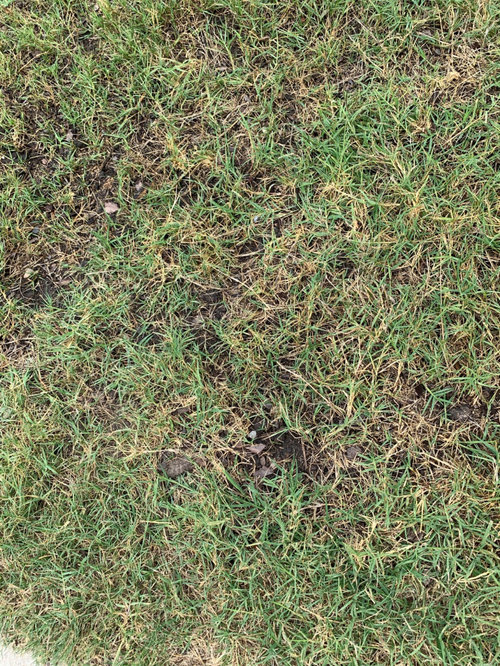
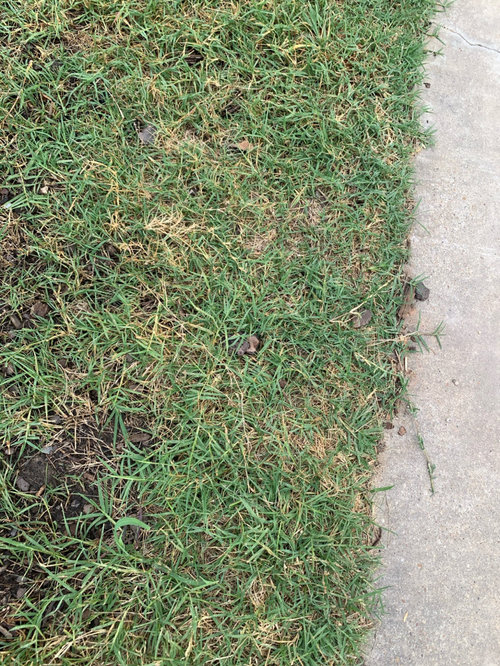
Trying to grow my front yard after the weeds took over last year. I laid down Scott’s 3 in 1, than hand picked all the weeds in the front and filled in the bare patches with some top soil and fertilizer. This is my first year taking care of the grass and I’m open for any tips or helpful advice. I’ve been watering like crazy. I’m pretty sure it’s Bermuda that was laid down when the house was built. I’m curious on what these long pieces are that look like grass at first. Also how to get it thick and a dark green. I’ve attached pics of my
Progress so far and what it looks like today. On the side you can tell where it was really bad with weeds so I had a lot to fill
I’m. Also the two last pics are of the longer pieces I was talking about. Is that grass? Its
Majority of my lawn.

Comments (5)

  • 6 years ago

    Yes, that is grass. Bermuda spreads with underground runners and with runners on top of the soil. You're looking at the runners on top. Those are called stolons.

    Bermuda is usually fairly easy to keep looking green. I mean the description of how is easy, but the actual doing it can become a hassle. The grass the builder used was most likely a hybrid called Tif 419. It is the most popular of all the bermuda hybrids, so the cost is low. Here's how to make it look like you want.

    Watering: You're doing it wrong. For all lawns, deep and infrequent is the mantra. You are experiencing the problems that happen when you water far too frequently. You get lots of weeds and the grass looks much less than optimal. Here is a motivational picture to show you the difference.


    This is morpheuspa's lawn in Pennsylvania. It is not bermuda, but you can clearly see the difference between watering daily and watering deeply and infrequently. Deep means 1 inch all at one time. You can measure 1 inch by putting out tuna or cat food cans in the yard and timing how long it takes your sprinklers to fill all the cans. Mine takes 8 hours. Yours will be different with different sprinklers and water pressure. That time will be your watering time from now on. The watering frequency depends on the air temperature. With temperatures below 70 degrees F, deep water once per month. Mother Nature usually takes care of watering at these low temps. With temps between 70 and 80, water once every 3 weeks. With temps between 80 and 90, water once every 2 weeks. With temps from 90 to 100, water once per week. With temps from 100 to 110, water once every 5 days. With temps from 110 to 115, water once every 4 days. Note that you never, "water like crazy." Bermuda is very forgiving if you forget to water, so don't ever think you need to catch up of you miss a watering by a few days.

    Mowing: Bermuda can be mowed as low as your mower will go. Yours looks fine. Keep that up. Always mulch mow to return clippings as organic matter to the soil.

    Fertilizer: After you mow bermuda for the second time in the spring, you can start fertilizing once every 4-6 weeks with as high a nitrogen fertilizer as you can find. There are 46-0-0 fertilizers which are fine for bermuda. Be sure to water those immediately after you apply to dissolve the crystals of fertilizer. If you wait until the next day, the dew can partially dissolve them and the grass will burn. Or you can use organic fertilizers. Tell me where you live and I'll tell you where to get the supplies. Organic fertilizers do not have the extremely high nitrogen values, but they do work fairly well for most people.

    Weeds: If you are watering, mowing, and fertilizing as above, your weeds should be minimal. Weed seeds need daily watering to germinate. You've been hand weeding. Is that because you don't want to use chemical herbicides or because you don't know which ones to use??

    That's about all there is to bermuda. The fertilizer all the time is the most hassle and the reason why I don't have it for my lawn. Getting on a more normal watering plan will green up your grass. Fertilizer will help with the color and help it to spread and fill the former weedy spots. Don't add topsoil where you dug out the weeds. New topsoil will have weed seeds in it.

  • 6 years ago

    Thank you so much. After reading many post I figured the watering my husband was doing and thought we needed to be doing was too much. This is my first year taking over the lawn and I would like to get it a dark green. The water isn’t cheap here so not having too water so much sounds like an awesome plan. I have that grass everywhere and wondered why it was so damn long underneath when I pulled up a lot. I have one area that seems to flood pretty easily and the grass is the most dead there. I’m wondering if it’s because that’s where it drains since there is no gutters on the house. If I put more top soil and built it up would it help? Would I need to plant more seed? I’ve been waiting to cut it but I think I will go ahead and get it short. I’m attaching a picture of the one area that holds a lot of water. Would I need to plant more seed if I put top soil down? Thanks so much for the help. The houses are close and my neighbor I guess planted new seed in his backyard so he is drowning out my sides everyday. I’m wondering if I should pack a bunch of top soil along that fence as well.

  • 6 years ago

    For bermuda you will need to mow short & often. When you let the grass get tall then it gets thinner. To keep it thick mow often & do not allow it to get tall.


  • 6 years ago

    @dchall_san_antonio.... we live in the ft worth area of Texas. Should I cut the front now short and stays on it? I hate how thin it has gotten and the vine look. I appreciate all the tips and information. So interesting to me when people think you need to water water and water to get good grass.

  • 6 years ago

    I would not add any soil until you see the greening from withholding water. They you can evaluate or send more pictures in. It will probably be a month from when you fertilize and cut back on watering before you see the lawn greening up. Try to sit on your hands and not love it back to death.

    You should NEVER reseed bermuda. You are starting out with a hybrid bermuda, not a seeded variety. Here is a picture of a lawn with seeded bermuda invading an established hybrid turf.


    The hybrid has finer blades and does not jump up out of the ground with stolons. Furthermore, the hybrid does not get seed heads like seeded bermuda. Once you get seeded bermuda in a hybrid lawn, it is going to look weedy for a long time. It will stop looking weedy when you have about a 60:40 balance and complete coverage of both types.

    Having said that, sometimes bermuda will thin out without your help. This only happens in shady areas under trees or adjacent to walls/fences. The tendency of most people is to reseed the area to thicken it up. All that does is get seeded bermuda established in the lawn - Big mistake. If you have bermuda thinning due to shade, then you need a different type of ground cover there. Yours is thinning because you pulled out some bermuda when you pulled out the weeds. Or your weeds had gotten to full coverage and pushed out the bermuda. Coarser grasses like St Augustine and the broad leaf weeds like clover and dichondra can shade out bermuda.