Software
Houzz Logo Print
avgusta_gw

SEPTIC TANK TREATMENT for compost

6 years ago

May I speed up composting of shredded leaves with that ? I think to fill a barrel with water about 1/3, dissolve septic treatment there, and put a pile of leaves. They promise to fix septic tank problems within 24 h, so will it do anything for speeding of composting?

Comments (22)

  • 6 years ago

    I suppose it could speed it up since Rid x is suppose to help with cellulose... but at the end of the day... one barrel stuffed with leaves will break down to small amount of "wet muck" vs more fluffy leaf compost/mold going about it the traditional way.

    There are other easier methods to break down leaves with urea or if you can get the good amount of used coffee grounds from starbucks (might be difficult these days) and mix them in, you can get get cooking compost in no time.

    Do you want to break them down fast to make a compost that you will being mixing into a soil? If not, just shred them and use them as a mulch. Mother nature will take care of the rest for you.

    avgusta_gw thanked Nevermore44 - 6a
  • 6 years ago
    last modified: 6 years ago

    I just need it asap for an ongoing project and I have to be sure that seeds of wild sorrel are dead. I made that mistake before -put shredded leaves as a mulch over flowerbeds and end up with sorrel beds.


    I need compost for soil amendment. Soil is pure sandy clay or clayish sand.

  • 6 years ago
    last modified: 6 years ago

    Agree with Nevermore.


    My experience is that well chopped up leaves need very little or no composting.

    If I were in a hurry I would put the leaves in a plastic garbage can and then Cuisinart the heck out of them with a weedwhacker.

    Doen’t sound like you are organic. If so and you wanted to compost them fast, for cleansing purposes, I would chop them up and then compost using the cheapest, most water soluble N that there is. That would be Urea fertilizer 43-0-0.

    a pound of Urea is about equal to five pounds of chicken manure. It tends to leach out, so top load your pile some and leave undissolved prills in the pile to compensate. Within reason you can add more Urea dissolved in water after composing is underway if you undershoot it at first.

    avgusta_gw thanked kokopellifivea
  • 6 years ago

    Will urea kill seeds ? I did that experiment with soaking shredded leaves in "gold N fertilizer" several years ago. It didn't work for speeding or killing seeds.


    For example, roebic k-37 says that its' bacteria will eat any solids: "Septic Tank Treatment contains a blend of beneficial bacteria that thrive in a "septic" environment (low oxygen, high nitrate), and through their metabolic activities they accelerate the breakdown of sewage waste, which helps to keep your septic tank functioning properly.

    Roebic also offers a dry septic maintenance product, Roebic K-37 Granular Septic System Treatment for those who prefer to apply a product several times a year. These bacteria, like K-37 Septic Tank Treatment, will digest proteins, fats, starches, and paper to keep the septic system running smoothly."


    What is wrong with my idea?

  • 6 years ago

    I’m thinking getting the temp up to 130+ for two or four days through composting to cook the seeds.

    avgusta_gw thanked kokopellifivea
  • 6 years ago
    last modified: 6 years ago

    I have a different suggestion from looking at the problem a different way: the task is that you need some compost or mulch that doesn't have viable wood sorrel, and you know your leaf piles have viable wood sorrel in them.

    Acquire (buy, borrow from a neighbour, source elsewhere) some compost or mulch that does what you need now. You can probably get some wood chips or other compost/mulch that will do the trick cheaply. You will then have time to compost your existing leaf piles properly, which is mostly a function of time.

    I think trying to hurry things up in the timeframe you're talking about is a fool's errand. The septic starter approach is completely different, and the '24 hours' referred to is in a completely different context (and to solve a different problem that occurs in septic systems - and note, even then, often doesn't work).

    Composting leaves takes time esp if need to make the various 'fellow travellers' non-viable. You can speed things up a bit but why complicate things? Acquire some mulch for the task at hand. You can do something with the leaves later.

    avgusta_gw thanked armoured
  • 6 years ago

    Yes, I could buy compost at store, but what to do with my curiosity and fun? :))

  • 6 years ago

    @avgust_gw: in that case, use your leaves as is and learn to make something tasty with wood sorrel - I think most of them are also edible. ))

    avgusta_gw thanked armoured
  • 6 years ago

    I vote to still try out the rid X stuff and see what happens

    avgusta_gw thanked Nevermore44 - 6a
  • 6 years ago

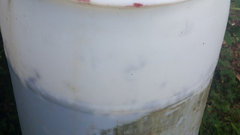
    Less than half of this barrel was filled with mix of water after bath with soap, pee, and roebic k-37 half bottle.

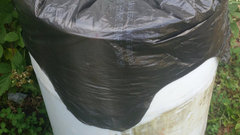
    Then I put 2 these carts of shredded leaves. Then make it "anaerobic". No bad smell so far. Shredded leaves smell marvelous!


    Will see what happens.


  • 6 years ago

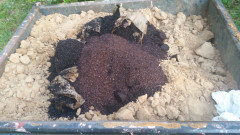
    This is dirt asking for amendments.


  • 6 years ago

    A little update on a process.

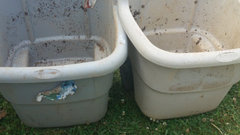
    Yesterday I took out all leaves from the barrel to a cart and added couple gallons of grey water and full pack of rid-x powder. Because I just had feeling there was not enough paper eating bacteria and enzymes. Then put leaves back. No bad odor at all even if it was mixed with a lot of pee. I don't know is it good or bad sign. Particles get softer but still I could tell what is what.

  • 6 years ago

    Particles getting softer is just breaking down in water (partially dissolving). Anaerobic unpleasant smells would take a while - guessing, but several weeks. What you've done by taking them out and then adding water again is make it partially aerobic again. I doubt having air made the anaerobic bacteria work faster, or multiply, but then again going back and forth from aerobic to anaerobic repeatedly may help break some stuff down a bit. I'm still skeptical, would be easier and probably about as fast to just leave it all in a big pile (after chopping). But as an experiment, whatever.

    The thing is, the woodier stuff in leaves - cellulose and lignin - just take longer to break down. You can speed it up some but only so much. Temperature and sufficient nitrogen are probably the biggest variables.

    But let us know how it works out.

    avgusta_gw thanked armoured
  • 6 years ago

    They 've been left for 6 months in a pile about a half of cubic yard. They didn't look decaying at all. All winter was rainy every day. My main concern is grass seeds. Grubs are almost dissolved that's good.

  • 6 years ago

    Personally I just use as a mulch and get used to weeding. Good luck.

    avgusta_gw thanked armoured
  • 6 years ago

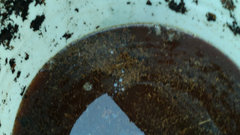
    Here is some smelly gravy :))

  • 6 years ago

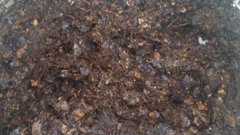
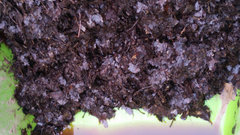
    Here is that was cooking in gravy.

  • 6 years ago

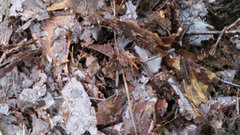
    So, for 2 weeks treatment clear "broth" has turned into thick gravy. Leaves still keep their shape, but when I smash them between fingers they get dusty easily. I will take a chance and use some of them for the project now, and continue cooking what is left till it "dissolved" :)))

  • 6 years ago

    yummy!

    I say just get some cheap urea... spread in your leaves and they will cook down good as quickly as possible to be used in the garden

    avgusta_gw thanked Nevermore44 - 6a
  • 6 years ago

    I'm going to guess that any seeds that have been immersed in that liquid for a few weeks are going to be dead. But who knows.

    avgusta_gw thanked toxcrusadr
  • 6 years ago

    Only partly related, but I went and turned a large pile of leaves that's been sitting since the fall. Out in the open, a very wet spring. I've partially turned the pile by partially moving it a month or so ago but hadn't done it fully. And I'd been pretty active with it in the fall, and these leaves were mostly chopped up. So it's not like this pile has just been sitting there.

    Anyway, short form: the parts of it that look and feel and smell like they've decomposed better are the dry bits in the centre. Maybe the other parts just need to dry out more and will be just about like the drier parts, but the wetter parts were pretty considerably matted.

    Also, shifting the wet parts around was a _lot_ more work, just sheer weight.

    Next time around I think I'll pile my leaves up between some pallets and put a light cover and basically try to do leaf mold. At minimum I think it'll be a lot less work and easier to handle the stuff. If it takes a bit longer, so be it. (Also I guess I could re-chop the dry stuff fairly easily if I wanted, the wet stuff is hard to work with)

    avgusta_gw thanked armoured
Sponsored
Peabody Landscape Group
Average rating: 3.5 out of 5 stars8 Reviews
Columbus' Reliable Landscape Design & Contracting