Software
Houzz Logo Print
mkabe

Should we have this repoured?? HELP!!

6 years ago
last modified: 6 years ago
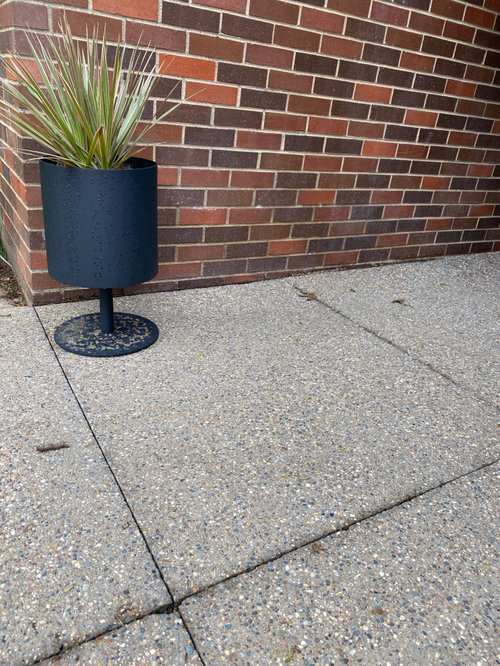
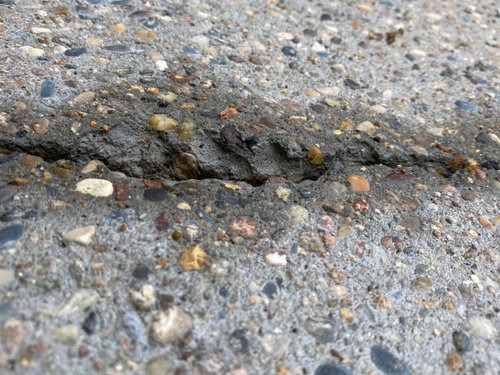
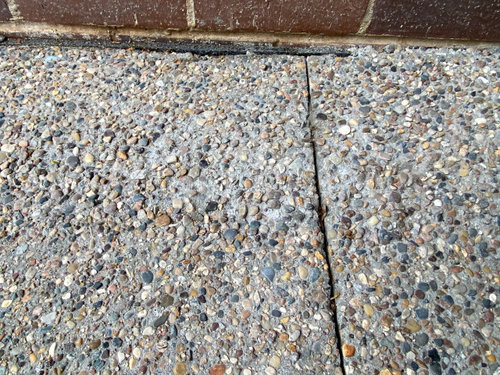
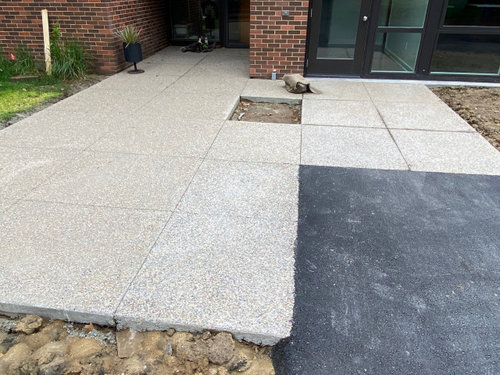
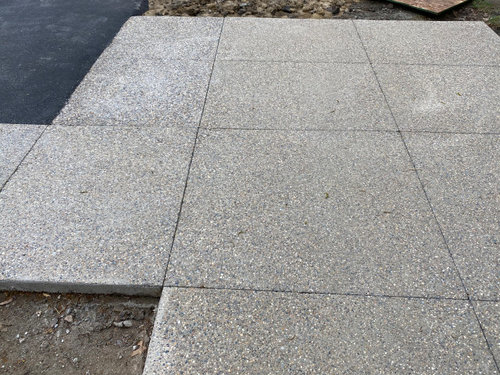
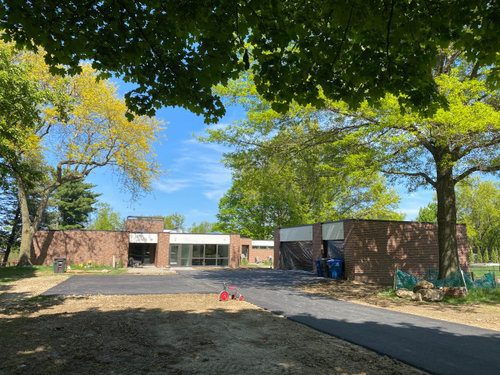
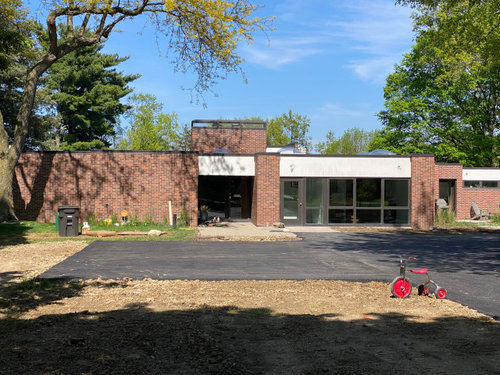
We own a mid-century modern home and wanted to expand the front patio/walkway. We loved the original exposed aggregate but because we couldn't match it, we had it removed and replaced (and expanded). BUT the general contractor was not on-site and so they forgot to pour a small section of the patio. They poured it a week later and now there is an obvious difference - in both height and aggregate exposure between what was poured originally and what was poured a week later. ALSO some of the control joints have crumbled and there are large gaps!! It looks terrible and I am concerned about the integrity of the concrete in those areas - Now that it has already begun to crumble, how will it hold up? The large holes at the intersections of control joints happened during cutting - could they have been prevented? The new concrete was not protected (also, where was the general contractor?!) and skid loaders have rolled across it causing more crumbling at the joints. AND, there is an area next to the brick wall where the acid was excessive and the aggregate has crumbled away. Is all of this inevitable or should we insist that it be repoured?? They say if they repour all of these issues will come up again. Is that true?? It is frustrating that we paid for a brand new patio and it already has many damaged areas. Please help!! What do we do ?? ( I would also LOVE landscape ideas for in front of those new windows and around the parking area! The square opening in the concrete is going to be a planting bed.)


Comments (15)

  • 6 years ago

    I don't mean to dismiss your concerns, but if you hadn't told me, I probably would never have noticed the difference. From any normal viewing distance, I don't think it's noticeable.

    Nor do I see a tripping hazard, but I might just not be seeing it the say way that Cat does. I also realize that such things can nag at you.

    You might have the GC look at it and discuss it with them. If possible, leave the option open of revisiting the situation after you've had a few months to live with it.

    Your house is quite distinctive! This is not meant as a negative, but it reminds me more of a mid- to high-end office building than a residence. It would be interesting to see how it fits in with the houses around it.

    To me, the way it sits in its environment calls out for a clean, sleek look in its landscaping. I'm not qualified to suggest anything specific, but in your place, I might contact a few commercial landscapers with high-end business landscaping experience for proposals.

    Melissa A thanked DavidR
  • PRO
    6 years ago
    last modified: 6 years ago
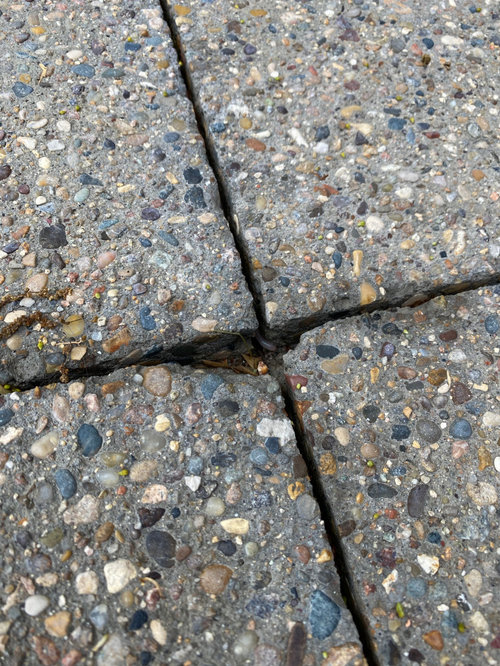
    Skid loaders across what appears to be 2 1/2" thick concrete? Placing adjacent specialty concrete on different days? Hillbillies. Clueless Hillbillies.

  • 6 years ago

    Well, until I saw the asphalt, I was leaning towards re do.

    There are economical cosmetic fixes.


    What kind of money is involved, what about the asphalt?

  • 6 years ago

    Way too much!!! The same subs poured a new concrete floor and polished and sealed it and that is a disaster too. I am not happy with the transition from asphalt to concrete but our designer thought it would look ok and we believed him. I would like them to cut back the asphalt, tear out the concrete, repour it and then fill in and CAREFULLY edge the asphalt at the transition. But would the exposed agg concrete be likely to crumble at the intersection of control joints again?? At the very least, all of the concrete would be the same height.. The subs want to expose more aggregate on the concrete that was poured to first to better match the 2 squares they had to add...but the crumbled joints would not be fixed. Why can't we just go back in time and hire someone else?? 😰

  • 6 years ago

    Yes. They seem to be complete morons. But expensive morons. If it weren't so expensive and stressful it would be laughable!! If we would have hired a better builder rather than a design/build place (we completely designed it!!) the money we saved would have paid for concrete all the way to the street (poured by someone else of course). The new garage in front and the attached garage transformation (turned into a home office with bathroom) cost $400,000. In Iowa. The cost just kept increasing once we started.

  • 6 years ago

    I think you have design issues...maybe that is why you are concerned about some cosmetics.

    Are your concerns borne out of frustration, or are there functional issues?

  • 6 years ago

    My concern is the integrity of the concrete and whether or not it should be repoured. I am not happy with the asphalt/concrete transition, but if it were a clean line, I think it would be fine once we have plants to divert attention away from those lines. I am not happy with the crumbling and holes in the junctions of the joints and wonder if this could be avoided if repoured? Did those things happen because it wasn't cut properly? Or mixed properly?

  • 6 years ago

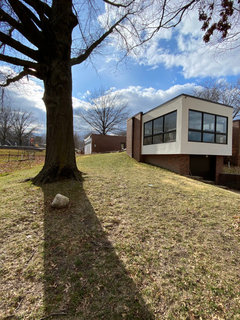
    DavidR Yeah it is definitely distinct! More international or even brutalist in style than traditional midcentury modern, but we love it. The neighborhood has many distinct midcentury homes - even a Neutra three houses away! Before the remodel the bank of windows on the front was a garage door - I want to install a wall or minimal fence in front of those windows to replicate the original intent of the house, but I wasn't able to make my case strongly enough right now, and what I wanted to build would have been costly.

  • PRO
    6 years ago

    You read my comment about waiting 30 days to cut ...?

    Melissa A thanked Yardvaark
  • 6 years ago


    You can see the new garage in progress in the background of the photo (but front of the house). The space between the house and the new garage will soon be an enclosed courtyard, but the thermory is on backorder - thanks coronavirus!)


  • 6 years ago

    Yardvaark yes!! Why oh why didn't they know that?! They are supposed to be the experts, and really good ones at that. They waited less than 24 hours. Do you have an article or anything that I can show my GC in our meeting tomorrow? I love your idea of having the concrete in a large rectange!! I considered that but wasn't sure.. Ultimately the house is the focal point, not the drive, so that is what is most important so your recommendation makes complete sense. Thank you!! And the waiting to cut....

  • PRO
    6 years ago

    It's a handsome and unusual home. Hopefully, there's lots of nice things in it that can distract one from the problems of the front concrete.

    Melissa A thanked Yardvaark
  • 6 years ago

    Yardvaark yes but curb appeal is important! I definitely want them to repour, or someone to redo it. Do you have any reference for the waiting period of 30 days before cutting control joints? How do you know that is the case? They seemed to think it was of ultimate importance to do it immediately

  • PRO
    6 years ago

    For me now everything is just general knowledge, acquired somewhere along the way. I couldn't tell you from where anymore than I could produce a medical receipt from 1988. But research concrete curing times. There should be plenty available via Google. Concrete is weakest when it is fresh. You could pound a nail into it with a hammer a few hours after it's set up. But a month later .... no way. Imagine how easy it would be to pick surface rock out of the concrete when it's fresh. That's what the saw blade will do.

    Cutting fresh concrete is going to be much easier for the saw blade, and consequently the operator. But it's much likelier to damage the concrete by pulling off bits near the edge. I don't think a knowledgeable, high quality concrete person is going to saw-cut exposed aggregate until it's sufficiently cured.

    The dilemma of waiting too long to cut control joints is that the concrete can crack from internal stress in the curing process. As a guide, here is a remark from the first web source I explored on the subject: "If the edges of the sawcut ravel, dislodging aggregate, then it's too early to saw. Continue to saw at regular time intervals until the cut edges show only minimal raveling. When this happens, the slab is ready for sawcutting.

    Melissa A thanked Yardvaark