Software
Houzz Logo Print
dean_kent17

Plasterboard - not drywall

6 years ago

I am doing some repair work on my father's house, built (in California) in 1954. The walls appeared to be plaster at first glance, because they are very hard - they don't dent, they either chip or break when something is pounded on or in them.


I had a plaster professional come in, and he said that it is not plaster, but is plasterboard. I asked him if that meant drywall, as I have some experience working with that and this seemed different. He said that no, it is not drywall, but 'actual plasterboard'. He suggested just using drywall joint compound to fix small holes and cracks, as there is no separation from any walls or ceiling. He demonstrated to me the superiority of the material over drywall by pointing out a spot on the other side of the bathroom where moisture had leaked through. The hardwood floor was damaged from rot, but the wall was only discolored. He pounded his fist on it and said drywall would have just rotted and crumbled, but plaster is more water resistant and so we didn't need to worry about the discoloration - just paint over it.


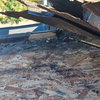
I tried doing research on this, and virtually every article I have found say that drywall, gyprock and plasterboard are all the same thing. So I started questioning this guy's claims, but found a small sheet of the material up in the attic when we had the insulation removed. It is indeed 1/2 inch thick plaster with brown paper on both sides. I know it is plaster because it doesn't scratch or crumble when a nail is dragged across it, and it is very heavy - even at the scored/snapped edges. But it is wrapped exactly like drywall (top/bottom paper edges are closed, while side edges reveal the plaster in between).


Is this material available anymore? I love the fact that the walls are so resistant to dents and scratches. It's more difficult to hang pictures, as nails and screws are not easily driven through, but it just feels more solid (as I imagine a 'true' plaster wall might).


Feedback/suggestions? I'd had to have to use standard drywall for areas that need any replacement in the future.

Comments (5)

  • 6 years ago

    Not available any longer and has not been for a long time. Patch, repair and use current drywall in new areas.

  • 6 years ago

    My sister and BIL bought a house a few years ago that was built in the 1950s. It had that sheetrock with what appears to be a layer of cement on the interior walls. I guess it's not real common. When builders were transitioning from plaster/lathe this stuff came out because the builders were not sold on the thin flimsy sheetrock. One of my friends houses the builders did double drywall everywhere. My BIL did a small amount out remodeling on the house, partial removal of one wall and installing additional outlets ect. and had a heck of a time.

    https://www.doityourself.com/forum/patching-plastering/563402-strange-wall-composition-my-1950s-house-nj-plaster-concrete-gypsum.html

  • 6 years ago

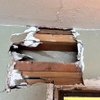
    I found out what it is today. An electrician came in to install some can lighting in the ceiling, and I looked at the cutout. The backing is the plasterboard I mentioned - it is harder than today's drywall. On top is a 1/2 inch coating of plaster, with a thin veneer on top of white plaster. What I guess they call 'rock lath'.


    Thanks all. I can figure it out from here.

  • 6 years ago
    last modified: 6 years ago

    That type of wall construction is plaster over rocklath, and I have it in my circa 1940 house

    Rocklath looks a lot like drywall, but was used in place of wooden lath for the first layer on the wall. I believe the outer coating of the rocklath is much more water permeable than drywall paper, to allow the plaster to adhere, but otherwise a lot like drywall. It is usually nailed on in 4'x4' sheets, and then there are two layers of plaster over it. The final wall thickness in my house is about 1" on top of the 2x4 framing.

    Bruce

  • 6 years ago

    OP that's very common where I am (Boston), so as to better match (v. drywall, which is very flat unlike plaster) 90+ year old homes' wood lath-plaster. No one installs (or it would be $$$$ to do so) wood lath plaster. Its all blueboard with a thin layer of plaster over the entire surface. No taping, no tape marks, very nice look. Let it dry out, then prime and paint. Better for sound insulation v. drywall. Harder to find studs in walls though.

    Better explanation from wiki:

    "Full coat interior plaster begins with a base. A hundred years ago it was wood lath, brick, or clay tile. Thirty years ago it might have been rock lath (a 3/8” x 16” x 48” sheet that looks a little like drywall), metal lath, block or tile. Today it is mostly metal lath or 1/2”- 5/8” gypsum base (also called blue board), similar to drywall but with a special type of paper to ensure a good bond.
    Next a scratch coat (made of gypsum plaster and sand) “keys” into the base and stiffens it for the subsequent coats. It is very rough so that the next coat can get a good bond."

Sponsored
AIS Renovations
Average rating: 4.5 out of 5 stars15 Reviews
Custom Craftsmanship & Construction Solutions in Franklin County, Ohio