Software
Houzz Logo Print
webuser_957614888

Grass identification and guidance (TTTF and KBG?)

6 years ago

I would sure appreciate some guidance.
I’ve a 6 month old 6,000sq ft lawn in New York that my lawn contractor graded and seeded. Trying to figure out a few issues.
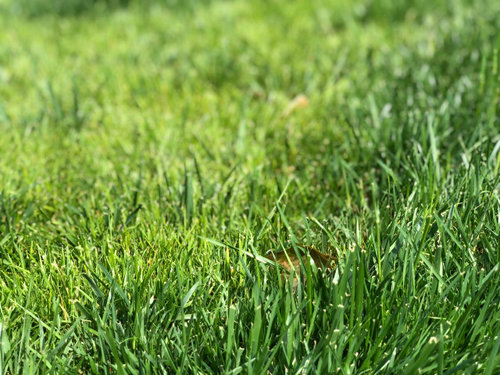
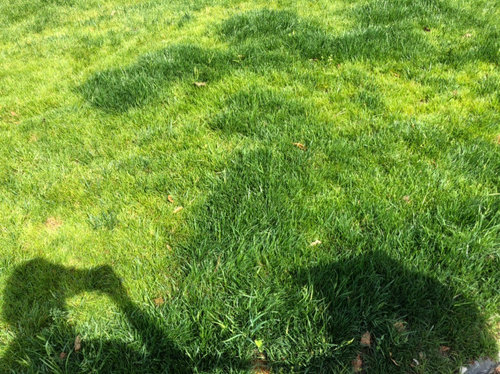
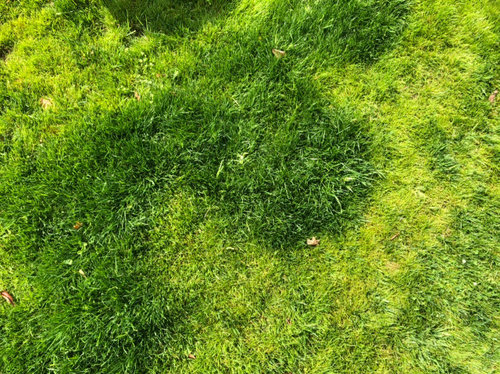
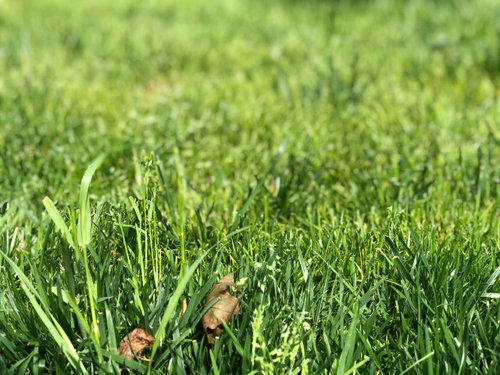
1/ Out front in full sun there are patches of lime green grass and longer dark green grass about an inch taller - photos are taken after a week of no mowing. Is this TTTF and KBG respectively? Obviously looking for uniformity so I need to resolve the patchiness which I hope to do by overseeding with one or the other. I believe the back yard which is partly shaded is mostly TTTF.
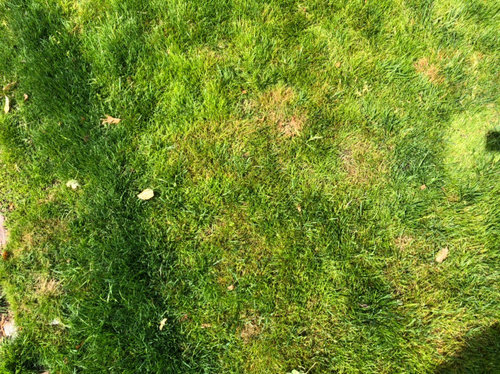
2/ There are a few brown patches tinged with red. Any pointers here?
FYI, I applied Tenacity a week ago and Milorganite a couple days ago.
Many thanks team.


Comments (5)

  • 6 years ago

    There’s no sharp up close detail of the lime green grass in the sunny photos. Is that PA w/o seed heads? Where did morpheus go to? He’ll know.

    Matthew Lynch thanked rifis (zone 6b-7a NJ)
  • 6 years ago

    Morph will be irregular in the future but yes, that does look like a bit of PA. Other than that, I'm thinking a standard tri-mix (so Kentucky bluegrass and fescue with maybe some rye remaining).


    Good on the Tenacity and Milo, that would actually have been my exact advice here. The Tenacity is going to turn the PA white in another week or so. It's not going to kill it, but it's going to weaken it. Another shot will likely be necessary around the third week of June, which...still won't kill it. But what it's going to do is weaken it even further and whiten it even more, tapping the roots of carbohydrates horribly just before the most draining and terrible time of year hits: high summer. The PA won't survive that.


    Plan on reseeding those spots in August, with a third application of Tenacity at seeding time (this will be one year where you push the top of the allowable amount) to kill out any few remaining strands of PA you have (they'll spread explosively) and also suppress sprout of PA seeds when you seed the grass.


    This wasn't really your contractor's fault, per se, as this stuff happens in oddball seedings.


    Matthew Lynch thanked User
  • 6 years ago

    Thank you indeed @User. Will take your advice on Milo application program (I thought PA only came out toward the end of summer).

    Might you be able to identify the darkest green grass? Here’s another photo for reference. Greatly appreciated.


  • 6 years ago

    PA actually sprouts in fall, winters over easily, and can make it through summer if summers are easy (in New York, they often are. Here in Pennsylvania, frequently. Further south or harsher sections of Zone 7A, not so much).


    The deepest greens there in the front of the shot look like a rough fescue offhand. And in this shot, some of the lime greens are definitely a fescue and won't be killed by the Tenacity; they're not PA.


    (I have a vast problem identifying grasses even on my ginormous monitor; my vision is terrible and usually leave the issue to others; I jumped to a conclusion I probably shouldn't've due to the chartreuse color above).


    They're simply not very well-matched seed, or it hasn't matured in well enough yet to color match, or there's a resource mismatch at this point.


    The first seems unlikely. Even the poorest seed matches better than this.


    That a November/December planted lawn looks bad is not at all surprising; some of that seed didn't sprout until April if it sprouted at all. The lawn should have been planted in August or September. And of them all, fescues are the ones that will play Johnny Jump-Up and mature the fastest.


    If you find the Milo and time don't solve this issue, and the Tenacity doesn't turn this white (meaning it's not in one of the alternate Poa species like annua or trivialis), you may want to think of killing out the mess and reseeding in August. Tedious, yep. Annoying? Oh, heck yes. The only way to get a consistent, decent lawn? Alas...yes.


    With a new home, you needn't do it this year. Ride it a year if you want and tackle it in July of 2021 with the kill-out and reseed in August of 2021.


    But that's cart before horse. Let the Milo work and, if things are improving, you can even jump the gun and apply it again around June 20th if you want (with a new lawn, this is the one time you can hit it harder). Feeding well, and organically, will move things along without forcing the issue too much. I'll also give my seal of approval to Purely Organic Lawn Food at this point (10-0-2). I used it to great effect myself this year when I had to have it delivered and couldn't get Milo or soybean meal and was stuck behind glass avoiding Captain Trips.


    At the moment, I have about six if-then-else paths in my head about this lawn...

    Matthew Lynch thanked User
  • 6 years ago

    Sage advice @User. My thanks again. Based on the variability of possible causes, I’ll first wait for the Milo to reveal what’s what. Based on that, I’ll likely hit it again with Milo and evaluate further steps - be that overseeding, balancing the soil, and/or ripping out the mess.

0
Sponsored
Peabody Landscape Group
Average rating: 3.5 out of 5 stars8 Reviews
Franklin County's Reliable Landscape Design & Contracting