Software
Houzz Logo Print
emilya_stroman

Raspberry glow mountain laurel looks sad...

6 years ago
Hi everyone!


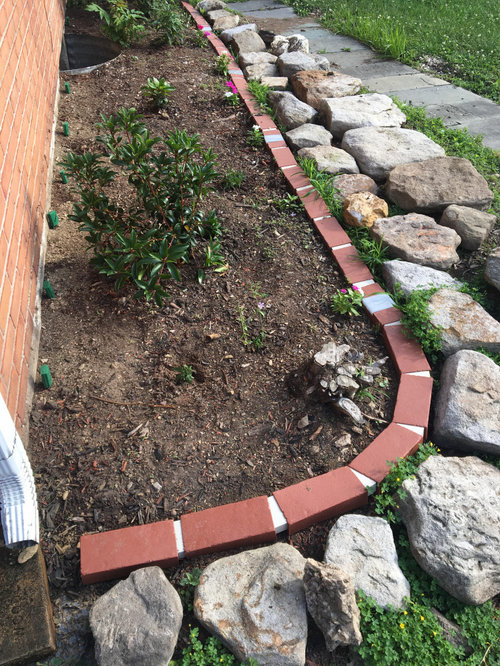
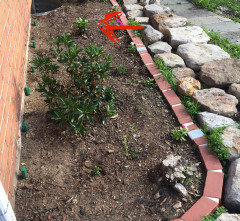
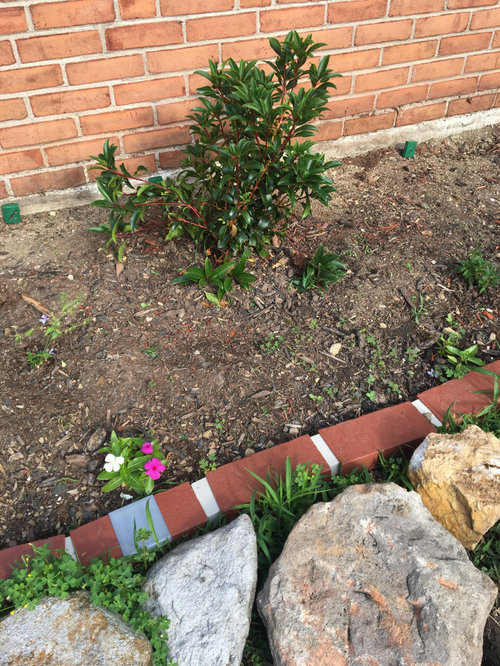
I got a raspberry glow mountain laurel a month or so ago. Parts of it are quite droopy and I'm not sure what to do for it. It doesn't look unhealthy otherwise to my untrained eye, so I am not sure if it just needs support being a young plant.


On a related note, can someone who has one of these tell me how tall yours got? I see a lot of conflicting information. When I bought it I was expecting no larger than 5'. I'll have to relocate it if it's expected to get bigger than that.


(Ignore the massive stones. They're for another project)


Comments (24)

  • 6 years ago

    I think Ken may be right on the heat solution. Even in my climate PNW, my kalmias do not like full sun or heat. I treat them like a rhododendron. Do you have a more shaded spot for yours? I do love them....

  • 6 years ago

    What Kalmia really likes is dampness, as in beside a pond - in addition to the heat off the wall yours may not do well in the dry soil near a building foundation.

  • 6 years ago

    Thank you guys for your answers. Sounds like I should rethink the placement entirely and put this poor guy somewhere he has a chance to thrive. I’m in zone 6A and live backed up to a creek so was hoping moisture in the air would keep it happy. I’m very inexperienced so am learning as I go along.

  • 6 years ago

    i failed at this plant once .. and have some vague recollection.. that it might have some pH needs in the soil ....


    anyone????


    yw ...


    ken

  • 6 years ago

    Trust your soil is adequately acidic. Like their cousins the rhododendrons, this is an ericaceous plant that wants moist, acidic soil (pH of 6.0 or less) to do well. Planting too close to a concrete foundation or sidewalk can have an adverse effect re: pH in addition to the reflected heat it might generate. Also not happy in too much sun.....would prefer some protection (shade) from afternoon heat.

  • 6 years ago

    Yikes, the next plant over is... a rhododendron. That one was on the advice of a few landscaping enthusiasts so I guess I can blame them for poor advice.


    Wonder if there’s any modifications/regular care I can provide for these guys to make this location work for them so I don’t have the transplant shock them.


  • 6 years ago

    Much better to use that bed for plants that would do better there against the heat reflecting wall than in your open garden, move the rhododendron and mountain laurel to suitable spots elsewhere on the property.

  • 6 years ago

    That one was on the advice of a few landscaping enthusiasts


    ==>>> at least you didnt call them experts ... lol


    ive enthusiastically killed many plants.. lol ...


    ken

  • 6 years ago

    If you put them there, you will always have to avert your eyes....how about peonies with spring bulbs? Although you may want somehing that stays green all season. Not sure what that would be in your climate...

  • 6 years ago

    one of the key things I’m looking for is something that stays evergreen. I have two rose bushes so wanted as much as possible that keeps its foliage to offset that.


    We had an ant problem so I’m very suspicious about peonies. I’ve got some impatiens out there that look really pretty. I was thinking about adding a nice colorful variety of bulbs throughout as well.

  • 6 years ago

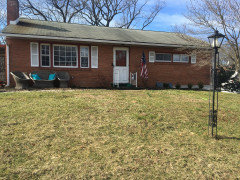
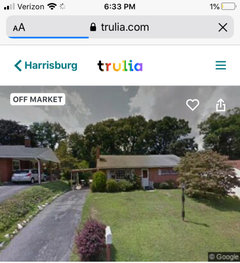
    Where else would you guys recommend placing them on my property? It’s raining out so I can’t get good pics but heres a past photo and the google earth view. Obviously none of the evergreens are there anymore. The barberry bush by the mailbox is also gone. It’s hard to tell from the pic but my front yard is a slope.


  • 6 years ago

    Rhododendrons and Kalmia want afternoon shade. They are woodland plants.

  • 6 years ago
    last modified: 6 years ago

    Planting peonies is never going to cause anybody to have a significant increase in ants. Ants that are already around will certainly come to their buds, but they are not going to move in and make a nest just because some peony buds will be around for a short time.

  • 6 years ago
    last modified: 6 years ago

    I have a Kalmia that gets late afternoon sun -- maybe from about 3:00 to 4:00 on in summer. It's thriving! They also need really good draining soil, as on a slope, and acid soil.

  • 6 years ago

    What do you guys think about relocating the mountain laurel and rhododendron to the top of a slope at the back of my property (backs up to woods and a creek far, far below) and putting some dogwood shrubs in their place? I was reluctant to go with anything that isn't evergreen, but the red twigs seem to be good looking even bare...

  • 6 years ago

    Use that spot for something that would benefit from its presumed warmth - the dogwoods could go anywhere on the property, that the soil is moist. Also I am not sure they would show up that well against the color of the brick.

    If you have access to an independent garden center of some size at this time of the year there should be plenty of shrubs to choose from.

  • 6 years ago

    So to my dismay, it seems like the left front garden bed may just be pretty unplantable. My rose bush is well established, the impatiens are doing well, and the coneflowers are doing outstanding. But the mountain laurel and rhododendron will definitely need to be moved. I also have discovered along the way that my soil is absolutely filled with old root systems that won't come out. Old Google Earth photos confirm that there were huge evergreens there before they got chopped down (some stumps also remain). Add that to the many rocks and poorly draining soil, and I think I should entertain ideas for flower pots, container gardens, etc.


    I will be moving the poor rhododendron and mountain laurel to the back yard asap though... Just need to catch a break with taking care of my 10 month old who doesn't nap...

  • 6 months ago

    How did this end up doing ? I just found one for sale locally

  • 6 months ago
    last modified: 6 months ago

    James - if you click on a user's profile, then 'activity' and lastly 'posts', you'd have seen Emily hasn't participated here since 2020. It's unlikely she's going to respond.

    There are lots of Kalmias in Philly area gardens. As long as they have well drained, acid soil, they will be fine. It's not an apples to apples comparison because there are only 2 commonly cultivated Kalmias species and there are at least 20 rhody species that contributed to current cultivars, but overall as a genus, I'd say they are tougher than most rhododendrons.

    A great ecological mystery to me is how the Elk Neck Peninsula here in Cecil County, which was once close to 100% farmland, came to have many Kalmias as it reforested. Were the seeds just there in the soil seed bank, or was there a "Johnny Laurelseed" who assistive-migrated them? At any rate they are seen there in great number, on exposures from almost full sun to deep shade. Sadly in recent years, invasive Celastrus vines are strangling a lot of the once almost pure stands of them. Of course nobody is doing anything about it.

  • 6 months ago

    James, how does it look? I used to hang out with people who were into kalmias once upon a time. Their experience was that this wasn't a plant you wanted to buy on sale. You had to start with good, healthy stock to have success, and frankly, the things aren't cheap. Someday I need to get my hands on some seed, and see what I can do with them

    Reading over this thread, I can't help thinking about how surprised certain plants would be if they could read what humans write about them. Around here (OK, a bit south and west of here) wild kalmia grows in full sun on rock faces.

  • 6 months ago

    I do have quite a few in my neighborhood. One in full sun across the street is real impressive. The others throughout the neighborhood are there but not thriving. I was more curious about this cultivar.

  • 6 months ago
    last modified: 6 months ago

    " You had to start with good, healthy stock to have success, and frankly, the things aren't cheap. "

    FWIW, in case some people don't know, it's because they either have to be grafted or micro-propagated. They just won't root from cuttings. (Of course, cutting grown rhododendrons aren't cheap these days, either!) You wouldn't think micro-propagation was expensive anymore, and I don't think it is, but maybe since they are such a niche product, the economies of scale aren't as favorable as rhododendrons. In about 2015, manager Ron at Rarefind told me that even for a nursery their size (surely, the erstwhile second largest mail order nursery on the east coast, after Plant Delights) Briggs nursery would not do exclusive run of micro-propagation for them. If the did a batch, they had to allow Briggs to also sell that Rhododendron cultivar as liners, themselves.

  • 6 months ago

    I transplanted a dozen mid-size mountain laurels while in mountainous and shady VA woods, and they all survived, but didn't grow very much afterwards (they prb'ly didn't grow fast before I did it). Very shallow rooted in the rocky soil. My point is that the OP's first pic is a spot I'd think problematic for them facing a very warm brick wall on one side, unless it's a north-facing wall.


    I also transplanted prb'ly 8 or so rather large Rhododendron maximums -- all survived except one. One was near 10 ft tall and about broke my back hauling it uphill to my house.

Sponsored
Peabody Landscape Group
Average rating: 3.5 out of 5 stars8 Reviews
Franklin County's Reliable Landscape Design & Contracting