Software
Houzz Logo Print
shianne_burks

Fiddle leaf fig problem

6 years ago

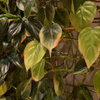
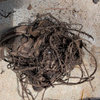
Hi! I need help with my fiddle leaf fig, I’m not sure what is causing this, root rot maybe? I only water my plant about once every 2 weeks and it gets a thorough watering. I also just had it out in the sun and made sure to water it well after that. it seems like the the leaves are turning a purple brown and you can distinctly see the cells Yet I’ve only had one leaf turn brown and a couple get tiny spots on them. What can I do/what is this?


Comments (3)

  • 6 years ago
    last modified: 6 years ago

    Many things affect a plant's vitality (health). Culturally, plants have a sweet spot for light levels, temperature, the level of every nutrient in the soil, how much air and water the soil holds, humidity, ad infinitum. The farther away from the sweet spot these conditions are, actually, the greater the degree of stress on the plant. Stress is a measure of how well the plant is able to deal with the cultural hand it's dealt by the grower. When stressful conditions get to the point the plant is using more energy than it's producing (by using the sun's energy to create its own food - sugar/carbohydrate) stress turns to strain, and strain is an untenable condition. Your plant is stressed and not all that far from slipping into strain. Not a particularly big deal unless there's no intervention to at least relieve some of the severity of the limitation.

    Unfortunately, there isn't enough information to allow us to pinpoint what the limitations are, but since 90% of the problems we see here are related to root health, that's a good place to start looking.Does the pot have a drain hole? If not, that's very likely the problem or an amplifier of another problem, over-watering. If it does have a drain hole, we can probably get the plant back on a healthy path without much trouble.We'll need to know, so I'll watch for your answer. Also, this piece about Growing Ficus in Containers should prove to be very helpful.

    Al

  • 6 years ago

    Thank you, that’s was very informative! My pit does have a drain hole! I mist and wipe the leaves and do not water until the soil is almost-dried out. The weird part is that the coloration on the larger leaves is only one sided, the other sides look healthy! I may look into changing the soil although I got a soil which was either for indoor plants or for plants including succulents (since they don’t require much water either.)

  • 6 years ago

    When you read the piece about caring for Ficus in pots, you'll see I'm a strong proponent of fully repotting Ficus every 2-3 years. Root congestion becomes limiting at the approximate point in time when the root/soil mass can be lifted from the pot intact. From there forward, the limitations get progressively worse, and potting up into a larger pot relieves the limitations only partially and for a shorter time. If you intend to be more than a laissez faire (things will be as they will be) you'll eventually want to learn more about soils and repotting. The piece I linked you to touches on both, but doesn't go into a great deal of detail.

    My advice would be to start using a "tell" to 'tell' you when it's time to water. It's much more reliable than a finger or moisture meter. Watering and making sure there is enough water but not so much it limits the roots' oxygen supply (O2 drives root function) is probably the most important part of container growing that doesn't occur passively - like light. I'll leave you something about using a tell at the end of my comments.


    So, how you water is very important. Water over the sink, slowly, to make sure you're saturating the entire root mass. Using the spray thing on low flow is great. You'll want to apply enough water to saturate the soil, and at least 25% of the total volume of water you applied exits the drain. When you're done watering, you can wait for the pot to drain for a while, or, you can immediately do this: Hold the pot over the sink, lawn, ...... and move it downward, then sharply reverse the direction to upward. You'll immediately note that a good measure of 'excess' water will “continue downward in a straight line” and exit the drain hole. The sharper the reversal of direction, the more water exits the drain hole. When you have repeated the exercise until water no longer exits the drain hole on the reversal of direction, you will have eliminated all excess water and your plants will regard you with a newfound sense of awe.


    Under conventional container culture, it's a given that saturated/partially saturated media rob roots of the oxygen they need to function normally and efficiently. At best, soil saturation robs your plants of immense measure of potential in areas like growth, appearance, yields, ….. At worst, plants unable to cope with the strain of drought stress caused by saturated media will succumb to it. This isn't a 'scare tactic, it's a very simple and straightforward observation that will be difficult to disagree with a straight face.


    Newton's First Law of Motion states that an object will remain either at rest, or in motion at a uniform rate and in a straight line unless acted upon by an external offsetting force. In this case, we will designate the 'object' as excess water in your potting medium. At risk of my being redundant, the 'law' can be seen as a simple statement about inertia, that objects will remain in motion and in a straight line unless a force acts to change the motion. To put the law to work for you/your plantings, you should water to beyond the point of total soil saturation - so the medium has been completely saturated and at least 15-20% of the water you have applied has exited the pot. Unless your soil is purposefully constructed to eliminate all/nearly all excess water, it's extremely probable, when the pot has stopped draining, there will be too much water in the potting medium for the plants' liking.


    When you next see new growth occurring, it's time to fertilize. My suggestion is to use Foliage-Pro 9-3-6 fertilizer, and fertilize every 3rd or 4th time you water. To keep track if you're watering everything at different intervals, drop a marble or button in the pot when you water. When you are watering the 4th time, remove the objects, fertilize, and start the cycle again.


    The more light you provide, the more potential your tree will realize.


    Using a 'tell'

    Over-watering saps vitality and is one of the most common plant assassins, so learning to avoid it is worth the small effort. Plants make and store their own energy source – photosynthate - (sugar/glucose). Functioning roots need energy to drive their metabolic processes, and in order to get it, they use oxygen to burn (oxidize) their food. From this, we can see that terrestrial plants need plenty of air (oxygen) in the soil to drive root function. Many off-the-shelf soils hold too much water and not enough air to support the kind of root health most growers would like to see; and, a healthy root system is a prerequisite to a healthy plant.

    Watering in small sips leads to avoid over-watering leads to a residual build-up of dissolved solids (salts) in the soil from tapwater and fertilizer solutions, which limits a plant's ability to absorb water – so watering in sips simply moves us to the other horn of a dilemma. It creates another problem that requires resolution. Better, would be to simply adopt a soil that drains well enough to allow watering to beyond the saturation point, so we're flushing the soil of accumulating dissolved solids whenever we water; this, w/o the plant being forced to pay a tax in the form of reduced vitality, due to prolong periods of soil saturation. Sometimes, though, that's not a course we can immediately steer, which makes controlling how often we water a very important factor.

    In many cases, we can judge whether or not a planting needs watering by hefting the pot. This is especially true if the pot is made from light material, like plastic, but doesn't work (as) well when the pot is made from heavier material, like clay, or when the size/weight of the pot precludes grabbing it with one hand to judge its weight and gauge the need for water.

    Fingers stuck an inch or two into the soil work ok for shallow pots, but not for deep pots. Deep pots might have 3 or more inches of soil that feels totally dry, while the lower several inches of the soil is 100% saturated. Obviously, the lack of oxygen in the root zone situation can wreak havoc with root health and cause the loss of a very notable measure of your plant's potential. Inexpensive watering meters don't even measure moisture levels, they measure electrical conductivity. Clean the tip and insert it into a cup of distilled water and witness the fact it reads 'DRY'.

    One of the most reliable methods of checking a planting's need for water is using a 'tell'. You can use a bamboo skewer in a pinch, but a wooden dowel rod of about 5/16” (75-85mm) would work better. They usually come 48” (120cm) long and can usually be cut in half and serve as a pair. Sharpen all 4 ends in a pencil sharpener and slightly blunt the tip so it's about the diameter of the head on a straight pin. Push the wooden tell deep into the soil. Don't worry, it won't harm the root system. If the plant is quite root-bound, you might need to try several places until you find one where you can push it all the way to the pot's bottom. Leave it a few seconds, then withdraw it and inspect the tip for moisture. For most plantings, withhold water until the tell comes out dry or nearly so. If you see signs of wilting, adjust the interval between waterings so drought stress isn't a recurring issue. Open shade, dappled shade, and morning (til 10AM) and evening (after 6PM) would be great. When your plant is outdoors, the wind causes the tree to move more water through the nutrient stream so it doesn't wilt. Nutrients are dissolved in that water. So the transport vasculature gets bigger and more nutrients get delivered. That, combined with the extra light getting inside the canopy perimeter stimulates back-budding, which is highly desirable.


    Questions?


    Al