Software
Houzz Logo Print
dmoore66_gw

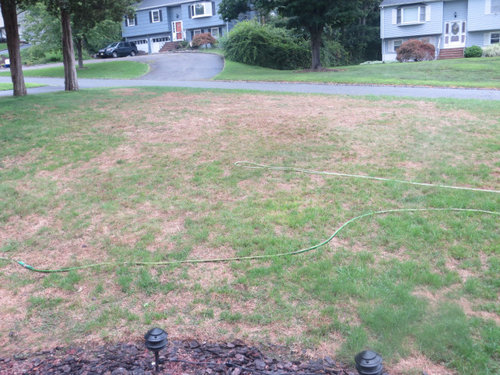
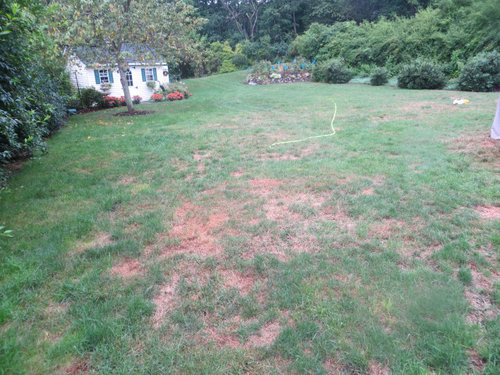
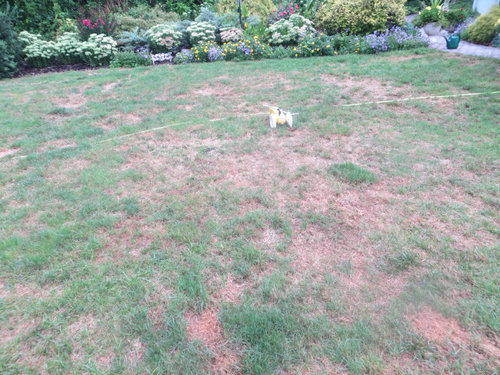
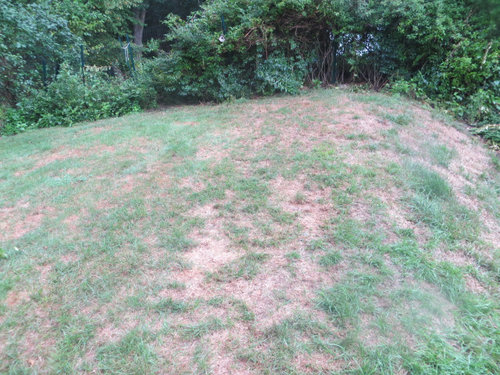
Could this be something other than drought damage

We had a very hot month of July with no rain and my lawn went from beautiful to brown. I have been treating this as drought damage and have started to aerate, seed, fertilize and water. I have been doing this for a couple of weeks and I don't see much recovery.

Now I'm wondering if this damage is from something other than drought, perhaps bugs or fungus.

What do you think?


Comments (9)

  • 6 years ago
    last modified: 6 years ago

    A drought stricken lawn that was otherwise healthy needs only water and time. Certainly no ferts. It went dormant and it will be a while before it wakes up again.

    tj

  • 6 years ago

    Maybe that's why it is getting worse.

  • 6 years ago

    do the peeps across the street water the lawn ... they look pretty good... ask them how much.. and how long.. etc .... if they dont.. then water might not be your issue ...


    im on glacial sand to 5 feet ... this is what my lawn looks like starting in mid july thru sept ... in my MI ..... and when night temps fall into the 50s in a few weeks ... and we get some fall rain.. it pops right back ...


    upside ... no mowing.. lol ..


    downside ... its ugly ... who cares.. i dont have to mow ...


    you could dig out a small patch.. and see if you have grubs ...


    ken

    David Moore zone 6a nw new jersey thanked ken_adrian Adrian MI cold Z5
  • 6 years ago

    It looks like drought and not much else. Water and time. It didn't need aeration (which did damage it can't recover from) or seed, which is going to compete with the old lawn. But what's done is done there.

    Most lawns (my own included this year) won't return until temperatures cool. They "know" what the weather is like and soils that dry out too quickly and soil temperatures that are too warm won't foster returning grasses. In nature, that would spell disaster if the rains stop again, as they normally would in grass' native environment.

    So it can be a while. I don't expect my blasted areas to return until September when temperatures drop even though it's rained a ton in the last few weeks. Areas that were only stressed are already moving into fall performance mode.


    In the future, don't fertilize either (unless it's with an organic, in which case do whatever you want in mid-August). The lawn doesn't want to be kicked in the butt right now, it wants to awaken gently. Fertilize on Labor Day if the lawn is awake, or half rate if parts of it are and parts are not. If large sections are not, skip those. Ferts there will just wash through into the water table.

    If you feel you must fertilize, as I said above, use an organic in mid-August. Soybean meal, Milorganite, something else off the shelf, whatever. Those are fine, much gentler, and won't kick your lawn in the butt the way a synthetic will. They'll release their nitrogen very slowly over a few months.


    Also in the future, mow the lawn as long as you can stand it. Longer lawns have longer roots, and last longer in dry spells. They also grow slower and need mowing a bit less often. I set mine at 3.5". It can go about 2 weeks without rainfall before doing something dire but really doesn't look good by that point.

    David Moore zone 6a nw new jersey thanked User
  • 6 years ago

    I am getting good germination but I can't keep up the watering every day for two more weeks on 3/4 of an acre. I'm spending most of the day out in the hot sun and I'm 80 years old. No rain in forecast for the rest of the month.

    I really screwed up this time.

  • 6 years ago

    the neighbors lawn across the street is 100% weeds

  • 6 years ago
    last modified: 6 years ago

    That's easy. Stop watering, let the new lawn up'n'die. The old stuff will come back, catch as catch can.

    The damage done by the aeration, if you aerated to the normal standard, is modest. Double or triple aeration would have been a problem, but you probably didn't do that; the soil would have looked like a minefield. After the explosions.

    Most of the fertilization on the fully dormant sections washed through already with the watering and didn't do any damage to the sleeping roots. It hit the water table (a kind of nasty-gram to Mother Nature), but again, a done deal at this point and there's nothing you can do about it. It stressed the greener grass quite a lot, but you already watered it through that so we're clear.

    The existing green grasses might take a hit if left to go dormant again. Dormancy is definitely not something that can be easily done twice a season. It costs a massive amount of energy, and doing it twice can and will kill grass.

    So let's come up with a realistic game plan that you can handle.

    1) Stop watering now.

    2) If nature doesn't do it, water again in, say, a week. Our target here is to keep the existing lawn alive until rainfall resumes, so give it a good, long drink. Normally, the target would be a full inch of water but...I'm going to just say water it as deeply as you can. This will also encourage those deeply dormant areas to begin waking up, and the deeper you can water, the better they'll be encouraged to awaken. Shallow watering doesn't really wake them up much. Those deep, water-seeking roots have to get wet and stay wet.

    3) Continue to water weekly until temperatures cool or rainfall resumes, which is probably going to be mid-September at worst. Around this time, the dormant grasses should also be coming back to life if they haven't already.

    4) You already fed, so let's skip the normal early September feeding. Feed instead around September 15 when the lawn is waking up. At that point, temperatures are cooler, the lawn is up, there's more water, and it's definitely time as fall is coming on. Even if areas are dormant, we're good to go--but I'd recommend using Milorganite if you can handle the weight. Because that's a lot of Milo over three quarters of an acre. If not, ignore me and just use a synthetic.

    5) Feed again around November first. It sounds odd, but after a season like this, a good-night "midnight snack" is going to really help with winter survival and, in your area (not so far from my area) will keep the lawn greener or downright green if we have a winter like last winter.

    If that works, great. If not, cut any part of it that doesn't work for you. But I think the lawn will recover, for the most part, even if you take a hands-off approach right now. The watering you did will really help and washed out most of the fertilizer, which was the most severe mistake.

    David Moore zone 6a nw new jersey thanked User
  • 6 years ago

    Here in Long Beach California our St. Augustine and other grasses that spread by runners died from a terminal fungus called "take all root rot". It has a long scientific fungal name but it is spreading from the east coast. I laid out flats of grass twice and both died in a matter of weeks. I ended up getting artificial turf with a weaved cloth backing and the dogs love it and it doesn't smell. And, I don't have to cut it!