Software
Houzz Logo Print
will_eaton

St. Augustine grass troubles

6 years ago
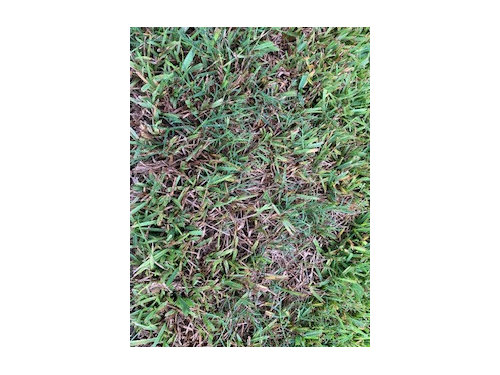
Every year I have trouble in the summer with my St. Augustine grass. I live in southwest Florida. I have used Lesco Fertilizer Plus Insecticide and Ortho Home Defense and nothing seems to help. Suggestions?


Comments (4)

  • 6 years ago

    I'm not sure why but when I click to enlarge those pictures, they appear smaller. Can you get down about 6 inches from the problem spot and take another picture? Also maybe put the camera on a higher quality setting?

    What is your watering schedule? I think I know the answer, but need you to verify. How often and for how long do you water? Have you gotten much rain recently?

    Would you say you have sandy soil? That might seem like a dumb question, but I've heard about parts of SWFL which have very sturdy soil.

    Do you also have nutgrass in the yard?

    So, what to do? I suggest stopping the use of insecticide unless and until you see pest insects damaging the grass. If you cannot confirm the problem is insects, you are wasting your money, killing the biology in your soil, and leaching pesticides into the water table. Insecticide is the exception to the exception to the exception - definitely NOT the rule. If you want to search for grubs, dig up 1 square foot of soil. You should find fewer than a dozen grubs. If you find an uncountable mass of grubs, THEN use a grubicide or insecticide labeled for grubs.

    In an attempt to restore your soil health, I would recommend applying ordinary corn meal at a rate of 20 pounds per 1,000 square feet. Here is a map to all the feed stores in the Fort Myers area. Call them for availability and cost. Cost should be under $10 (way under) for 50 pounds. If they quote you something like $30, they're talking about a different corn product. You want ordinary, whole ground corn meal. Corn meal is one ingredient in many organic fertilizers. It is very inexpensive and will go a long way to fixing the issues caused by using insecticides. It also has anti fungal properties, which I suspect is your problem. Better pictures would confirm that.

    Will Eaton thanked dchall8 .
  • 6 years ago

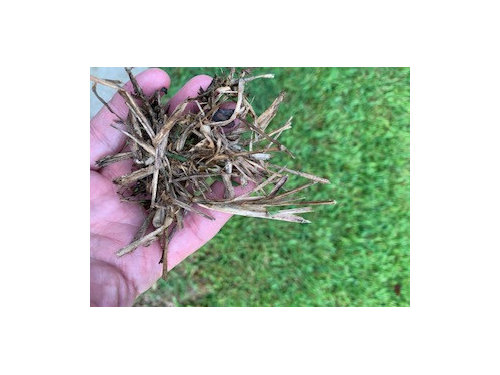
    Please see attached new photos. I looked for grubs and don't see any sign of them. I am in Sarasota and can look up corn meal suppliers. I never heard of that.


    Q - What is your watering schedule?

    A - I have an Orbit B-hyve smart watering irrigation system. It will run when it needs it. However, we have gotten quite a bit of rain, so it hasn't been running often. When the irrigation runs - maybe once per week, it runs for 15 minutes per zone and then runs again for 15 minutes per zone.


    Q -Would you say you have sandy soil?

    A - We absolutely have sandy soil.


    Q -Do you also have nutgrass in the yard?

    A - No


    I will stop the use of insecticide, as you directed. Should I consider putting down an organic fertilizer? The last fertilizer I applied was in April, when I applied Scotts Southern.


  • 6 years ago

    Those pictures are pur-fect. Perfect! You have this year's poster child lawn for disease in St Augustine. "Quite a bit of rain" is likely the cause of the problem.

    New map for feed stores.

    That is the disease I had in my lawn that plagued me for years. The dead patch was about 5 square feet, so pretty small, but persistent. One application of whole ground corn meal and it completely turned around and turned me into an organic lawn care kind of guy. I've used corn meal on disease spots every year since 2002, and never been disappointed.

    There are two causes for that disease, at least two that I recognize. One is too much water and the soil not drying out. My problem spot was a low spot in the yard where all the water drained. The second cause is my wife dropping garden clippings on the grass and leaving them there overnight. One night seems to be all it needs to get going - hence my repeated use of corn meal every year. Apparently St Augustine MUST get airflow to dry the morning dew which would lead to getting that disease.

    Cornmeal works by attracting the Trichoderma (try-koh-DER-muh) fungus during normal decomposition. Trichoderma is a parasitic fungus which parasitizes other fungi. When the corn meal has been fully consumed by the soil microbes, that leaves a large population of Trichoderma which then feed directly on the disease fungus, thus killing it. The process takes about 3 weeks before you suddenly notice the new grass is not getting the disease. Cornmeal is also an ingredient in many organic fertilizers, so you'll get a fertilizer effect from it. For that reason alone I would apply it to the entire lawn at 20 pounds per 1,000 square feet. The first time I tried corn meal my lawn became as dense as cabbage. Nobody was more shocked than I was.

    One last thing about corn meal. There is a college prof in Oregon who has published a list of myths about gardening. One of them is the myth that corn meal is an effective anti fungal agent. All I can say is it works for me and has every year for the past 18 years without exception. I can also say, or suggest, that she's never tried it and never tried it on this disease on St Augustine. Corn meal doesn't cost much to try. I've gotten a lot of positive feedback on it, especially from the St Augustine owners.

  • 6 years ago

    Thank you for taking the time to help me. I hope that I can extend the favor someday.

Sponsored
Haus Studio
Average rating: 4.8 out of 5 stars28 Reviews
Franklin County's Preferred Custom Cabinetry & Design Studio