Software
Houzz Logo Print
paul_griffin4728

Recommendations on Heating Solutions

6 years ago
Hello,


I'm building a new home and looking for the most efficient/cost efficient heating solution. I live in Canada so a northern climate.


The two seemingly most popular heating systems used in my area are hot air heat pumps with ductwork and then electric heat with mini split style heat pumps. There is no natural gas heating solutions available.


I generally don't like the aesthetics of mini splits being out in the open on the wall. So I'm leaning towards a ductwork style heat pump.


Basically looking for the pros/cons of each from your experience. I have heard from a few people they really like their Trane brand systems. My brother has a Daiken and he's finding it a bit more expensive than what he expected.


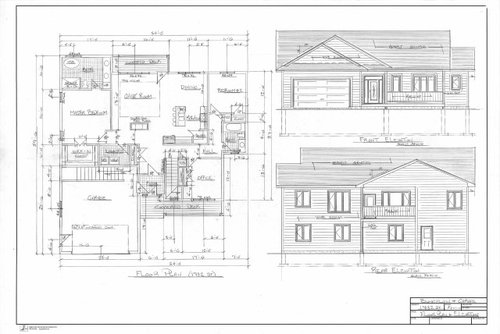
See house plans for the layout its mostly an open concept. I feel like the mini splits would be cheapest but really don't like the sight of them on walls


Thanks for any help.


Comments (12)

  • PRO
    6 years ago

    Not suggesting one over the other, but mini splits don't need to hang on walls.

    There are ducted options and cassette systems mounted within the ceiling.


    Air sealing is also important -- as important as insulating, so consider climate control as more than turning the heat/AC up or down.

  • 6 years ago
    last modified: 6 years ago

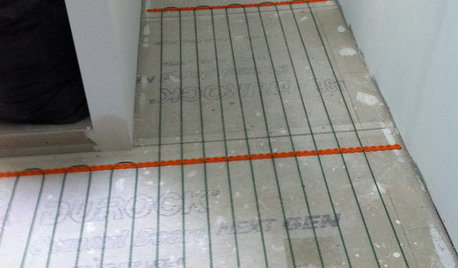
    As you are building a new, energy efficient house in Canada, I would suggest looking into a Cold Climate Air-To-Water heat pump along with hydronic in-floor heating, hydronic air-conditioning & domestic hot water (DHW) production. This is the direction of the most energy efficient and flexible methods of heating and cooling.


    Find contractors in your area that understand this technology, when attending technical seminars this is where the excitement is. Contractors that don’t know much about this are stuck in the past.


    Another possibility would be geothermal Liquid-To-Water hydronic heating and cooling.


    Nordic Air-To-Water Heat Pump


    Nordic Air-To-Water Brochure


    IMPO


    SR

  • 6 years ago

    Most efficient - geothermal

    Most cost effective - minisplits

    You need to find a balance of upfront costs vs ongoing costs.

    The number one most important factor is how tight your house is built and number 2 being how well insulated. The third most important decision is your heating technology.

    If geothermal is not popular in your area, there is usually a reason. In the US, we have a federal tax credit for geothermal. And we still don't do a lot of geothermal.

    While I don't love Carrier for reliability, I believe they still have the best cold weather heat pump performance with the Greenspeed. But Trane also has efficient models.

    You can't shop brands and make generalizations about performance. Which is faster, Tesla or Porsche? It depends - based on specific models.

  • 6 years ago

    If your floor design is choppy and not open, I would forget ductless systems. Geothermal sounds good if you have the type property for the lines and government subsidies. Also knowledgeable installer who will be around to support it when needed. the leader in conventional cold weather heat pump systems seems to be Carrier and Bryant. One has to weigh both the upfront purchase costs and ongoing operating costs.


    TD


  • 6 years ago
    last modified: 6 years ago

    TD - I don't really agree about the closed areas and not doing ductless. A tight house doesn't need all that many heads. The conventional wisdom about how many vents are needed doesn't really make sense in a tight house.

    As the temperature flow to the outside gets really low, the temperature flow from nearby rooms can easily make up for it.

    Our master bedroom is on its own system (ducted mini) and we don't run it in the winter. Body heat and flow from the rest of the house is plenty. Similarly, that unit can keep the whole downstairs cool in the summer. And it is very isolated with closets/hallway etc from the rest of the house.

  • 6 years ago

    For David...an open floor plan works better for ductless mini splits.

    IMO

  • 6 years ago

    Also I just noticed theres a note on my building application for the town that Open Looped ground water heating pumps are not permitted in the town. Is this a gerothermal?


    I'm not sure the reasoning but it may be because there is no water and sewer service in the town. Everyone uses artesian wells and septic systems.

  • 6 years ago

    A ‘ground water open loop’ is for a geothermal system. That it is not allowed is pure ignorance on the part of the level of government restricting it. What the concern is is that you will extract precious water from the aquifer and deplete it - if you ‘Pump & Dump’, as in let the water run out into a stream, lake or worse into a drain. That is legitimate; I would not recommend this even though it might be considered a legitimate method. To me it’s just not responsible enough.


    What ‘should’ be done and perhaps what your local authorities are not aware of is the more responsible way of using open well methods that does not harm the aquifer. This involves drilling 2-wells separated by 80 to 100 feet minimum, one supply well and one return well, returning the water that is pumped through the geothermal heat pump back into the same aquifer. The only transformation that the aquifer ‘sees’ is a possible increase in water temperature of about 5˚F - that’s it, the water quality remains otherwise unchanged as there is no contact with chemicals or any harmful elements. This change of water temperature might be harmful if pumped back into a lake or pond as it might disrupt the balance of fauna or flora of the body of water around the discharge outlet pipe. There is also the possibility that bacterial growth at the end of the pipe will disrupt discharge flow and the environment as well but now we’re getting into the ‘weeds’ so to speak. This is not the case for an aquifer which will very quickly return to its normal ground temperature.


    I have seen installations with multiple well and massive boreholes (several feet in diameter) drilled into aquifers where huge amounts of water were extracted and then returned into the same aquifer with no damage to the environment. One of the advantages of ‘Open Loop’ is that the ground water is cold enough even during the hottest days of summer to provide ‘passive cooling’ where the heat pumps do not have to run their compressors. This reduces the operating & maintenance cost as well as shortening the payback time.


    You could also install a ‘Closed Loop’ ground heat exchanger that is either vertical (drilling required) or horizontal if you have the room - without drilling!


    Hope that helps.


    IMPO


    SR

  • 6 years ago

    There are some amazing ducted heat pump systems that work great in colder climates, even with our crazy Canadian winters.


    Twintech Heating & Cooling

    https://twintechheating.ca/

  • 6 years ago

    Open loop Geothermal in Canada would likely lead to colder water returned to the aquifer the vast majority of the time. Just a small correction.

    And to be fair, do you really want to get your drinking water right next to something like an open loop? I mean, you are absolutely right that it isn't an issue in normal operation. That being said, stuff happens.

  • 6 years ago
    last modified: 6 years ago

    I have seen open loop geothermal used for farms and it makes sense for some applications. They run the water through to pull heat for the house and then pipe the exit water out to stock tanks and other areas that are used by cattle. Its still well above freezing coming out of the house and it keeps the stock tanks unfrozen in the winter. Not a typical application for a homeowner.

    Bruce

  • 6 years ago

    Re: David Cary


    “Open loop Geothermal in Canada would likely lead to colder water returned to the aquifer the vast majority of the time. Just a small correction.”


    You are correct. The ‘direction’ of the ∆T is dependant on the HP’s seasonal mode of operation. Depth of the well and flow of ground water would make the effect of ∆T on the aquifer negligible in most residential applications.


    “And to be fair, do you really want to get your drinking water right next to something like an open loop? I mean, you are absolutely right that it isn't an issue in normal operation. That being said, stuff happens.”


    Generally domestic potable water would be pumped from the same well as the GSHP supply well. Rejected water should be returned down stream from supply if direction of flow in the aquifer can be determined.


    I would filter potable water from a well so that even if it is drawn from ‘down stream’ it would not be a factor.


    YMMV


    IMPO


    SR