Software
Houzz Logo Print
spectrograph_nc_7b

Rescuing a school soccer field

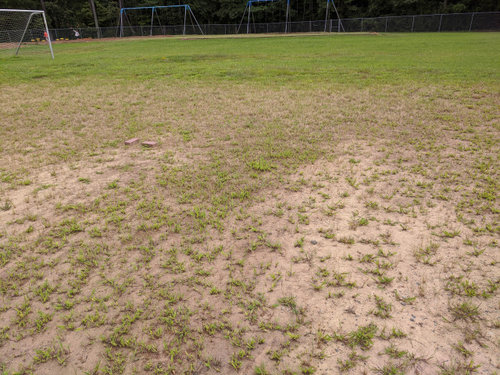
Good afternoon, all. Our childrens' elementary school has a soccer field in rough shape. Now that children will not be on site for likely the next 6-9 months, I'd like to improve it. During the year the students often complain of dust blowing off it, and the teachers restrict access to the entire outside area on dusty days. We'd really like the kids to be able to go outside comfortably every day!!


We are active members of the PTA leadership. We are willing to dedicate our own resources and money to the project, and work with the PTA.


The school is in North Carolina, Piedmont region, zone 7b. It has a reasonable drainage (small slope, no pooling of water), but of course the dirt is extremely hard packed. It gets good sunlight.


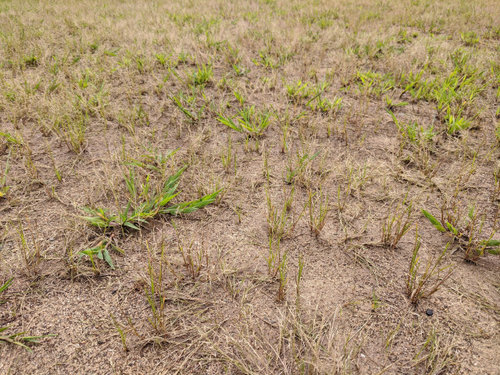
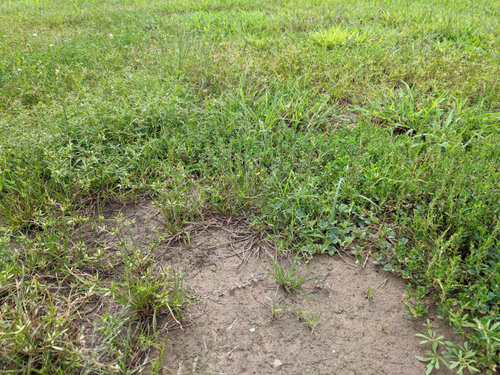
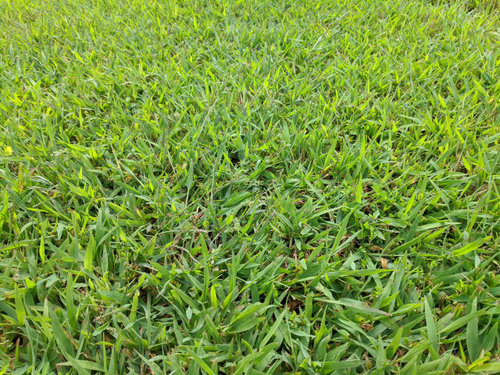
What kind of grass is best for athletic fields in NC? Bermuda or some kind of rye? What are the first actions for rescue? I will get a soil test soon, but from the pictures below I think it needs everything. It is mostly crab grass, sparse weeds and bare dirt.


Comments (16)

  • 6 years ago

    If a sports field specialist doesn't answer this, reply to your own post and I'll give you a more standardized answer as if it were a lawn that had to stand up to very heavy wear and tear. There are ways to do it, but my first instinct is always leading to, "...but you're probably going to have to reseed every year, and that's always going to be exactly at the time the kids come back and want to play on it..."


    Which is why most school fields always look, bluntly, like compacted, dead, dusty crap as above. And although the soil test will certainly help--and I do suggest Logan Labs--depending on the grand total size, a full fix might be prohibitive in terms of cost and time.


    It'll need to be kept after, even if you use bluegrass as part of it for the self-repairing characteristics (southern grasses, some of them, will also do this, but I'm not at all comfortable recommending them in the transition zone for sports fields without somebody far more experienced backing me up on that). Another reason most fields look bad is inappropriate (read: no) feeding, or feeding at the wrong times.


    Another consideration is how are you going to water that? Optimally, it will need to be watered two (minimum) to three (best) times daily while the seed is germinating. Less means reduced levels of germination.


    The third issue is that reseeding time is right now. Literally. Not a month from now, or two weeks from now. Now. For northern lawns (fescue, KBG, rye). For southern lawns (Bermuda, etc,) it's not until next May. So the clock, as they say, is ticking. Or, if you go southern, not even on the calendar yet. Depending.


    Can you renovate late or not following the rules well? Sure, but the resultant is generally that, the following year, the questions that result are, "How do I fill in a really patchy soccer field?" and "How do I get rid of half an acre of severe weeds in our soccer field?"


  • 6 years ago

    There are no traditional turf grasses which do well in the winter time with very high traffic. You would do best to cultivate the grasses and weeds which want to grow. If you were to water, mow, and fertilize as if it were a custom blend of grasses, it would look better than it does.

    Since the area would normally be filled with kids all week, the best time to water would be on the weekend. If you water during the week the soil would be too moist, and the kids would compact it. It would help to keep the kids off of it when it rains and for a day or two after a long rainy spell. Watering is the single most important thing you can do, so just be aware that fixing it once, is not permanent. The soccer field will have to be watered all summer, and at a higher frequency than during the winter.

    Mulch mow the grass at the mower's highest setting every week. Whatever grass tends to grow will do better when mowed high.

    Fertilize in early September, around Thanksgiving, and after school gets out in the spring. If you are concerned about chemicals in the fertilizers, you can use inexpensive organic fertilizers like corn meal or alfalfa pellets or meal.

    So for a plan, start watering it deeply once a week. Deep means 1 inch all at one time. Deep watering grows deeper roots which can withstand more traffic and also take nutrients from deeper in the soil. Measure 1 inch of water using cat food or tuna cans. Time how long it takes to fill all the cans. Be sure to put cans in the problem areas. In the heat of summer you should be watering deeply once a week. As the temps cool off back off on the frequency of watering but maintain the 1 inch rule. Slip to once every 2 weeks, then every 3 weeks, and then monthly during the winter.

    Get ready to fertilize in a week or two. Labor Day is the target, but I'm sure the school maintenance people aren't working over the holiday.

    I would not spend any money on aeration. If you think the soil is compacted, spray a surfactant product on it instead of aeration. The rate for a common surfactant, like shampoo, is 1 gallon per acre or 3 ounces per 1,000 square feet. If you accidentally spray 2 gallons per acre, no problem. It won't hurt anything. Follow up the shampoo with a deep watering. Any clear shampoo will work. I use Baby Shampoo, but anything you find is fine. Dish washing soap is not recommended because it has bactericides in it. You might be buying shampoo at Costco by the gallon. There is no need to purchase in higher bulk, because shampoo has long lasting results in softening hard soil as long as it does not go completely dry for many weeks.

    You might want to consider planting Dutch white clover seed. Once it gets established it helps to keep the soil in good shape and fertilize the grasses.

  • 6 years ago

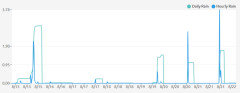
    Rain has not been a problem...


  • 6 years ago

    I'm afraid that's not going to be sufficient for a full seeding; the seed would have dried out on 8/18 and started to die, for example, and there will certainly be many dry days during September, as there always are. During the germination period, it must remain damp at all times for decent germination percentages.


    I usually won't be blunt without being asked (or, as I'm sure many have noted, treated badly), but in this case, I'll make an exception. If you're already planning on relying on exceptionally wet weather through September to bring in a renovation (which is not in the long-range forecast that I'm seeing here in PA)...don't do this. It's a waste of time and money and you'll ultimately end up being both disappointed and looking bad.

  • 6 years ago

    Oh, sorry, I didn't realize that watering schedule was for fresh seed, I thought it was just for rescuing the existing turf.

  • 6 years ago

    Oh, yeah. For rescuing existing turf, August's rainfall so far is more than sufficient. In fact, for both of us, excessive (which means "more than fine."). And with Laura's remnants likely to hit next week in both our areas, probably quite a lot.


    Too much to really work with. I can't feed using it, the nitrogen would wash right through.


    A baby shampoo app would be fine, though, it doesn't require any resting time.


    However, those large blank areas will still be...well, large and blank...after a turf rescue. :-)


    Y'know, I'm kind of wondering about perennial ryegrass. It's easy to work with, pretty durable, does winters well, but would look shabby in summer. In your case, who cares? The stuff's cheap, older cultivars still look good, and it sprouts in seven days. It still has to be watered three times daily for seven days (or very, very well-mulched and watered once to twice).


    If you used Soil Moist Seed Coat, you might be able to get away with once daily watering. And I stress "might." The larger seed there also helps out in holding water.


    On the down side, it has no tillering ability, a finite lifespan, modest wear tolerance (most northern grasses do), and would require reseeding every few years under high-wear conditions.

  • 6 years ago

    Watering new seed is going to be challenging. This is an elementary school and they don't have irrigation, and I won't have the time to go over there three times a week. Hmm.

  • 6 years ago

    Three times a day. A day. Even using Soil Moist and a quarter inch of heavy compost, it would have to be monitored and probably at least spritzed daily. Seed's really sensitive. It dries out, it starts to die. It does it more than once, it really starts to die, and if it goes longer than a few hours, the death rates mount rapidly.


    In nature, if losses are 99.99%, that's fine. There are other years, and other seeds. In the lawn...that's not acceptable.


    Even transplanted sod will require that it stay moist for the first month, without drying out. Although that is more forgiving, can be put in later, and when it's cooler, which can be helpful in terms of establishment. It's also orders of magnitude more expensive.

    Spectrograph (NC 7b) thanked User
  • 5 years ago

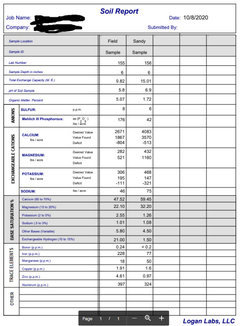
    Good morning! We ended up re-sodding 1/3 of the field. I'd like to work on improving the areas we could not afford to re-sod this year. I sent off two samples to Logan Labs, one in an area with more healthy weeds ("Field"), and one from an area that was barren sandy soil with sparse dying crabgrass ("Sandy"). Thoughts?


  • 5 years ago

    Did...did you sample the area you resodded? If it has soil like the other two, it's probably going to need...help.


    I'm going to think about this for a short period, then get back to you. This soil presents some challenges and some different products in different areas. It's a really split-personality soil that looks like it came from two different areas, and I'm hopeful you can see a distinct split between the two. If not, do the best you can when applying.


    In North Carolina, you still have time this year, and none of these will be harmful to any passing children, animals, parents, or PTA members. Given that the area counts as fallow, I'm going to compress the applications and go well beyond what I normally would allow on a lawn or active field to accelerate the process.

  • 5 years ago
    last modified: 5 years ago

    Haha, yes, they are very distinct areas.

    #1 - The re-sodded area. This was fairly sandy crappy soil with sparse crabgrass hanging on. I didn't have time to sample before the re-sodding. They cleared out existing vegetation and then put down two inches of soil, and then the sod. It's obviously resting on some relatively useless dirt, but it has two decent layers above it, and bermuda ought to do okay.

    #2 - "Field". This came from an area maybe 20' away, and is representative of the middle and left thirds of the field. Dark brown soil, thick weeds. Obviously higher in organic material. I wanted to know pH and nutrient profile before doing anything. This is the area I'm focused on.

    #3 - "Sandy". This came from an area that was not the field, but a worn out portion of grass that had obviously seen high foot traffic and eroded. pH much higher, no organic material. I wasn't really sure if anything could be done here. It had stubby crabgrass spaced around six inches apart that were not thriving.

  • 5 years ago
    last modified: 5 years ago

    OK, I'm going to read "Field" and "Sandy" together. Even "Field" kind of makes my heart ache a bit. :-) In this case, I'm going to make a call I wouldn't normally be comfortable with. If you want to treat the sodded area like "Field," I'll shoot the applications gently enough to do that. Nothing I'm doing here is particularly harsh and the adjustments are within range for what I'd expect for an untreated area in North Carolina adjacent to another untreated area in North Carolina.

    "Sandy" has clearly been ignored for quite a while in all ways, but it...actually isn't as bad as it might look. The sand is only up top.

    I'll also give you the short read because...sports field.

    pH: 5.8, 6.9 (Field, Sandy) Mentioned only due to the amount of margin I have here--some and absolutely none, respectively. I'll speak more below, but the magnesium levels in this soil are insane. Whoever limed it did it exactly the wrong way, unfortunately. It can't be fixed, but it can be worked with--and it won't be cheap. That was how the problem with this got started, and how the grass died in the first place.

    EC: 10-15: Not sand. Probably silty, could be some clay, but probably silty in that area. It's a nice soil, really, and should be able to support a gorgeous home lawn. Fields are always a challenge due to inconsistent watering, care, and heavy, heavy, HEAVY wear.

    OM 5, 1: Mentioned only due to amusement. It's because the 5% one has grass on it. Grow grass in the sandy area and the OM will rise. :-)

    Phosphorus 176, 42: A little low in Field, Low in Sandy. For feeding, I'd use Starter fertilizer--even if there's nothing on the field, so to speak. Recommendations below. Forget triple superphosphate as it averages more expensive per pound of P. I'm giving feeding for northern lawns, for the Sandy area, if you adjust it, you can simply move that to four monthly feedings for Bermuda if you plant that (or monthly on blank soil).

    Calcium 47%, 59%: Quite low in Field, a bit low in Sandy and going to drop over time (plus way out of whack with the Magnesium percentage below and causing problems). Field is easy; calcitic lime, anything with a very low magnesium percentage (under 8%). Sandy is harder in that we absolutely cannot add lime here as it would raise the pH, and that we don't want to do. So we use gypsum, calcium sulfate, which is neutral in pH, and the sulfates will hopefully grab a little sodium (very high pH) on their way out and take that away. Maybe they'll even dispel a little magnesium? It's unlikely, but let's hope so. Unfortunately, they're also going to pull out some potassium, so we have to put that back, but more on that below as you need potassium anyway. Recommendations below. These do not vary regardless of grass type, they're seasonally dependent.

    Magnesium: 22, 32: Ridiculously over the top. Whoever adjusted this soil the last time used dolomitic lime, or just kept applying lime without a soil test and used the cheapest (dolomitic). This...was not a good idea. Excess Mg is not necessary, makes soils tight, impenetrable to water when dry, makes them crack, and just...icky. It's hard to get rid of, so we live with it and hope the gypsum helps a bit, and also flood the soil with calcium to make it matter a bit less as calcium acts the opposite way. Avoid all magnesium sources.

    Potassium: 2.5, 1.2: Saturation is OK right now in Field although the lime will drive some out, already low in the Sandy where the calcium sulfate I'm adding will drive out even more (and the base number in Sandy is awful to begin with, with a low number in Field as well). You'll need some potassium sulfate for this. Which you can probably order at the same landscape store that ordered the gypsum for you...

    Sodium: 1, 1: Although I mentioned it above and it's a titch high, it's nothing to worry about, really. The calcium and gypsum will kick it out anyway.

    Minor Elements: While Boron is very low, let's not worry about any of this in 2020 or 2021. The adjustments I'm making are already very broad strokes and very big kicks in the butt. Adding a micro adjustment to all of this is just...a lot. Let's think about that in 2022.


    Recommendations:

    Now-ish: Feed both Field and Sandy with Starter Fertilizer (any brand, pick the cheapest).

    October 20th: A bit late, but for NC I'm OK with this. Apply 9 pounds per thousand of fast (humate bound) calcitic lime like Mir-A-Cal or the like to the Field area. Apply 20 pounds per thousand (checked, not a misprint) of gypsum (calcium sulfate) to the Sandy area. Apply 3 pounds per thousand square feet potassium sulfate to both Sandy and Field.

    Memorial Day 2021: Feed Sandy with Starter Fertilizer. Apply 9 pounds per thousand of fast (humate bound) calcitic lime like Mir-A-Cal or the like to the Field area. Apply 20 pounds per thousand (checked, not a misprint) of gypsum (calcium sulfate) to the Sandy area. Apply 3 pounds per thousand square feet potassium sulfate to both Sandy and Field.

    Labor Day 2021: Feed Sandy with Starter Fertilizer. Apply 4 pounds per thousand of fast (humate bound) calcitic lime like Mir-A-Cal or the like to the Field area. Apply 20 pounds per thousand (checked, not a misprint) of gypsum (calcium sulfate) to the Sandy area. Apply 3 pounds per thousand square feet potassium sulfate to both Sandy and Field.

    October 1, 2021: Feed Sandy with Starter Fertilizer

    November 1, 2021: Feed Sandy with Starter Fertilizer

    Spectrograph (NC 7b) thanked User
  • 5 years ago

    Thanks Morpheus! One question: Sandy is listed as having a higher pH (6.9) than Field (5.8). You wrote "Field is harder in that we absolutely cannot add lime here as it would raise the pH, and that we don't want to do." It seems to me that Sandy is the one that you don't want the pH to rise any more, past 6.9?

  • 5 years ago
    last modified: 5 years ago

    I just reversed the reads, so that was a very good catch. Let me go back and edit that correctly...


    OK, you got it. For the sandy area, use gypsum/calcium sulfate at 20 per thousand square feet. For the field area (and, optionally, the installed new sod), 9 pounds per thousand calcitic lime twice, then 4 pounds per thousand calcitic to round it out late next year.

  • 5 years ago

    I might need to get more tests before I'm confident doing anything to pH - the field looks fairly heterogeneous with many isolate spits that are very hard, packed and free of any thing green.