Software
Houzz Logo Print
s_thomas87

Framing around French Drain in basement

5 years ago

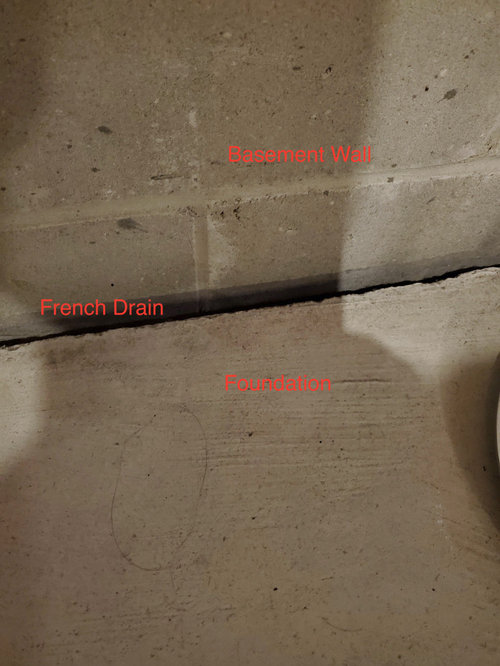
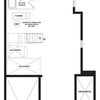
Hi, I'm a newbie so please maybe my question is very basic. I have a french drain cut out into the basement foundation along the edges. Please see picture where I've marked the different elements. When I attach my sill plate to the floor should I -

1) Cover the french drain with the pressure treated sill plate wood so that it butts against the masonry block wall

2)Fasten the sill plate to the ground at the edge of the foundation and leave the french drain unobstructed

3) Pour concrete into the french drain and try to close up the gap


My concern is that if water wells up the french drain (like it's supposed to) and I don't close it up, it will make my insulation wet.

I asked many people and got different answers. I'm also debating if I should use furring strip or go with full 2x4 frame. Not sure if my choice will be affected by the presence of the french drain.


Comments (17)

  • 5 years ago
    last modified: 5 years ago

    What kind of flooring do you plan on putting in? I'll give you a longer answer after I know that.

    Also: I hope you don't plan on putting plastic or any other "vapor barrier" nonsense down there. Research has shown pretty conclusively now that trying to impede vapor flow in any way through wall assemblies in basements is a bad idea. What climate zone are you in? Have you ever seen the trench drain fill up with water?

    Also that's your slab on the bottom, not your foundation.

    One of the reasons you asked a lot of people and got different answers is that there is a lot of bad info and practices out there on how to finish basements, even in the professional construction industry.

  • 5 years ago

    Thanks Super Lumen. Like I said I'm a newbie. Let me try answer your questions-

    Flooring - I plan to put waterproof vinyl plank flooring

    I was planning to cover the insulation batts with CertainTeed Membrane not with regular plastic sheets

    I live in NJ where it can get pretty cold in the winter but humid in the summer

    I have never seen trench drain fill up. In fact I was told it is not supposed to be open like that but should've been sealed up with a thin concrete lip to prevent insects etc.

    You are right that I get A LOT of advice. A contractor told me the current best practice is to not insulate inside the house but dig a trench around the outside perimeter of the house and insulate the wall from the outside and cover it up with faux stone till the height of the vinyl siding. But that is expensive like crazy. I'm really confused.

  • 5 years ago

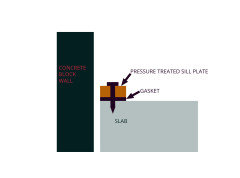
    Thanks for the tip, I'm going to leave the insulation uncovered so that it gets some room to breathe..The gasket under the sill plate is also a good idea! Didn't think of that.


    I was told the trench gap is left uncovered on purpose in rainy areas like NJ so that any water drops appearing on the walls can safely drain down into the gap instead of accumulating on the floor. Wouldn't sealing up the french drain with concrete prevent that? I have seen efflorescence and drops sometimes. Secondly, are there any disadvantages to leaving the open gap and just framing to the edge of the slab? (please see attached pic) The drawing is not to scale. Thanks


  • 5 years ago
    last modified: 5 years ago

    Yeah I mean yes, if you have water drops on the walls occasionally maybe you want to leave that drain gap open. Technically if you are getting water coming through your walls and draining down, the "real" answer is....you shouldn't be finishing your basement without solving that from the outside with the very expensive solutions you were mentioning.

    However lets face it, many people do finish their basement without the moisture conditions being exactly as they should in a "perfect" world. If you Drylok the wall to slow the moisture penetration down a bit, don't use any kind of barrier to trap humidity in your wall assembly, and stand your framing away from the concrete, you will *probably* be fine as when you do occasionally get moisture it will continue to dry off without causing mold. *probably* There are no guarantees though, as you are operating in a situation where you know you have more water than you should. I'd have a REALLY good dehumidifier running down there at all times.


    Also: that drain gap is a great spot in your area for ground termites to come up and eat your house. Before you seal that drain gap up I'd order some Termidor, mix it at 150% strength, and dump it down that gap in spades along your entire foundation. That will keep the soil in that area pretty well protected for 8-9 years.

    S Thomas thanked Super Lumen
  • 3 years ago

    S. Thomas, please advise what you finally did to your basement. I have the same issue and plan to finish my basement in NJ. Thank you.

  • 3 years ago

    Left the gap open and framed around . So the sill plate is away from the wall a .bit

    No issues!

  • 3 years ago

    did you nail into the area where the french drain is? got any pictures on the framing? I am planning to do the same thing in NJ, but wanted to know if you nailed right into french drain area. Most likely yes.

  • 3 years ago

    S. Thomas, thank you for your response. What type of insulation did you use? After insulation, did you put a poly vapor barrier then drywall? I’m planning on leaving the wall gap as you did then do the following:

    1. Frame with galvanized studs
    2. Use Rockwool insulation
    3. Then clear 6 ml plastic sheeting
    4. Then moisture mold resistant 1/2” drywall.
      Please advise. Thank you.
  • 3 years ago

    Is it better to not use plasticsheeting over the rockwood insulation so that you avoid moisture accumulating between plastic sheeting and rockwool.? should you just use waterresistant sheet rock over the rockwool and framing should be about 2-2.5 inches away from basement wall, beyond the french drain inwards. ? The dehumidifier should help with room moisture and avoid mold buildup I would think. I finished one area in basement and used metal framing, kept sheet roock 1.5 inches above the floor and used azak or plastic baseboards . When the boiler deteriorated, the water never hit the sheetrock. I am about to finish the rest of basement and Im not sure whether to use that plastic sheeting over the rockwool. I would eentually like to leave a 2 inch air gap around the perimeter of the basement for air flow. I don't know what to do about the cement floor. Painting it withEpoxy is a good idea?indoor/outdoor rug? I once put a vinyl tyle down and water condenated below that tile once I removed it. Thanks for your response in advance.-Helen

  • 2 years ago

    hethennow, what did you end up doing? I'm in NJ and getting ready to take on this job as well.

  • PRO
    2 years ago

    When finished basements involving French drains, we used surface-mounted French drain covers, they get sealed at the floor and the foundation, keeping moisture from the drain to get between the wall and the foundation.

  • 2 years ago

    I’m in NJ as well and also

    want to cover thr drains foe smell and bugs. Any recommendations on contractors in the wayne area?

  • 2 years ago

    Hi Marti, I decided not to finish the basement. Thank you.

  • 2 years ago

    Hi S Thomas, I realize your post is now almost 4 years old, but I found it very helpful. I’m in Union County, NJ, have a French drain, and am about to start framing the basement. My questions are,

    1. Did you nail in the bottom plate or glue it?
    2. Did you do a regular wall or floating?
    3. Did you do a floating floor, or floor on the slab?
      Thank you in advance.
  • 7 months ago

    @S Thomas did you complete your basement? Do you have pictures of your setup? @Marti Morris@HU-410772873 did you guys end up completing your basement as well?

  • 7 months ago
    last modified: 7 months ago

    This entire thread is wrong.

    Misleading. Proposing things they have no understanding about. One commenter is too (ironically) confidently incorrect, and getting likes which makes readers think they are knowledgeable, continuing the cycle of wrongness.

    Those that are revisiting this old thread, finishing a basement is actually somewhat complicated to know what you have to do, to minimize the risk of problems.

    ____________________________________________________________

    1. The first thing to understand is an underground, concrete/masonry-walled basement has a different approach than an above grade wood-framed wall. And a basement built before the 1950's presents different circumstances and issues than a basement built after the 1950's.

    2. The second thing to understand is liquid vs vapor (moisture). Basements are not difficult, prevent liquid water outside from getting inside. If you are not dry, has evidence of past water (efflorescence), or it even has a slight risk of water infiltration, the basement is not yet a candidate for finishing until you fix that. And just like a boat, it is better to prevent water from entering rather than managing it after it has come in.

    Concepts like "drying to the inside/outside" have people doing mental gymnastics to understand. Moisture will easily be handled by a dehumidifier, and you will need to use one with a basement in any case, which solves you having to think about the mechanics of moisture.

    3. The third thing to understand is condensation. A modern basement (1950's methods and newer) has fairly constant temperatures, both in the deep ground (which translates to the concrete/masonry walls) and inside the general basement. So the air temperature, in regions where basements are commonly built, is always going to be warmer than the walls. When warm touches cold, you have risk of condensation.

    In the 2000's, a team of professionals began studying the common "musty basement syndrome." What they found, researched, experimented with, and concluded changed the entire industry with regards to condensation, not just for basements, but all building assemblies. Building code now follows this science. Unfortunately, these concepts have yet to fully trickle down to contractors or homeowners, who are stuck on opposing historical methods they've learned through heresay. The actual, real paper thesis of condensation in basements can be read at "BSD-103 Understanding Basements" (link here) by Joe Lstiburek. It will give you the recipe in how to finish your basement.

    ____________________________________________________________

    Back to the OP question.

    A retrofit interior drainage perimeter system is to accomplish 2 things: collect water that has entered through the wall-to-footing joint and from underneath the slab; and collect water infiltrating the upper wall. With most retrofit systems you will see this gap with a hard plastic lip sticking up a couple inches here, which directs the water down to a pipe, so this floor gap must remain open to function. However, if you read "BSD-103", you now know that air gaps behind a wall are baaaaaad. So what needs to be installed is a wall membrane, tucked into this gap, and up the entire wall to collect any water infiltrating and direct it down into this gap. Afterwards, if a gap remains on the basement-side of this lip and membrane, then it should be sealed shut with caulk.

    Caveat: make sure it is actually an interior drain system, and not just a capillary break when the original slab was poured. A capillary break does not have the lip nor needs a wall membrane.

    Now, how to insulate and frame a wall. Again, reading "BSD-103" you understand you need air impermeable insulation, which is foam. Your IECC Climate Zone will determine how much basement total R value you need, but it is minimum R5 of air impermeable against the concrete to prevent condensation. NO AIR SPACES, foam goes right against the drain's wall membrane. Then, the wall framing can go against this foam. NO ADDITIONAL VAPOR RETARDER as the foam acts as one.

    You get to choose how this wall assembly looks:

    - The most common choice is using 1" XPS for condensation control, 2x4's to make electrical easier, and then batt insulation within the wall framing to achieve total R15.

    - You can choose, say, 2" XPS and no more if you only need total R10.

    - You can choose, say, to frame the wall first, holding it 1" away from the concrete. Then spray closed cell foam behind it. Then additional batts in framing for your total R value for a "flash-n-batt" method.

    - The important concepts are foam against concrete, with no air spaces, while meeting total R value for your climate.

    - Note that a typical wood-framed rim joist area follows above-grade requirements for R value, which are more intrusive than the below-grade requirements.

    There are also other important details in finishing basements, like bottom plates need to be either treated wood or have a sill gasket, and are never glued, but fastened into the slab. Or fireblocking at the top of wall, horizontally every 10', and at soffits/bulkheads.