Software
Houzz Logo Print
dbarronoss

Need to kill a pinoak

6 years ago

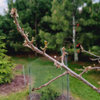
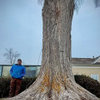
I have a pinoak seedling that I neglected to remove when I first bought my house. It's now 30 foot high :( and in a very undesirable place (between chain link fence and garage and basically into the incoming electric line too.

I got a quote on removing it and another tree and it was simply unaffordable for me.

My plan is to kill the tree and let it be standing dead for a couple of years, in which case it'll be a bit more easy to deal with (rotting and all). My thought is to girdle the tree, I know that will take perhaps a year to kill it, and I'm ok with that.

So, what tool and methodology would best allow me to girdle the trees?

Comments (17)

  • 6 years ago

    isnt it going to eventually fall on the fence and garage.. even if dead??? .. oak may take a very long time to rot ... since it will basically remain dry standing .. but you might win the lotto in the meantime.. enough on that ...


    anyway .... girdle it.. and apply roundup or a stumpkiller to the cambium layer.. and that ought to do the trick ... id use that special applicator.. im sure youve seen before ....


    ken


    ps: have you tried contacting the electric company.. and see if they might take it out????


  • 6 years ago

    Dead trees ALWAYS cost more to remove than live trees. The longer they are dead, the more expensive they get to remove. The unpredictability of dry and/or decaying branches increases the risk level, caution required, and safety steps needed during removal.


    If anyone offers you less to remove the tree dead instead of alive, check their reviews, check their liability insurance, and check your own homeowner's liability insurance.

  • 6 years ago

    Do you have a good pole saw?

    If the tree is that close to the garage, get up on the roof and start removing the branches. The clippers will take up to one inch diameter and the saw will do up to 3" dia. sections.

    It should be reduced to a more manageable size, say 15-20 ft. tall and much narrower by the time you're finished (mostly trunk and branch stubs will be left).

    Then do the rest in short sections (1-4ft L?) depending on weight and diameter, using a chain saw.

    That's how the tree guys do it, you start at the top and take it down in pieces, little at a time. Less chance of damaging anything that way.

    You might want a helper down below to pull branches out of the way.


  • PRO
    6 years ago

    If you kill the tree and let it rot, you are running the risk of the rotted limbs falling and taking out your electrical, fence, and garage.

  • 6 years ago
    last modified: 6 years ago

    Oh, electrical lines need to be looked at. The 3 wire high tension that feed the transformer are dangerous, if the tree parts are touching or fall on them.

    The insulated and grounded type that come from the transformer to the buildings are no problem unless you drop the entire tree on it and pull them down.

  • 6 years ago

    Only a professional has any business in the removal of a tree near a power line.

  • 6 years ago

    I can't pay 1/8 of my static yearly income to get the tree down'd by a professional. It isn't in the cards, I like to eat and be warm/cool. I guess I'll do the best I can myself (as my question states).

  • 6 years ago
    last modified: 6 years ago

    'Only a professional has any business in the removal of a tree near a power line.'

    Most modern, transformer to residency, are 2 insulated voltage cables that have a bare ground cable wrapped around the outside of the 2 voltage lines, essentially turning it into one insulated cable. The reason they do this? So you can not draw current simply by touching it.

    Do you still have to be careful? Yes.

    So it's a judgment call.

    If it's a very large tree, where the lines are heavily surrounded by limbs, I would have to agree with rhizo. You don't want inexperienced persons, accidentally cutting into the insulated part of the lines with the saw.

    If it's a smaller tree, where the lines are away from where the work is being performed and you can do the cutting without coming close to the lines, then I would say it's still best if the person doing the work, understands power lines and has experience with doing this type of work.

    Disclaimer: I am not recommending or encouraging anyone in doing this type of work. I am only describing this for the sake of the discussion and by no means will bear responsibility for the personal actions of anyone involved.

  • PRO
    6 years ago

    If you can't afford to have it taken down, can you perhaps afford to have the parts around wired trimmed out? I know that trees can be trimmed out, it happens on the regular around here. Might not be the most ideal, but might make it a bit safer for you to try working on the rest of the tree.

    Have you checked with the power company to see if they can trim out the tree? Depending on where you are and what company it is, you might have to pay for it, but you might also be able to get it done for free.

  • 6 years ago

    The power company says it's my lead line and I'm on my own.

    I'm more than capable of running a chainsaw btw and I plan on limbing before cutting of course.

    I asked...if anyone would like to answer THAT question...how to best girdle the tree to prevent further growth. Now please stop telling me that I should employ a professional.

  • PRO
    6 years ago

    Well, someone did answer you on how to girdle your tree to kill it- it's in the first post.

    But if it helps, here's a PDF from the forestry service on it.

    https://www.fs.fed.us/t-d/pubs/pdfpubs/pdf99242809/pdf99242809pt01.pdf

    And a video on it...


  • 6 years ago

    I always take Ken's replies with many grains of salt/sand. Plus, there might be wisdom that others have to share (if they just focus on the question asked)..we all learn different things from our experiences.

  • 6 years ago

    I. .. can't imagine .. why....

  • 6 years ago
    last modified: 6 years ago

    Got to do what you got to do sounds like. Can you just drop it on the fence and rebuild the fence later?

  • 6 years ago
    last modified: 6 years ago

    I'm fairly confident that I can bring it down with no damage to anything, not my first rodeo. It's really not that big and when limbed, should be no problem. And oak while a very tough hard to cut wood, will be less so after standing a year or two. No danger it's gonna fall by itself though, in the wild they stand for many years. I can cut a notch to control fall, I can have someone with a rope exerting pressure, etc.

  • 6 years ago
    last modified: 6 years ago

    imo: I certainly wouldn't wait for the tree to die. Dead branches tend to snag and tangle more so than green branches, Remove the tree and then treat the stump with tryclopr. Less work that way.

  • 6 years ago

    You've gotten lots of good replies here. I just wanted to suggest checking out some Youtube videos on tree felling especially the tree felling failures.