

Should there be a cold air return in the basement?
We're replacing our furnace and air conditioner. The first guy that gave us an estimate (seemed like just a salesman from our current company) suggested that we should have an air return in the basement. The second guy (seemed way more knowledgeable and tech-y) said no it isn't needed.
Details: House is a 16 year old 2100 sq. ft. story-and-a-half + full basement, well insulated, Energy Star certified when it was built. Furnace and water heater are in the middle of the basement; there are two heat vents in the ceiling ductwork, one on each end. Basement is unfinished, but we do use it - workbench, sewing, wrapping gifts, starting plants, etc. We have the heat vents open if we're working down there in the winter but it's still chilly, vents are closed when we're not down there much. Basement is damp in the summer so we run a dehumidifier then.
Who do we believe?
Comments (31)
 5 years ago
If you have heating vents down in the basement you should have a return. The first guy was right, the tech-y guy number two is wrong.
beckylc thanked outpaientzerobeckylc
Original Author5 years agoInteresting. The first guy is from the company that installed the system, and even though we've been having it serviced twice a year for 16 years, none of the service guys ever mentioned it.
Related Professionals
Florence General Contractors · Norfolk General Contractors · Baton Rouge Home Remodeling · Rochester Home Remodeling · Kirksville Home Remodeling · Edison Home Remodeling · Yuba City Home Remodeling · Florence Bathroom Remodelers · Phoenix Bathroom Remodelers · San Diego Bathroom Remodelers · El Dorado Interior Designers & Decorators · Texarkana Interior Designers & Decorators · Natchitoches Architects & Building Designers · Jackson Architects & Building Designers · Kennewick Kitchen & Bathroom Designers PRO5 years ago
The biggest problem with a return near a furnace... is that it can create a deadly situation.
The return can pull air from around a furnace that was originally intended for 'combustion air' of the furnace.
That combustion air is responsible for complete combustion of the gas. Without that the furnace creates carbon monoxide.
To make matters worse, the return (near the furnace) serves as the portal to then distribute carbon monoxide thru the home. (note that usually hot water heaters are near the furnace area as well... so sometimes it's not the furnace that creates it... but it could also happen that both appliances create it.
It's not saying it can't be done, just that you need to make sure it's done correctly.
Under normal operation a furnace creates CO2 (carbon dioxide) -- CO is carbon monoxide.
The difference between these two is one molecule of Oxygen... which represents not enough air for combustion.beckylc thanked Austin Air Companie PRO5 years ago
My replacement furnace guy had to replace a burned-up motor in the new furnace because of a lack of air and fix the lack of air problem.
beckylc thanked Joseph Corlett, LLC- 5 years agolast modified: 5 years ago
I had a return installed in the finished part of my basement when I replaced by HVAC systems 11 years ago. In the winter the return draws the more humid air from the basement and helps keep the humidity higher. In the summer the return has lowered the humidity to the point where I no longer have to use a dehumidifier in the basement. The AC is a 2-stage system which has very good humidity control. The extra return has also reduced the static pressure. It is very good when both AC condensers are running in the high stage.
If you have a gas hot water heater, you have to be careful to not create a back draft condition if you install a nearby return. In my case the return in a separate room with a closed door. If your basement is unfinished then the return needs to be as far away as possible. The furnace should not be a problem if it is a high efficiency model with an outside air intake.
beckylc thanked mike_home - 5 years agolast modified: 5 years ago
I guess I'm lucky I'm still alive. I had an old open combustion gas furnace in my work shop for 20 yrs with heated air blowing out the top and the return sucking it all back in at the bottom. Tell me how you can starve combustion or create a back draft with a return sized right to the supply in the basement, AND with the required makeup fresh air from outside equal to 1 sq. in for every 1000 btu's (times 2) to supply a open combustion furnace? Anyway moving on to becky's home.
Becky's home is a 16 yr old energy star certified home, I'm assuming the old furnace she's going to replace with a new 95% efficiency Trane is also a sealed combustion furnace. If not and the existing furnace is open combustion I'll assume the correct amount of outside makeup air required by code is supplied. I'd have NO concerns putting a return vent in her basement either way. and by code. A furnace in an open unfinished basement also doesn't mean the entire space is considered a dedicated furnace room.
M1602.2 Return air openings.
Return air openings for heating, ventilation and air conditioning systems shall comply with all of the following:
1.Openings shall not be located less than 10 feet (3048 mm) measured in any direction from an open combustion chamber or draft hood of another appliance located in the same room or space.
2.The amount of return air taken from any room or space shall be not greater than the flow rate of supply air delivered to such room or space.
Becky, go ahead and have a return installed if you which, you won't die from carbon monoxide poisoning, just make sure the installer follows 1 and 2 of the code and you will benefit as mike mentioned. BTW, my workshop furnace still met code as an exemption to M1602,2 but two years ago I replaced it with a sealed-combustion furnace.
beckylc thanked outpaientzero beckylc
Original Author5 years agoOkay - from all of your answers, it looks like we should have a return in the basement. And based on mike_home's experience, it might help with humidity issues. Yes, the original furnace was a sealed combustion one. I'll get an estimate on adding a return into the new HVAC installation. I just looked up static pressure - is that something that's typically checked during routine maintenance? Thanks so much.
- 5 years ago
I'd say yes they should check static pressure, some say they do but I've never worked for a company servicing residential HVAC, so I'm not sure. Ray would know he's worked residential for 25 years. Every air handler has a rated maximum static pressure rating in water column (WC) . Your old furnace does and it's on the nameplate and should be around 0.5 WC. A magnehelic gauge or digital manometer is a great diagnostic tool to use for checking multiple problems and cheap, at $60 to $80 for analog and digital from a $100 and up, so I don't know why a total system differential pressure check wouldn't be part of the routine maintenance.
I've mostly worked in commercial/industrial HVAC specializing in refrigeration. We took differential pressure measurements all the time and even had gauges mounted on air handlers for quick reference. Blatant neglect wasn't a luxury practiced in my field and often meant quick termination because of a preventable failure. In residential HVAC it means they get more of your money to repair what they should have caught in the first place.
beckylc thanked outpaientzero - PRO5 years ago
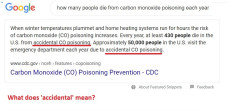
So true... the odds you will suffer from CO poisoning or even death are really low.
BUT... having an air return drawing air in an area that needs combustion air for combustion of the furnace / among other appliances puts you that much closer on the path to 'trouble, trouble, trouble.'
Accidental: let's not worry about it, until we get sick or even die from it. Who cares?
(It's not just the furnace you need to worry about).
I don't post here because I am a home owner. I post here because I actually do residential HVAC for a living. - 5 years ago
Ray, can you tell us as a residential HVAC Pro if you gauge the total static pressure when preforming routine maintenance calls and do others also do it in their preventive maintenance routine? It is a good question and the answer may be something people may want to know.
beckylc
Original Author5 years agoOkay, mulling this CO2 thing over . . . Now clearly I don't understand a lot of how this works, so I'm wondering. Since we have a closed system furnace, it has an intake for outside air for combustion, and exhausts to the outside, right? And the water heater next to it does not have a pilot light, and it has an exhaust fan that runs when the heater runs. So doesn't that pretty much keep CO2 from possibly leaking?
- PRO5 years ago
It is never a good idea to run any gas appliance that is producing CO. CO is carbon monoxide, CO2 is carbon dioxide.
Remember CO is produced primarily from incomplete combustion burning of fossil fuel. This occurs when there is not enough oxygen for combustion, not just the furnace but also water heater(s) etc.
Even if everything is vented properly, the problem comes when the machine breaks cracks form in heat exchanger etc. (In those cases, death is likely the result... small odds, but there are deaths.
I never assume anything in terms of a closed off or sealed combustion chamber, and or adequate outdoor air. Return air near where combustion occurs is risky.
Why do you think manufacturer's install a blower door switch that will kill power to the furnace once the blower door panel is removed? For that very reason...
In terms of static pressure test with a basic system check? no. It would be an add on. Then who would pay for the add on, full well knowing the result of that test will likely include redesigning the whole system up to and including equipment replacement?
In this business here on this board you are told if you don't like the price of something get 3 quotes. How many out there do you think would know the importance of static pressure of their HVAC system?
Most people do not do checks or proper maintenance of equipment for the simple reason you will get techs to your home that try to talk you into things that aren't necessary. (Like just today someone being told to replace a blower wheel for $700 because the unit is unlevel.) They have a Trane that is just recently out of warranty. Trane Blower wheel snow jobbeckylc thanked Austin Air Companie - 5 years agolast modified: 5 years ago
Here is the residential code for returns. If I read this correctly if the return is more than a 10 foot distance from the furnace or hot water heater, you would be compliant.
International Residential code, Chapter 16 Duct systems
M1602.2 Return Air Openings
Return air openings for heating, ventilation and air conditioning systems shall comply with all of the following:
- Openings shall not be located less than 10 feet (3048 mm) measured in any direction from an open combustion chamber or draft hood of another appliance located in the same room or space
beckylc thanked mike_home beckylc
Original Author5 years agoThank you again. We talked to the heating guy again and will be adding a return. It will be more than 10 feet away from HVAC and water heater, but this is good to know.
- 5 years ago
I just realized Kevin9408 posted the same information about the return being at least 10 feet away. Sorry for the redundancy. When posts become long it is difficult to kept track of the comments.
The additional return air should lower the static pressure. It would be good if your installer does a measurement.
beckylc thanked mike_home  3 years agolast modified: 3 years ago
Let me add one more comment to this discussion. When I had my furnace put in 20 years ago, the technician chided his employee for putting in a air vent on the side of the airbox for return air. His reasoning was since the basement is unfinished, it will have odors. And if a basement is used for woodworking, as somebody posted earlier, and also, as in my case, have bad basement odors. I have a sewage ejection pump in the corner which sometimes has an order. So anything with woodworking or any kind of odors are going to be brought into the furnace and then circulated around the house. Do you really want this?
 PRO3 years ago
This thread is an old one, but since it's been resurrected, I'd like to correct some misinformation.
"Under normal operation a furnace creates CO2 (carbon dioxide) -- CO is carbon monoxide.
The difference between these two is one molecule of Oxygen... which represents not enough air for combustion." I'd refrain from giving lessons in combustion chemistry if I were you, Ray. Oxygen is diatomic. A molecule of oxygen is O2. An oxygen atom would be referred to as 1/2 O2.
"I never assume anything in terms of a closed off or sealed combustion chamber, and or adequate outdoor air. Return air near where combustion occurs is risky.
Why do you think manufacturer's install a blower door switch that will kill power to the furnace once the blower door panel is removed? For that very reason..." Nope. Blower safety cut off switches are installed on air handlers paired with heat pumps or air conditioners--not just furnaces. They shut off the blower when the access panel is removed to prevent injury due to the moving blower which can do a nasty job on fingers.
The IRC requirements for air returns were noted by two posters above. The combustion, ventilation, and dilution air requirements are equally if not more important. The can be found in chapter 24 of the IRC. An intake vent area of 1 sq. in per 1,000 Btu/h rating isn't always adequate. For work which is being performed under a permit, code compliance inspectors will usually check. When in doubt, ask. If your contractor isn't aware of code requirements or chooses their service area to avoid permits and inspections then you've selected the wrong one.- PRO3 years ago
Nope. Blower safety cut off switches are installed on air handlers paired with heat pumps or air conditioners--not just furnaces. They shut off the blower when the access panel is removed to prevent injury due to the moving blower which can do a nasty job on fingers.
Please list the manufacturer that has a blower door switch on an Electric Air Handler.
I have a electric air handler at my house installed in October of 2019. No blower door switch on that.
Blower motor moving parts are behind a squirrel cage Mr. Builder.
A molecule of oxygen?CO2 = carbon dioxide all day, everyday. 1 carbon 2 oxygen.
CO = carbon monoxide all day, everyday. 1 carbon 1 oxygen.
H20? = 2 hydrogen, 1 oxygen. = water. I never even took chemistry and here I am explaining this to an Engineer. I think I need some reparations. - PRO3 years agolast modified: 3 years ago
You'll need to learn the difference between an atom and a molecule if you want to advertise your expertise in combustion chemistry, Ray. I think I learned that oxygen is a diatomic molecule in 5th grade science class, but you might have been absent that day. You can purchase a cylinder of O2, but you'll be hard pressed to purchase a cylinder of "O." Since you've admitted to never having attended a chemistry class, you might be open to learning that the equation for oxidation of CO is written as follows:
CO + 1/2O2<---> CO2
You might also want to sit on the sidelines when combustion chemistry is discussed.
"Blower motor moving parts are behind a squirrel cage Mr. Builder."
There is no "squirrel cage" protecting against moving parts in a typical air handler blower, Ray. The fan wheel in a typical centrifugal blower is referred to as a "squirrel cage." You can usually put your hand right into the fan intake and contact the moving squirrel cage. That would hurt. Blower door safety switches safeguard against the hazard. You can find blower door safety switches on furnaces and air handlers--even those with with hydronic coils which have no potential for CO emissions. Here's one for your information:
https://northstock.com/content/product-catalogs/first-co/first-co-fwa-aq-hw-specification.pdf If there's no combustion hazard why would a blower door safety switch be an appropriate option? The protection against inadequate draft and potential high concentrations of CO is provided by a draft inducer pressure switch.
- PRO3 years agolast modified: 3 years ago
The safety switch to the link you posted is a hot water furnace, that's not an electric air handler.
What did I ask for? let me check I said Electric Air Handler. Charles can't even follow directions to what I asked for?
CO is written as CO it's not written as CO +1/2O2
O3 is Ozone. it's not written as 02+1/2O2
H2O is water.
It's not written as H2O +1/2O2
O is oxygen it is not written as O +1/2O2
O2 is a compound because it is formed by combining 2 oxygen atoms.
Charles I understand more and more why you failed as a chemical engineer. Go out and beat a few nails to death, or select a sub contractor to do it for you.
If I go to a parts house to replace a blower wheel, I don't ask for a squirrel cage. The cage as it were is what the blower motor & wheel resides in. All day everyday. But you'd have to actually do my job to know that.
Common sense, isn't so common.
- PRO3 years agolast modified: 3 years ago
My claim, Ray,was that blower door safety switches are installed in both furnaces and air handlers. That doesn't mean they'll be installed in every furnace or air handler. But their use is not restricted to combustion appliances. If their function were strictly as some type of combustion safety device, they wouldn't be installed on air handlers. Here's a blower door replacement switch advertised for an air conditioner https://www.2jsupply.com/Product/632125R or you can read this description of a Carrier replacement blower door switch:
"This blower door switch is an essential component for HVAC systems, allowing for safe and efficient operation. Designed to detect when the blower door is open or closed, it ensures that the system only operates when the door is securely in place. This not only prevents damage to the system but also helps to maintain optimal energy efficiency. Made with high-quality materials and built to last, this blower door switch is a reliable choice for any HVAC service technician looking to ensure the safety and efficiency of their clients' systems."https://libertysupply.com/products/lsij2zfx0f
The "squirrel cage" is the rotating component in a centrifugal "squirrel cage" blower; it's not the fan housing, Ray, and it doesn't refer to some protective mesh at the fan inlet. It got the name "squirrel cage" because it looks somewhat like a hamster wheel. For air handlers and furnaces without a blower door safety switch that shuts off the unit, a person servicing the unit can injury their hands which can be inserted into the fan and contact the unprotected, rotating squirrel cage. That's a good enough reason to install a $9.00 ,blower door switch on every furnace and air handler. Your claim that "The cage as it were is what the blower motor & wheel resides in. All day everyday. But you'd have to actually do my job to know that. your claim " is horse hockey (I'm trying to be polite here.) Your really don't have a clue, do you, Ray?
- 3 years ago
O2 is a compound because it is formed by combining 2 oxygen atoms.
This statement is not correct. I suggest you edit your post so it complies with the fundamental rules taught in chemistry classes.
- PRO3 years ago
Looks like a case of, well, compounding evidence that Ray lacks knowledge of basic chemistry. I believe psychologists call it "the illusion of explanatory depth."
- PRO3 years ago
O2 is a compound because it is formed by combining 2 oxygen atoms.
This statement is not correct. I suggest you edit your post so it complies with the fundamental rules taught in chemistry classes.
LOL.
My claim, Ray,was that blower door safety switches are installed in both furnaces and air handlers. That doesn't mean they'll be installed in every furnace or air handler. But their use is not restricted to combustion appliances.
The info you posted was for a "combustion appliance" --- That by definition is not an Electric only appliance. Mr Charles Ross is now twisting and spinning his words... we shouldn't expect anything less from a builder?
click to enlarge: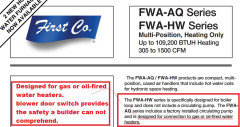
- PRO3 years ago
" O2 is a compound because it is formed by combining 2 oxygen atoms." Oxygen is a diatomic element, Ray, but it's not a compound. A chemical compound is a substance consisting of atoms from more than one element. A molecule consisting of atoms from a single element such as oxygen is not a chemical compound. LOL, Ray. LOL.
- PRO3 years ago
Charles Ross the builder: You can usually put your hand right into the fan intake and contact the moving squirrel cage. That would hurt. Blower door safety switches safeguard against the hazard. You can find blower door safety switches on furnaces and air handlers.
You go on to say: But their use is not restricted to combustion appliances. If their function were strictly as some type of combustion safety device, they wouldn't be installed on air handlers.
The only reference to a blower door switch actually being used was on a Water Furnace that is designed to work with a gas or oil fired boiler.
You then trying to scramble and point to a part that is typically found on a gas fired appliance door switch because those appliances operate with 120v. Where as an Electric air handler operates at 240v.
Why does an air handler need 240v to operate? let's not think. We're builders pretending to know something we don't. We have subs on speed dial to do these things. If they come up after the fact? Deny, deny, deny, twist words. Change the subject entirely. You think this is anything new for a builder? Uh, no.
Charles, your claim is that the switch is there to protect your fingers from the big bad blower that isn't behind a squirrel cage. You want to claim the squirrel cage is the blower wheel.
If the door switch is only about safety to the tech servicing the machine why then does the switch you show only going to cut half the power available on an Electric Air Handler?
You said electric air handler / not water furnace. And you're still saying air handler, which is wrong as usual.
PS: I am not a chemical engineer. Not pretending to be one. This is HVAC discussions... it only went into the chemical realm of things over the discussion of Carbon Monoxide CO vs Carbon Dioxide CO2.
The difference from these two substances is WHAT?
How they are WRITTEN: CO vs CO2
What is the difference between the two? 1 oxygen. Molecule, atom? What ever you want to call it I don't care. This is HVAC. CO vs CO2? one will kill you, the other won't. That is all I care about, preventing an untimely death.
I am expected to know HVAC, not chemistry. Let's argue over molecules and atoms and the safety of a blower door switch that is missing on air handlers?
If this switch is not missing? I am still waiting for you to show me an ELECTRIC AIR HANDLER that has a blower door swich.
Let's make excuses and show a blower door switch (a part) that wasn't designed for what we claim.
If anything this thread shows how much smoke a builder can blow and just keep blowing it for the sake of blowing smoke. What does that smoke contain? Better hope it's not CO - PRO3 years ago
Ray,
A blower door safety switch protects against a variety of hazards. You can find them on both furnaces and air handlers associated with air conditioners and heat pumps. The example I gave was an air handler with a hydronic coil. The hydronic coil doesn't care how or what makes the hot water for the coil; the heating is done in a hot water heater remote from the air handler. Clearly, the switch is not protecting against a combustion hazard.
A blower door switch on a gas furnace protects against the mechanical hazard of the squirrel cage blower (remember, the squirrel cage is the rotating part,) the thermal hazard of a hot burner assembly, and the fire/explosion hazard which could result from an untrained person messing around with the burner while the unit is operating. They should be installed on every air handler, in my opinion, but some manufacturers choose to save the $9 switch and rely on a warning sticker or maintenance manual to communicate the hazards.
Since you've admitted you never attended a chemistry class and provided ample evidence of that fact, I think we can leave the chemistry debate here. Houzzers should be made aware of your level of "expertise" before you give any more chemistry lectures.
- PRO3 years ago
Charles, show me an Electric Air Handler with a blower door switch.
Prove it to me Charles. If it is so it shouldn't be so difficult. (not a water furnace)
You can't do it can you Charles? Show me an electric air handler with a factory installed blower door switch?
You say they exist, yet you can't prove it? - PRO3 years ago
Ray,
Again, my claim was that installation of blower door safety switches is not restricted to combustion appliances. I provided an example as evidence. You tried to disqualify my example asserting that an air handler paired with a hydronic heating coil is a combustion appliance. It's not.
- PRO3 years ago
Charles, what you posted was for a gas fired or oil fired boiler.
Not an Electric Air Handler. Charles the builder does not understand the difference between a gas or oil fired appliance?
If it's not why does it say so in this snippet below that you posted. This was your proof taken from the link you provided.
Click to enlarge.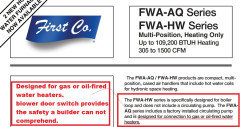
Upper left hand corner: Water furnace (not an Electric Air Handler)
Designed for "connection to" gas or oil fired water heaters.
Charles likes to post things as proof of which he fails to read what it is he is actually posting.
Come on Charles... put your money where your mouth is.
Who is the 2 buck Chuck in this wine cellar? ha, ha. Come Charles prove it. It's slaying you I know it is.








outpaientzero