Software
Houzz Logo Print
sebtla

Help for tall fescue dried during drought

5 years ago
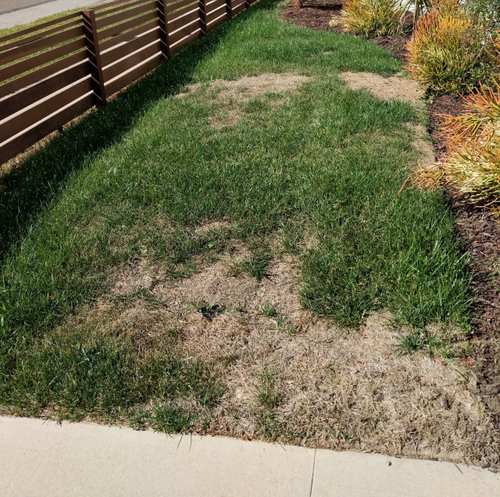
Hi, we had new tall fescue sod installed this past August here in Southern California. It was right in the middle of very hot temperatures. We watered twice a day for a few weeks to help. Unfortunately, some areas turned yellow and still look dry until today (lately we water once a week, and weather is in the high 70F lately). I don't know if those yellow patches can be recovered or need to be seeded again. I read November is a good time for fertilizing fescue but was wondering if anyone also recommends overseeding as well in our case so it can bring back the green. Any help would be appreciated. Thanks!

Comments (8)

  • 5 years ago

    Where do you live in SoCal? I'm familiar with the area, so please be specific. The town is good enough.

    What is the rest of your watering schedule? You mentioned once a week. For how long do you water? What kind of sprinkler or system do you use?

  • 5 years ago

    Los Angeles.


    Sprinklers run once a week at 6am for 15mn. Pop up sprinklers with fixed spray patterns.

  • 5 years ago

    LA narrows it down a lot. I suppose I forgot to say, 'if you live in LA, what part?' - because people who live in Sylmar, Venice Beach, Pasadena, Pomona, Rolling Hills, and the San Fernando Valley all say they live in LA. I think I can remember three people claiming to be from LA who were actually from inside the city of LA. So please bear with me as I ask for a little more fine tuning as to your location within the LA area. As you know because you live there, the micro climate west of the 405 is different from the micro climate east of the 110. If you are far enough inland that the summer temps are usually in the 90s, then fescue is the wrong grass to have, because it requires too much water and strains the state's resources.

    Running the sprinkler once per week is great. Have you ever done a tuna can test where you place several tuna or cat food cans in the yard and turn on the sprinklers long enough to fill the cans? The idea is to time how long it takes to fill all the cans, because grass needs about 1 inch of water per week in the hottest heat of summer. BUT if you live in El Segundo where the summer temps rarely get above 85, you should be able to deep water once every 2 weeks in the summer.


  • 5 years ago

    take a tablespoon/hand trowel ... and dig a couple holes in the DEAD part.. before and after watering.. down to about 3 inches ... AND FIND OUT IF YOUR WATERING IS EFFECTIVE TO THE ROOT DEPTH... watering is an art.. not a science.. meaning random schedules may or may not work ... and the plan must be adjusted as heat and rain and etc.. vary thru the year ....


    no more guessing ,..


    the brown parts are probably dead.. dig up a chunk.. and find out if there are any viable looking roots .. if not.. remove all the dead parts...


    then either go get a few new pieces of sod and install it ... or prep the soil and seed ... if now is a good time to do that in LA


    but it will happen again.. if you dont figure out the watering issue ...


    what does your installer say about this failure after planting in the heat of summer??? .. is he the one the recommended the watering schedule???


    ken

  • 5 years ago

    Hi @dchall_san_antonio, no worries, we live in Park Mesa Heights area, just south of the 10, tucked between the 405 and the 110. Hope this helps!

  • 5 years ago
    last modified: 5 years ago

    Thanks for the location. That helps a lot. Although I would not voluntarily put Marathon there, it should be fine.

    Ken Adrian has a point about watering being an art; however, it is based on some science. Here is what I generally say about watering:

    The mantra for watering is deep and infrequent. Deep means 1 inch all at one time. Frequency depends on many factors such as air temperature, wind, direct sunlight, soil type, turf type, mowing height, humidity, and some other factors. When you add everything up and do the subtraction, the predominant factor is the daily high temperature. What this means is for high temperatures below 70 degrees, deep water once a month. For temps between 70 and 80, deep water once every 3 weeks. For temps between 80 and 90, water every 2 weeks. For temps between 90 and 100, deep water once per week. For temps between 100 and 105, water every 5 days. For temps above that, water every 3-4 days. The main take-away from the sciency part is that you should never be watering every day or every 2 days. Think deep and infrequent.

    Having said that, now we get into the art. For example I live where the temps run in the high 90s most of the summer. Do I water every week? Not really. I water about 3/4-inch every 10 days. Our temps have dropped to the 80s with a lot of cloud cover but low humidity. The last time I watered was Oct 9. I'm going to water today at the 4 week point. The grass still looks alive, but the blades are folding together, so it needs it, finally. Watching the grass for it's needs is the art on top of the science. If you go 2 weeks in the summer and it looks good, stretch it out a little.

    Deep watering encourages deeper roots. Deep roots find nutrients long lost to rootdom when the plants are watered frequently. If the grass gets frequent watering, it does not need to grow deep roots. If you have been watering frequently, you're going to have to wean the lawn off of that schedule into deeper and less frequent watering. Start by doing the can test to time how long it takes to fill the cat food or tuna cans.

    If you get runoff before filling the cans, stop watering immediately and let the water soak in for 15 to 30 minutes. Then resume watering and timing. Stop as necessary to prevent runoff. To prevent runoff in the future and to encourage deep water penetration, spray a surfactant like shampoo on the lawn using a hose end sprayer. The application rate is 3 ounces per 1,000 square feet, but that is a minimum. You can double or triple the amount with no adverse effect. Follow that up with 1/2-inch of water to get the shampoo down deep into the soil. I used baby shampoo once in 2012 and never needed to spray again, so it is a good bargain.

    At this point you can either reseed or cut out the dead sod and replace it.

  • 5 years ago

    @dchall_san_antonio and @ken_adrian Adrian MI cold Z5, thanks much for your response, super helpful.


    I did the can test, I do get more than 1 inch of water in the green areas but these brown parts don't get much indeed. Will need to fix some sprinklers.


    The grass in the brown parts is definitely dead, it came off pretty easy when I dug up a few. Ken, unfortunately, the installer is not really unreliable as they never returned any calls since then. This is a good opportunity to try taking care of it myself, with the help from here :)


    So I'm thinking about reseeding over the few brown areas I have.

    1. My yard being rather small (about 500 sqf), do you recommend reseeding only over these bare areas or might as well go renovate the entire yard given how small it is? By renovating, I'm thinking of mowing existing grass short, seeding with a good brand (read this one is good), apply a starter fertilizer and water well this time using your recommendations, so the whole yard can get back on a better track overall.
    2. I can tell some dead sods along the driveway just "float", their roots aren't deep enough into the soil under so I wonder when reseeding, should I just rake the dead grass or remove the entire dead sod? (if so I guess it needs some new soil to level up?)
  • 5 years ago

    You can do either one. What you call renovating is simply overseeding. People with fescue do that more than others.

    With grass seed you get what you pay for. The Amazon ad doesn't show the guaranteed analysis and neither does the Jonathan Green website. That's not a good sign. What you're looking for in the analysis is the percentage of weed and other crop. Those values should be 0.000% for the best seed. The problem is that bermuda and creeping bentgrass have seeds the size of dust. When you have even a small percentage of those grasses in the mix, it could amount to thousands of seeds per bag. The website shows some values for grass seed percentages, but the words, guaranteed analysis, are missing from that little section of text. It will be printed on the bag for certain. When a seed seller is proud of his guaranteed analysis, they won't be afraid to post it.

    2. Remove the dead grass and adjust the soil height if you need to. Step on it to press the new soil down. Repeat as necessary to match the concrete height. Then seed and step on it again to press the seed into the soil surface.