Software
Houzz Logo Print
hzdeleted_19693228

Before And After!

5 years ago
last modified: 5 years ago
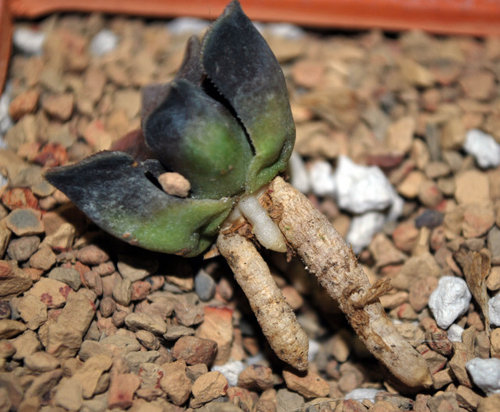
We all have them--hopeless-looking things that survived. I'll start.

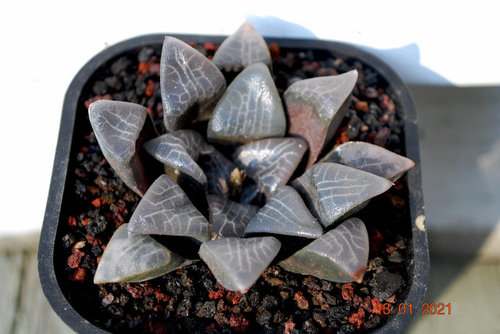
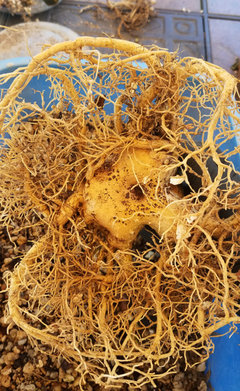
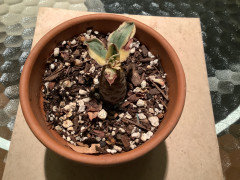
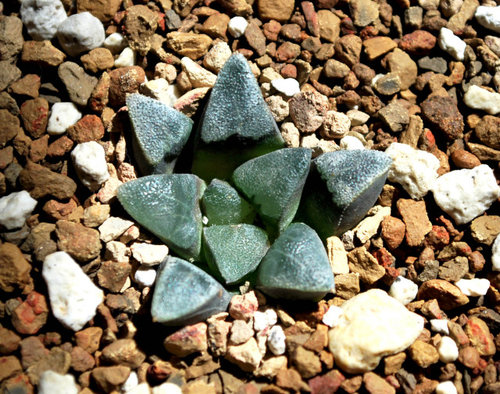
Haworthia bayeri, two months after arriving from AridLands (May 2014): remember that when you buy a haworthia, it usually loses the old roots and tries to grow new ones. At the time, I had NO idea lol


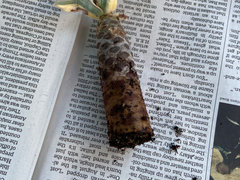
Yes, I dug it up to see why it was dying. It wasn't!

By July 2014, it looked better:


Today:


It takes a lot of work but things do turn around if you get it right.

Comments (23)

  • PRO
    5 years ago

    Yay!

    User thanked The Wonder Ways
  • 5 years ago

    Looking great!

    User thanked rina_Ontario,Canada 5a
  • 5 years ago

    I'll just keep posting all these b&a pics until someone else does!

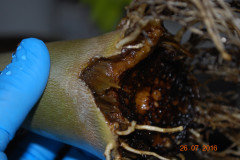
    This one is an Adenium arabicum. I think. Cold-damaged in 2016; the soil gets colder than the plant if it is wet and kills the thick rootstock first:

    Some hacking and slicing:

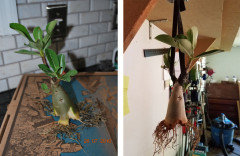
    Then in 2018

    It's in the basement right now, on the floor and in the cold. If this post is still editable in a couple of hours I will add a pic.

  • 5 years ago

    Beautiful job with that Haw! It's a stunner today!

    User thanked robinswfl
  • 5 years ago

    @robinswfl I know! I didn't even notice until I looked at the photos I took today. I just kinda picked it up, put it in the sun, snapped the pic (it was freezing) and then fled back indoors to thaw.

  • 5 years ago

    Great success, Pagan! Maybe your expertise can help this poor plant.


    Hope it’s OK if I just post a “before” picture. I have had high hopes for this Aeonium Sunburst since it has some life in the center, now that it’s in it’s growing season. However, it just sits and sulks. When I touch the side gently, it seems firmly rooted. Should I give it a weak feeding?

    User thanked socks
  • 5 years ago

    I have a major "right now" plant also, socks. I'm not sure it will turn into a "before" followed by "after" lol

    Anyway, aeoniums have very fibrous roots that will keep that plant feel firmly rooted long after it has died (imagine my shock when I found this out the hard way). If that was my plant, my logic would go like this: better dig this thing out now while it is not in summer coma. That way, I'll get a reaction to whatever I do to it, since it is active. AND, I get to see what's going on under there.

    So, I'd personally de-pot it, check and repot in fresh material. Also, into a smaller pot since it doesn't have enough leaves right now to support vigorous growth and it will be more prone to drowning if the pot is so proportionally bigger that it doesn't dry fast enough.

    Full disclosure: I have only ever experimented with A. tabulaforme, four attempts now spread over a period of about 8 years. I really like the plant but every time it dies on me, it's always after I've succeeded for a couple of years. Then the effer just ups and dies. Haven't solved it yet.

    I also do not know how variegated cultivars behave.

    My only tip that so far applies to most winter growers I have is this: the drop in night temp really makes the difference. For example, for species whose winter growing temp ranges between 25 to 0C, I put them on my basement floor with a heat mat that switches off at sundown. Maybe don't go that far, it's just a reference, especially for the more delicate prima donnas I have. Even if the night temp does not go down as low as it would in habitat, simulating the large drop seems to be enough to keep these weirdos from throwing tantrums. I also treated my ex-aeoniums this way, though I kept them at around 8C at night.

  • 5 years ago
    last modified: 5 years ago
    Lol The little twerp has been tricking me all these months. Rotten all the way up. Oh well, one less plant to take care of. Thanks for the suggestion.

    User thanked socks
  • 5 years ago

    Oh my!! I didn't expect that! Funny! Yes, "before & after" can go both ways.

    User thanked socks
  • 5 years ago

    So, that aeonium was beyond saving, socks?

    I'm going to be looking for my---get this--fifth A. tabulaforme now.

  • 5 years ago

    There might have been 1/8" good tissue at the very top, but I have others so I said, "bye bye" to that poor thing.

  • 5 years ago

    Tabulaforme...I had to look that up. Very interesting plant. Gets so big, so flat. Very dramatic flowering. I guess in zone 7 all your plants are inside at this point, right? Mine are all outside, enjoying our heatwave. I wouldn’t mind seeing a pic of your tabulaformes.

    User thanked socks
  • 5 years ago

    Um. That was my fourth one, socks, I have no other. As soon as I think I have the plant figured out, they really do keep dying on me lol

  • 5 years ago

    omg, I wish to have the same healing superpower you have, mine keeps struggling either it's underwatered or flooded. I guess, like many things, it takes time..

  • 5 years ago

    Which plant, Rocio?

  • 5 years ago

    Ohhh, I thought you had 3 others. I get it. You won’t give up to that plant.

    As for me, I give up easily. If something dies, I just consider it “not for me.”

  • 5 years ago

    I think this is where A. tabulaforme and I part ways, socks.

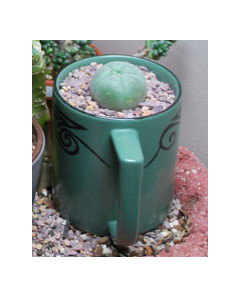
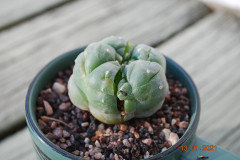
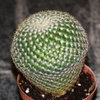
    On the other hand, I have this Lophophora diffusa in a mug in Oct 2015 and I am calling this the "before":

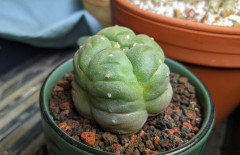
    By Oct 2019, it looked like this:

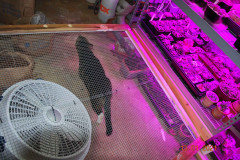
    Then, this happened about three weeks ago:

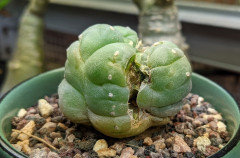
    Underneath (no, it wasn't his fault), right where the screen frame landed, was this:

    I guess that's "after".

  • 5 years ago

    Noooo!!

  • 5 years ago

    Yeeees. It has not died yet, though. It appears to have calloused over and both hemispheres are firm. I had moved it off the floor on that day and to the top shelf to wake it up. I figured it will probably need water so I watered it a few days later.


  • 5 years ago

    Hopefully it survives and offsets/flowers. My Astrophytum got munched on my a squirrel so it has battle scars too.

  • 5 years ago

    Oh, yeah. I do remember your battle with squirrels. I'm not really sure what I'm looking at here so, does this look like the beginning of proper, healthy scarring? I'm just counting on the general idea that being ground plants, it must have evolved some kind of recovery mechanism for just being stomped on or chewed.

  • 5 years ago

    The outer edges yes, inside not sure as the bites weren't as deep. Since your basement has a dry atmosphere if it callouses well I think it should survive? Turned into a new experiment now.