Software
Houzz Logo Print
hzdeleted_20091243

What do you know about termites?

5 years ago
last modified: 5 years ago

I could use some expert advice.


We are currently searching for our next forever home. We are within a few years of retirement and are looking for a smaller ranch home with 7 or 8 criteria on the wish list. The geographic location I want to be in is small, and houses sell quickly often with a bidding war. For context, we have been looking for something for about 2 years and in this time several homes came close but weren’t “the one” for various reasons. We are in no real hurry to find something and I would rather wait than chose poorly.


The perfect one may have just hit the market. It literally ticks all the boxes. It needs some cosmetic updating but I don’t mind that at all as I’d rather pay to remodel to my own tastes anyway. Location is perfect, size is perfect, I love the layout and I love the neighborhood.


So what is the problem?


Termites!!


I live in New York and we just don’t have a problem with termites here. It’s too cold to support comfortable human habitation here, and the insecty little buggers are apparently smarter than we are and prefer warmer climates. Ha. So I literally no nothing about termites or termite damage.


The location of the new house is a few states away, obviously much father south than NY. I looked up some information online and apparently the new destination is a termite hot spot. (Good to know!)


A reputable pest control company has been out and treated for the termites. (I was told there were “a lot” of termites found in the ground.) The termite damage is allegedly contained to the wall underneath one window. All the drywall is ripped off that wall and the damage is obvious. We have been told by the sellers that there is no floor joist involvement and no other signs of termites are found elsewhere in the house.


You don’t know what you don’t know – and I don’t know squat about termites. So I can’t decide if this is a big deal or not.


If you were in my shoes, what would you do? What questions should I be asking? What trades or contractors do I need to look at the house to ensure the full scope of the damage has been found?

Comments (16)

  • 5 years ago

    Depending on the size of the house if it hit all of the spots I would purchase it and ask for it to be tented before I moved anything into it. Tenting involves placing material over the whole house then poison used under the tent. There is no way other than ripping out walls that all of the damage could be found by any of the trades. A good inspection could find points of entry and perhaps dried wood powder as a suggestion that there was damage but it would be up to you if you wanted to gut the house to find all of the damage.

    User thanked maifleur03
  • 5 years ago
    last modified: 5 years ago

    Termites don't always hate the cold! Long time ago a good friend bought his first house in New Jersey. He started to remodel the house and turns out most of the structure had been devoured by termites. There was a long lasting lawsuit about disclosure and lies from the selling side, but he finally won. So don't believe that colder areas are not prone to termite damage.

    In warmer climates, with wood framing, you should assume that most houses either have had termites in the past, or currently have termites. Key is to find out how much damage they have done or stop them from doing any more.

    We found some during the remodel of our house in CA. We paid to tent/fumigate the house while we had some of the walls opened up and had all the new lumber in the house, so it would get treated at the same time. You get a 2 year guarantee with tenting, but you then need to have yearly termite inspections to keep on top of any new infestations. It is what it is. You just need to be aware, do inspections and watch for any signs of them.

    The tenting cost us about $4K for a 4600 sq.ft 2-story house, plus 2 nights in a hotel for us and 2 nights of boarding for the dogs.

    If the house meets all criteria, then I would get it inspected by a third party ... not one refereed by the seller or any of the RE agents. Get the house tented before you move in, so you are starting out knowing the house is clean. Then have yearly termite inspections.

    User thanked chispa
  • 5 years ago

    If you really like the house and don't want to lose it, get it under contract right away with general inspection and termite inspection contingencies. You can back out if the results are really bad.

    User thanked chispa
  • 5 years ago

    Hire your own termite inspector. Research drywood vs. subterranean termites. Sounds like subterranean, which is not treated with tenting. If you buy the house you can have a termite inspection done yearly that carries a warranty (for subterranean, not drywood). Not an expert, except that I'm a Texas homeowner!

    User thanked HU-232399493
  • 5 years ago

    HU is correct, these are subterranean termites. Treatment is not done with tenting. At least as far as I can figure out so far - I'm getting a crash course in termites with this.


    I plan to talk with a good termite control company. I'm happy to pay for ongoing treatment if they warranty against future damage.

  • 5 years ago
    last modified: 5 years ago

    Move on. You are close to retirement, We are 20 yrs into (early) retirement. Trust me, you don't want to purchase a house which has a major issue. And why are you looking in an area that "boasts" termites? How about a golf community in Fla with alligators in the back yard? : > )

    How many years is "close"? Right now, covid-19 has influenced the market and it is so hot. If you have a few years, stop looking and resume when the market stabilizes.

    BTW, I just read a US News report that TN is the #1 state for purchasing a home.

    With all that is going on in the U S, I want to move to New Zealand. Sadly, New Zealand doesn't want us.

  • 5 years ago

    In Florida finding subterranean termites is common and not considered a “major issue”. inspect, treat, inspect in a year and every year. Chances are you will have an exterminator for others critters. Be sure yours knows about termites. And is trustworthy.

    User thanked maddielee
  • 5 years ago
    last modified: 5 years ago

    the insecty little buggers are apparently smarter ...

    They've been in existence 220 times longer than us, so what would you expect?

    and prefer warmer climates.

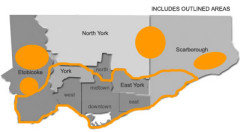
    That would be why they're widespread throughout parts of Toronto close to Lake Ontario. A veritable sunny warm clime year round!


    Termite Hot Spots in Toronto

    A friend reached for a book under her bed, only to find it was eaten away by the little critters. Not to mention door-frames etc. (And they'll eat your coffin and you, too, when you're gone.)

    As mentioned above, independent assessment, repair and regular upkeep is required.

    User thanked worthy
  • 5 years ago

    Two types of termites, subterranean and Formosan. Which is it? It sounds as if it is subterranean. Subterranean are easier to deal with than Formosan. They work differently. Subterranean come up from the soil. Formosan swarm in the Spring and find damp areas above ground like a leaking gutter, then tunnel down into the earth eating the wood on the way down. Subterranean are naturally found through out the South and Southwest. Formosan are typically found in coastal areas. They are not native to the US and are a moving infestation.


    What the two types have in common are they eat the wood and destroy the soundness of the wood structure. Eventually, the structure becomes so compromised that it falls down.


    If you have Formosan, the structure will need to be tented and a poison gas injected into the sealed tent. If you have subterranean, the ground will need to treated around the area using a poison bait system or soil barrier treatment, if permitted in that state, where they entered into the structure. Both of these treatments are done by state licensed professionals. The little companies are just as good as the big national companies. The area that is compromised will need to be exposed and the wood replaced if there is structural damage. Your termite contractor can advise you whether the structure has "conducive conditions" such as wood touching the earth and what you need to do to change the conditions.


    It appears from what you posted that the damage has been treated and the damaged area is open to inspection. That's great. The seller should have also the area repaired prior to closing. Most homeowners in the South purchase annual termite contracts that include annual inspections and treatment. Make the seller purchase and transfer a termite contract on the structure as part of you offer. Under the circumstances, this is not an unreasonable request.


    I've purchased two homes that had termites. One was Formosan and it was limited to one wooden column. We didn't have to tent. Our termite contractor found the active infestation when he conducted the sale inspection. We worked out the solution and were satisfied with the result. The other was in a home that we had owned for two years and found them after observing some wings around a doorway. The front porch steps and wooden doorway were removed, area treated and repairs made.


    Most states in the South require a termite inspection and a termite certificate be issued within 30 days of closing. Your real estate agent will take care of this detail for you.


    Given that the seller has exposed the affected area, I'd feel confident that this is a conscientious seller. I wouldn't hesitate if the property is properly treated, repaired and a termite contract in place.


    User thanked homechef59
  • 5 years ago

    My brother told me that a termite inspector told him that a house built on foundations with a termite trap on top, such as the one I am currently sitting in, is better than one built on a concrete slab --- as far as termite damage is concerned. Apparently it is easier to find termite damage by going under the house and looking around.


    Seems that houses these days are much more likely to be put on concrete slabs. A shame, I reckon.


    BTW, we have termites around the place where I live (not at home, out in the bush). On one walk we go on occasionally we pass a termite mound, and enjoy looking at the latest in its renovations. We think an echidna had breakfast there one morning, The next time we saw it, after rain, the clever termites had cemented everything up.


    Also BTW, it gets cold here, but not enough for snow, just frost.


    Oh and ANOTHER thing, that termite inspector told my brother that as a T. inspector he had to advise to get rid of any wood laying about. But the thing is, he said in confidence, he'd keep that bit of wood laying about and let the termites have that for a meal if they so chose. They wouldn't necessarily burp and then move onto the house for desert. So advice can sometimes be what they feel they should tell you, but what they would do themselves might be something a little different.

    User thanked tete_a_tete
  • 5 years ago

    Very helpful everyone, thank you.

    Homechef - not Formosan, just regular ole subterranean. The seller is very honest. However it's an estate sale so he has no real first hand knowledge either.

    The house has a cellar. So am I correct that a competent GC can tell more or less for certain there is no floor joist involvement? The thing that scares me is that structural integrity could be severely impacted with no visual evidence. Apparently these buggers hollow out the insides of the wood but from the outside all looks fine.

    It sounds like as long as all of the damage is found and fixed, and we keep up with pest control going forward it might be ok.

  • 5 years ago

    The GC and the termite inspector will take a long screwdriver or knife and jab it into the joist. If it crumbles, you've got a problem. If it doesn't crumble, it's sound.


    Like one of the posters said above, slabs are a lot harder to deal with than crawl spaces and basements. Every house of a certain age will have evidence of a termite snack or two. The trick is to get ahead of it before it every becomes a big problem. I like the Sentricon system for this, have one myself and can recommend it. It's environmentally friendly.


    I really think you will be fine. Just follow the advice that you receive from your friendly termite inspector. If you like the house, go for it.

    User thanked homechef59
  • 5 years ago
    last modified: 5 years ago

    I live in an area that is popular for termites. My last house had termites. It required some very minor repairs, and also the holes drilled all the way around the house to keep them away. Everyone here employs, a termite company to come in and inspect once a year, and do a light spraying, for prevention. No tenting ever done in this area. Its not the type, they have in California, and some other places. Yours are not the type, that tenting is done for either. Hire a reputable termite inspector, to check out the house. If there are any problems, he/she will find them. I wouldnt let it stop me from buying the house, unless it has gone on so long, that there is more damage than what is seen. If the area you are looking at, is a termite area, then everyone there, can expect to have them at some point. Its just a fact of life living in a warmer climate.

    User thanked cat_ky
  • 5 years ago

    Thank you so much Homechef and cat. Very much appreciate your response. 😊

  • 5 years ago

    I just want to add to what has already been said is to make sure if there are subterranean termites then make sure that there are no access points to the house from the ground. They don't like to get into the house through open space so it is recommended to keep 6" of space if a house is on the slab and to the dirt. With a basement I think what would matter is that the masonry foundation doesn't have any holes/cracks in it and that it sticks up 6" from the ground similar to a house on a slab.

    User thanked lyfia