Software
Houzz Logo Print
angie_duckworth49

Best siding for a concrete block house?

5 years ago

I have a 50's concrete block house that I am refurbishing. What is the best solution to covering the outside block? I'm not a big fan of vinyl or stucco. Would Hardie board work? And would it go directly on the block, or would I have to do furring strips? I don't want moisture problems down the road. I am framing the inside walls out with insulation and sheetrock. Thanks for any and all advice!

Comments (13)

  • 5 years ago

    You would fur the wall out and treat it as a rainscreen system.

    Angie D thanked millworkman
  • 5 years ago

    What climate are you in?


    Any chance you can insulate the exterior instead, to keep the thermal mass of the concrete inside the insulated envelope?

    Angie D thanked Isaac
  • 5 years ago

    I am in South Carolina. Hot, humid summers. I'm thinking it might be best to do furring strips with sheet insulation between and go ahead with vinyl. I just don't want any moisture getting trapped and causing problems down the road.

  • 5 years ago

    My impression had always been that vinyl traps moisture more than aluminum siding does. No idea how it compares to wood or Hardi.

    Angie D thanked Isaac
  • PRO
    5 years ago

    Hi, Angie,


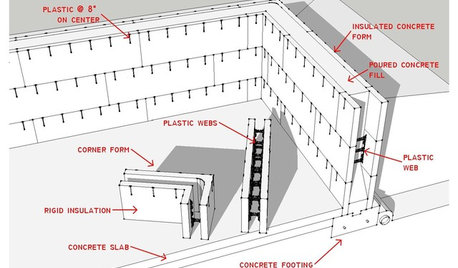
    You might consider insulating the cores of the masonry block with a foam insulation like Core Fill https://www.core-fill500.com/documents/brochure.pdf and adding any supplemental insulation to the exterior only if you don't otherwise need to alter the interior wall surfaces. You can create a vented rain screen as Millworkman described behind fiber-cement siding. If you install vinyl siding, you wouldn't need to bother; it drains particularly well and wouldn't trap moisture behind it.

    Angie D thanked Charles Ross Homes
  • 5 years ago
    • Hi, many years ago I was on a job on a military base in San Diego. They had us redo the interior of a huge office space. We installed about a 1000 sheets of vinyl clad 5/8 sheetrock on concrete walls. We Glued them up with about a quart of glue per sheet. It came out really well. Just a thought.
    • Good Luck Woodbutcher


    Angie D thanked woodbutcher_ca
  • PRO
    5 years ago

    @woodbutcher_ca,


    We've learned a lot about building science in the last 25 or so years. Vinyl wallpaper and vinyl-covered anything might work fine in a dry climate, but it's about the worst interior wall treatment I can think of for a mixed-humid or humid climate. Vinyl doesn't allow for drying to the interior which elevates the potential for mold/mildew growth on the back side of the drywall.

    Angie D thanked Charles Ross Homes
  • 5 years ago

    @Charles Ross Homes if you fill the voids, isn't thermal bridging still an issue? Concrete is not insulating by itself.

    Angie D thanked Isaac
  • 5 years ago
    last modified: 5 years ago

    Look into mineral paint, aka potassium silicate or waterglass paint. Its a whole different thing from modern acrylic paint that forms a surface film. Its more of a chemical bond with the masonry which keeps out water but allows vapor to pass through. This is what we want in order to prevent peeling paint, damage to the masonry, and/or mold, mildew or algae. I say "we" cos mine is also a concrete block house, early 1900s but i had a lot of the same concerns you are dealing with and ran through the whole gamut of what to do about it.

    Mineral paint has been in ctommon use in Europe for a long time. Here we have only a few co's including Keim, Limeworks US, and Beeck which is located in South Carolina I believe.

    The last two is who Ive been working with - both have GREAT customer service, willing to work with homeowners.

    It might be fun, and a whole lot simpler, to embrace what youve got, an unusual and interesting historic building material. One other thing in favor of silicate paint is the colors are BEAUTIFUL - because mineral pigments are used there is a richness to the color that cant be matched with chemical colorants used in acrylic paints. The afore-mentioned companies have their own pallettes but can also color match any paint co. color. Can we see a pic of what youve got?

    Angie D thanked Debbie Downer
  • PRO
    5 years ago

    @Isaac,


    Actually, concrete does offer some insulating value. An 8" thick concrete wall has an R-value of 1.35 according to ASHRAE data. A 12" concrete CMU (block) has an R-value of 1.28. The R-value of the CMU is the, well, aggregate, of the R-value of the cells and webs.


    Heat loss/gain is a function of the overall performance of an assembly. If you insulate only the cores of a masonry block wall, you'll improve the thermal performance of the assembly, despite thermal bridging at the webs. My suggestion for your home was to fill the cores with foam insulation and adding supplemental insulation to the home's exterior since you're planning on adding some sort of new cladding material. Rigid foam would be a good candidate. That would eliminate thermal bridging. Depending on your climate and the overall performance of the modified wall assembly, that may eliminate the need to add insulation to the home's interior.

    Angie D thanked Charles Ross Homes
  • 5 years ago


    One of my first thoughts was to just paint it and be done, but I need to change the layout of the interior and will close up some of the windows. So, that leaves me a couple of options: hire a mason to close up the windows with more block and just paint, which I don't think I will like the look of; or do furring strips with board insulation between and put on vinyl. I'm definitely framing in the inside concrete block walls - do you think I will have moisture issues between the block and the sheetrock?

  • 5 years ago

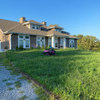
    Cute house - I like that low slung bungalow vibe that it has. Still think the correct breathable masonry friendly paint is the way to go. Sometimes less is more and in your climate your insulation concerns are not what they are up here in WI In other words, your proposed multiple layers is overkill - walls are of much less importance than that large heat absorbing roof and keeping attic from turning into an oven. What above poster said - definitely consult with locals before proceeding!


    Re altering or adding more layers to the exterior, our houses are odd ducks and my experience was that for every pro that advised one thing, there was another who would contradict and advise something totally different! I heard the fill in the brick idea, but then someone else says it blocks too much of the vapor exchange plus prohibitively expensive to drill, fill and seal 10,000 individual blocks. I honestly dont know if thats true or not, just saying proceed with caution cos anything beyond applying a surface coating is going to cost $$$ and you dont want to take a chance of causing serious problems like mold down the line. - good luck!


    Angie D thanked Debbie Downer