Software
Houzz Logo Print
westes

How Did Bark + Turface Rhododendron Soil Turn Into Mud?

5 years ago
last modified: 5 years ago
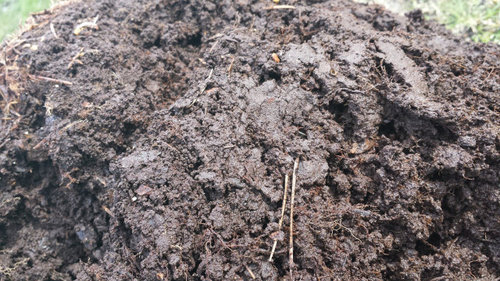
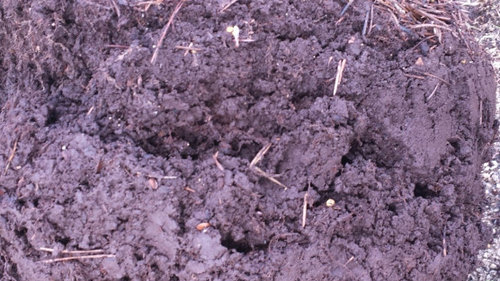
I have a few rhododendrons that are planted in 50% bark and 50% turface. After about two to three years of growth, I just replanted one of those and the rootball looks exactly as you would expect, a dense kind of bark/sawdust from the slow degradation of the bark. The other plant however has turned into slushy mud. It looks like a potter's clay, highly moldable. How did even happen? Does that imply that the turface degraded? Did some other contaminant get into that soil? Photos attached.

I am going to bare root the plant and give it new soil.


Comments (7)

  • 5 years ago

    It almost looks like the Turface wasn't kilned thoroughly and turned to clay? Don't look at me, I'm just guessing here, but that might have also accelerated decay of the bark due to the extra water. Or the area's naturally wetter and the bark turned to mush and took the Turface with it? The latter seems...odd.

    (I'm not really a fan of digging in bark or other unrotted organics, even high-carbon ones, for that reason; in my base silty soil, it rots easily and sucks up oxygen and nitrogen; non-organic soil lighteners and conditioners are better used in bulk, but that's another story).

    westes Zone 9b California SF Bay thanked User
  • 5 years ago
    last modified: 5 years ago
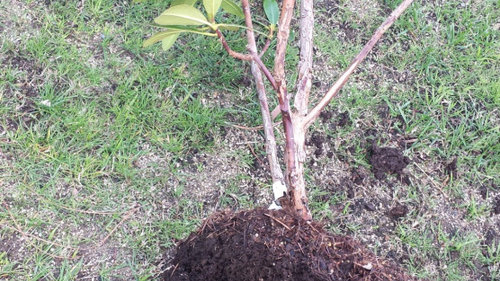
    @morpheuspa I should have mentioned this was in a pot, so there is no chance of contamination with the clay soil in the ground. And yes it does look like the turface degraded into a potter's clay. That's a big wake-up call that turface may have some quality control issues.

    If I were planting into the ground, I would not be using this soil mix. For in-ground planting, I might add some inorganics to improve air space. If I were planting into a raised bed that sits on top of clay soil, I might consider using a more organic soil mix. For normal plants, I rarely have organics be more than about one-third of the mix (e.g., the gritty mix), and in most of my experiments, I keep organics under 20%.

  • 5 years ago

    Yeah, even in a pot I avoid bark and bark fines for the same reason (nitrogen/oxygen binding, although at least pots are smaller so oxygen can penetrate) but I'm happier with very well-aged compost and peat to a greater extent since it decays less.

    I rarely, if ever, amend garden soils because it creates a virtual "pot" within the soil. That can actually be useful sometimes for a water-retaining section in a lighter, sandier soil. It's usually a terrible idea within a clay or dense silt like I have, however. You just end up with a water pit. :-)

    Of course, if you want a water pit for some reason, like aquatic plants...

    westes Zone 9b California SF Bay thanked User
  • 5 years ago
    last modified: 5 years ago
    Is there some advantage of turface vs the expanded clay balls? I assume they are basically the same thing. And much cheaper than turface (I think).

    westes Zone 9b California SF Bay thanked armoured
  • 5 years ago

    Turface's kilning is supposed to keep it from degrading as quickly. In your first case, that worked. :-) I just use Perlite or grit since the roots aren't going to penetrate kilned clay anyway.

    I've always thought we could argue soil additives all day (and do, usually with a lot of name-calling and ad hominem arguments). Everybody's got preferences and we all get really passionate about them (well, I don't, as such). I'm about half peat moss and bark fines, realizing the latter will go to mush pretty fast, with Perlite to lighten that to account for the mush and aerate the mass.


    If you want to use Turface or expanded clay balls however, both work and I think that's great.

    westes Zone 9b California SF Bay thanked User
  • 5 years ago
    last modified: 5 years ago

    @morpheuspa The reason to use turface is that it retains and releases more water - and for longer - than bark. Using it is about water retention. Tapla estimates that bark has water retention similar to an even mix of turface and granite.

    I know you are big on peat moss, but I have to say that a soil that is half peat and half bark is truly horrible soil for most plants. Any soil with more than about 30% organic content is going to have a soil structure that is difficult to manage and would drown plant roots if overwatered or left out in continuous rain. The exception is when you size the organic component, which is the workaround they are using with 5-1-1, using the bark size to keep the soil structure sound. Personally, I find that very tricky to manage keeping track of how much of the overall 5-1-1 mix is sawdust and peat.

    I have been doing a lot of experiments with adding peat as a soil component, and I am finding that a little goes a long way. Much more than 10% of peat starts to adversely affect soil structure when the soil is fully hydrated.

    The soil I mentioned in my original post here was something of a freakish experiment, and it is for a plant type (i.e., rhododendrons) that loves moist but well-drained soil.