Software
Houzz Logo Print
xuexchong

Drilling through concrete

5 years ago

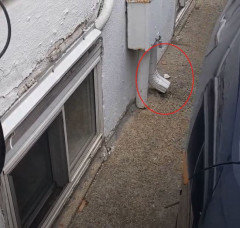
Guys - I have a window in the backyard and below it there is an open drain. We took out the drain and found out that it doesn't really take the water anywhere through a pipe but simply has some large rocks so basically doing nothing. We suspect this area of the house is allowing water to get close to the foundation and to the basement even though there isn't any water appearing right below this window in the basement. However, it is appearing a few feet away on the side of the house and we know that water can travel


I want to close out this open drain with a tarp temporarily and see if it stops water in the basement but I'm sensitive to drilling more screws into my stucco concrete. Is there a way to attach tarp to the wall in any other way? If not, what kind of screws would you use that'll cause least damage and not cause even more water entry points? Are Tapcon screws good for this purpose? Also in the past when I drilled into my stucco, it would break and crack quite easily. I just need perhaps 4-5 screws to hang the tarp properly onto the concrete and after a month of testing through the April rains, I'll take it off


Thanks

Comments (21)

  • 5 years ago

    I took a video to show the window well drain. The window is in a bathroom where we haven't seen any water come in at all but I'm curious to hear your thoughts if you think this may be the entry point for the water and then it shows up in the foundation by the driveway (0.17-0:25 is where the water is showing up). The waterproofing specialist wants to dig a few feet by the driveway, add gravel etc but I'm not fully certain as yet given water can and does travel


    https://youtu.be/1VtEHDoobJo


  • 5 years ago

    Go to the home center and buy a plastic window well cover in the correct size. Use caulking to adhere it and seal it from water on the concrete. You should have a window well cover on it anyway, in that location. If water is showing up from the drive way side, I would be looking to that area for the water intrusion. Please do not attach to your stucco house with bolts or screws.

  • 5 years ago
    last modified: 5 years ago

    More likely the water is coming from the gutter spouts. It looks like the slope goes straight to your area of concern. Add extensions so they drain far away from the foundation.


  • 5 years ago

    I actually placed a long tarp in that area and the water still came into the basement. I agree with you the gutter is too close but don't think it's the issue here

  • 5 years ago
    last modified: 5 years ago

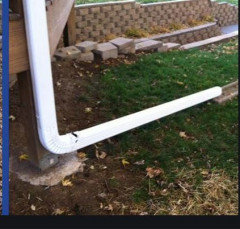
    I can't envision how a tarp would direct water away from the house. Once it's on the ground, it will travel the slope. It needs something like this. Also, you have 2 of them in that area that we could see, so both of them may contribute. But I agree, you certainly want to test every possibility.


  • 5 years ago

    Downspout leaders to help, period.

    2 ways: water is getting through the slab at various points. I see you caulked along the trouble wall, but there are many other points I see along the house and at the grade window. Don't think more caulk will fix your problem though. The other is water is going to be under the slab. But the hardscape is collecting the water and dumping it at the edge. The downspouts (and even if you add leaders) and the neighbor's water is probably adding to that. So if the ground is saturated, this convergence of water is overwhelming and coming into the basement where it has found an easy way.

    Start with the leaders to see if that helps. Beyond that, try a swale or french drain along the edge to catch the neighbor's runoff, pavement water, and your new leaders. Beyond that, see if there is footing drain tile under the walk-up door's grate. Then cutting the pavement against the house might be the last resort, but a gravel trench won't do anything. It would have to have a pipe, but at that point, might as well dig down to footing to put the pipe and damp/waterproof the wall.

  • 5 years ago

    Everybody's making very good points here and I appreciate that. Here is my outline of next steps and after each step, there will be a waiting period for 2 rainfalls to measure if it helped. Btw the neighbor's house has a French drain I believe on all 4 sides


    Step 1) How long a leader do I need? This is the driveway so the kids often use their bikes back and forth. Can I start with a 2ft leader?

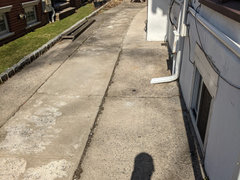
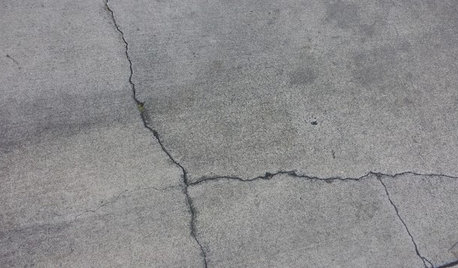
    2) There are obviously many cracks in the whole driveway as you can see - should I be pouring new concrete to fix those cracks which will cost about $9000 in NYC to do the whole driveway OR do step 3

    3) Dig down by the whole driveway and waterproof - this is what the waterproofing company suggested and it's $12,000. If I do this, should I have them install a french drain too

    4) I don't understand this statement (are you referring to the patio door or basement door down the steps) - "see if there is footing drain tile under the walk-up door's grate"

    5) I'll into installing a swale - so far the neighbor does have bricks laid out so none of his water is coming into my side. Also the streets slopes towards his house

  • 5 years ago

    Walk-up door - the door from basement looked like it had a grate at the bottom. If a footing drain tile existed, it would be at this level (and I imagine you would have a sump pit).

    The neighbor had one dowspout you can see connected to underground piping, no telling where that all exits though. If it connects to a french drain (perforated piping) then his downspout is just expelling lots of the water within the ground. Also, if you are talking about the edging blocks laid out, water is freely moving around in the soil under those. Putting a swale between you and him, if there's room, would be if his yard is sloping towards the property line, then that water + your hardscape water is collecting along the edge of driveway and a good bet contributing to water at your wall.

    The leader length, that's why it's always a hassle dumping onto hardscape, they get in the way. Just depends on slope of pavement and how much entry there is in gaps/cracks. You can cut the leader and screw it a certain way to allow it to rotate up out of the way (prob videos on Ytube).

  • PRO
    5 years ago
    last modified: 5 years ago

    Sorry but reall you need to get a pro out to help with this not a bunch of strangers on the net. Drainage is not something you tackle from the top you need to know where the issue starts below what you see. It looks like there is a drain there and where does the water go from there.? You say a pile of rocks but maybe those are actually drain tile and the issue is not there at all if there is no water coming in there. Yes the downspouts need to lead water away from the foundation so that can be done no matter what so I guess start there .I do not think a tarp is going to be the answer for sure.

  • 5 years ago

    Outside the basement door, there is a rectangular sump pit but I've never seen water collects there, it just drains out to the soil. That begs another question - I'm getting the basement door replaced as this one is cracked in many places on the inside and hard to winterize - can I remove the 4-inch concrete threshold and use the 1-inch that comes with the new door? I'll be sure to install a new sump pump in case water ever collects outside the door


    If I get a french drain installed, then I guess I can have my gutters connect to them too right?


  • 5 years ago
    last modified: 5 years ago

    If you are in a freezing climate then you won't want to be putting a sump pump outside.

    For the door grate, sometimes in old houses you'll see a concrete box installed acting like a "dry well." It is just to collect the water and let it drain slowly to the soil rather than thru the basement door. If rain is too much it can be overwhelmed. A lot of times you'll find a floor drain connected to your sewer system. I can only see the storm door in your vid that looks like the landing is flush with the basement floor. You want the landing to be lower than the door, if there is a concrete lip better to leave it. Hopefully still allows a standard 80" door.

    A french drain has perforated pipe to collect water from the ground - you do not want to add another concentrated water load collected from somewhere else, or it can interfere with the french drain's initial purpose. The downspouts should be connected to a solid pipe to transport the water to the endpoint clear of the house. The french drain, however, can be combined with the downspout pipes as long as the perforated pipe remains upstream.

    You won't be able to bury any leaders without some sawcutting and pavement removal anyway. Lots of people just buy cheap corrugated pipe to use as leaders so they can get stepped on and beat up.

  • 5 years ago
    last modified: 5 years ago

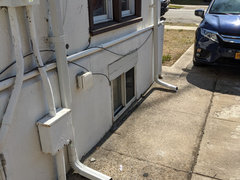
    I plan to connect corrugated pipes to these gutters and then lead them out to the front and terminate just before the sidewalk. Even if I do waterproofing, I agree with you that all the water needs to be led far away from the house


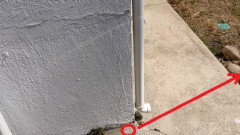
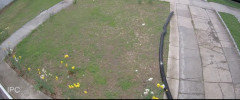
    View of the back of the house but I don't want to send the rainwater there since it'll negatively impact our vegetable garden


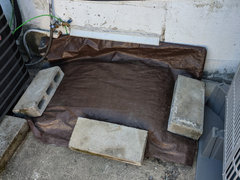
    Tarp on the window drain well as a test to see if there is less water getting into the basement after the next major rainfall in April. I guess not allowing water to go into the soil from this area will reduce pressure on the water table


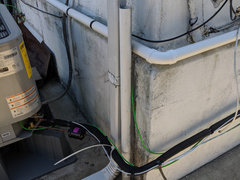
    As a side question, does this open pipe look like a plumbing vent? We do have a full bathroom in this area below in the basement


    This video shows a solid pipe from the sump pump outside the basement to the front of the house. Can I connect the gutters into this solid pipe?

    https://streamable.com/3zaa8b


  • 5 years ago
    last modified: 5 years ago

    If that is an open plumbing vent, its not right. Plumbing vents, need to vent up over the top of the roofline. Usually, they go up an inside wall and out through the attic, through the roof to the exterior.

  • 5 years ago

    What else could it be? It's certainly not my dryer vent or hvac vent since I know where they are

  • 5 years ago

    Is the green lid an existing pop-up emitter?

    Don't connect the 2 downspouts into the 2"(?) sump line, too small. You could, though, core out a hole at the front corner and install a pipe to run below the front sidewalk. It could then go out as far in the front yard as you want.


    The pipe would need to be 4", and if gravel under the sidewalk would make it a bit harder to tunnel under, but can be done. You can then tie your sump into this line as well so the front walk isn't flooded.

    Check the vent by listening while someone is running water inside, is there a toilet or shower right where the pipe exits? It should stink too. Or can you just see a pipe running through the wall somewhere?

  • 5 years ago

    The green lid is the termites food. Good idea about running a separate 4" pipe for the gutters. I'll take your advice and investigate this vent further

  • 5 years ago

    Are you guys in agreement that I should connect some corrugated pipes to the two gutters on the driveway to see if it alleviates the problem?

  • 5 years ago

    Yes, leaders was my and other's first suggestion. If it works, then you've saved yourself lots of trouble.

  • 5 years ago

    I installed these so will wait and see now. But the 4-in corrugated black pipe looks very ugly. Does anybody know of a source with flat corrugated pipe in green or can I simply use a very thin PVC pipe (4 inch wide and 2 inch high) where the kids can easily ride bikes over. I did this as a test but if it eradicates the water in the basement, I will look to using this as a permanent solution. Would I have the option to bury the pipes under the soil using some pvc and then maybe some perforated pipe inside the soil?


  • 5 years ago

    Update - I took all your suggestions and laid out corrugated pipe to all the downspouts on the driveway side of the house and it helped partially. Now, it seems the water comes into the basement only when there is a real heavy rainfall which does occur which means we have to fix this. Our waterproofing contractor made a visit and said he wants to dig up to the foundation (lay gravel, etc) starting after the basement steps to the start of the chimney (you see that area from the start upto 0:18 on this video) - https://www.youtube.com/watch?v=1VtEHDoobJo

    He also wants to close out the window and the drain that you see at the start of the video


    Upon questioning his reasoning, he said he sees somebody laid out a lot of tar in this area and is most likely where the majority of the water is coming in. If this doesn't work, he wants to do the work from the other side of the chimney to the end of the house. We've seen a little water in this area too but he thinks it's because the windows haven't been caulked which could be accurate since we've seen some water come in from the windows. It'll be $5000 for this job. I asked him what would prevent water from simply moving sideways and getting in through the side of the driveway closer to the front of the house and he said that typically doesn't happen and if water cannot enter the basement, it'll start seeping downwards


    Thanks