Software
Houzz Logo Print
rachel_ewald

Ornamental, barrier, & fruit tree recommendations?

5 years ago
last modified: 5 years ago
Hey all,

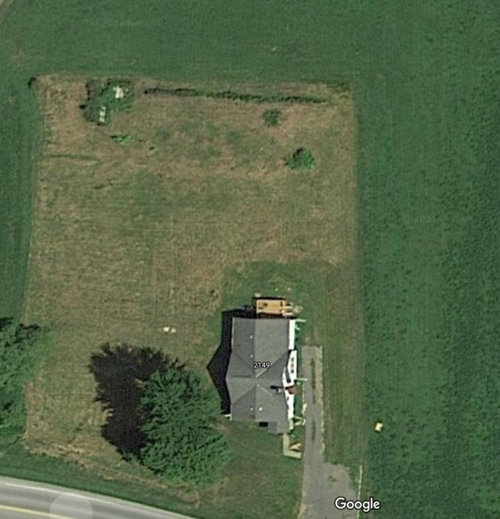
So it seems that my SO has decided to buy a shithole of a house right next door to work (we actually both work on said farm, but his work weeks can be upward of 80+ hours in the summer, so I understand the appeal). It's right on the outside of a slight curve of a major state route. There are two large trees on the west side of the property but otherwise, the yard is wide open (hay/row crop fields surrounding it) which I absolutely hate. So we have work to do...

Central, OH zone 6a.

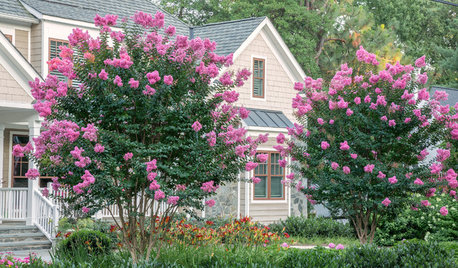
1. I would love some suggestions for trees to place on either side of the driveway. Preferably something spring flowering, but not set on this. Needs to be hardy as I'm willing to bet it will get at least trace amounts of salt from the road.

2. Suggestions for barrier/privacy type trees/bushes we could utilize on the property. I really don't know much about this topic. I'm not so concerned about the north end (would be the backside) of the property as it's open to the farm's hayfields, but I don't like the sides of the property being wide open, so something that will provide a wind/visual barrier, doesn't need to be super tall.

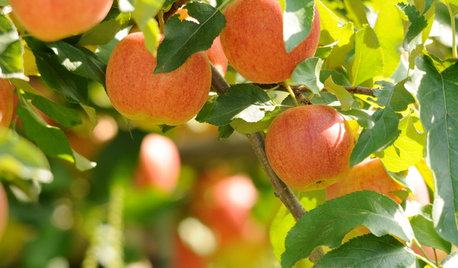
3. The fun part: fruit tree suggestions? I have the vague idea to create a line of fruit trees along the west side of the property (bordered by a pasture fenceline) but again am open to suggestions on this. I have some houseplant and vegetable experience, but not much of a fruit tree person.

4. Regarding berry bushes (raspberry, blackberry, blueberry, etc); any suggestions on these &/or where/how to strategically place them on the property? Do these make good barriers?

I promised I would make the best of things & I'm a dreamer, planner, & doer. I like projects. That being said, any thoughts/advice/recommendations/information would be greatly appreciated, I love to learn. Screenshot of the property from Google maps. Thanks in advance!


Comments (11)

  • 5 years ago
    last modified: 5 years ago

    Define what "barrier" is: visual (high/low), wind, snow, specific in zones or combination of them.

    Prepare for extra work on edible fruit bearing plants with the insects and birds that have no other trees nearby to compete for their appetites. Consider your timeline for growth, and placement based on future garage/driveway/shop/outbuilding/above ground pool.

    Rachel Ewald thanked 3onthetree
  • 5 years ago

    Regarding birds, you'll see the ones that there is habitat for. If you plant fruit trees, you'll suddenly have fruit eaters-- especially if you plant cherries, the robins are mad for them! But really, with fruit trees, fungal and insect damage is generally more of a problem than birds. These are not low-maintenance trees.


    Your local extension office will be a terrific resource. They know all about what is hardy and pest resistant. I'd be planting native species if at all possible. Holden Arboretum (near Cleveland) is also a wonderful resource and a lovely place to visit.


    For wind breaks, farmers usually plant poplars because they grow fast. In between them they plant evergreens, which though slower growing do a better job of blocking wind.


    If I were designing a garden on your plot, I'd include sycamores, tulip trees, magnolias, redbud and oak as well as lots of evergreen mixed in for winter interest. You'll want to have a mix of slow and swift growing trees as the fast ones also tend to die young. Additionally, you'll want to consider the mature height of the trees. Some trees, like redbud are understory trees. They prefer being sheltered by taller trees.

    Rachel Ewald thanked Jennifer K
  • 5 years ago
    last modified: 5 years ago

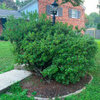
    I can't tell what type of tree you have in that picture, but be aware that if they are junipers (including eastern red cedar), there's a shared rust (cedar-apple rust) between those and fruit tree species from the rose family (apple, serviceberry, pear, quince, etc.). If there aren't nearby junipers, there's no need to worry, as both hosts have to be present for the rust's life cycle to continue (it goes back and forth). I don't know much about fruit trees beyond that, though there are lots of knowledgeable people here who can guide you more on those.

    In my experience, blackberries will take over the world if you let them and are thorny to pick from. If you pick your cultivar carefully, you may be able to avoid or mitigate these features ... I'm pretty sure ours are/were mostly bird donated.

    Blueberries are slightly picky on their soil, but if you have the right acidity, they're pretty maintenance free and will form nice tall bushes in a few years. They also have nice fall foliage. they like somewhat acidic soil. I happen to have the right acidity, so I do nothing but give them some water occasionally, but others amend their soil to accommodate. To maximize fruit, you want to have multiple varieties that bloom at the same time (bushes will list themselves by fruit timing - early, mid-season, late ...); many varieties are self fertile (though not all), but still do better with cross pollination.

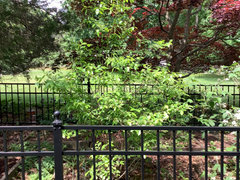
    Here's my Jersey (my largest variety and oldest bush):

    June (fully leafed out):

    The fence is 3' tall ... the blueberry is 7-8' if I let it be ... I don't know how much taller it could get if I didn't prune it, but I like to reach my berries (if I can beat the birds).


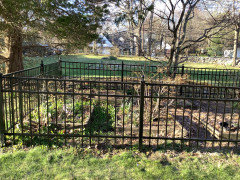
    April (budded out but not leafed out:

    (Jersey on the right, a young Berkeley on the left - in the corner, not-yet-weeded bed)

    Rachel Ewald thanked BlueberryBundtcake - 6a/5b MA
  • 5 years ago

    Rachel, there is a great tutorial in this post by NHBabs that details planning and execution of a mixed border. Take a look at this one for inspiration!


    https://www.gardenweb.com/discussions/3113384/shrubs-for-privacy-along-a-fence#n=22 

    Rachel Ewald thanked indianagardengirl
  • 5 years ago

    Meant to say it’s about half way down the post...

  • 5 years ago
    last modified: 5 years ago

    What's your soil like? Could be higher pH clay in that part of Ohio, especially west of Columbus.

    1. Crabapples may be your best bet for a hardy spring flowering tree by the driveway, but not too close to the road to minimize potential for salt spray injury. Be sure to get a variety with known disease resistance. Tree Lilac would probably also work or possibly one of the disease resistant Buckeyes.

    2. For a barrier for the perimeter of your property, I'd go with a mix of evergreen trees and deciduous trees/shrubs as Jennifer and indianagardengirl suggested (although I'd avoid poplars). Pines are OK if you have good loamy soil, but in higher pH heavy clay soil pines probably won't be very happy, and spruces may be a better option (avoid blue spruce). Norway spruce are disease resistant and adaptable, but they do get very large. Techny Arborvitaes would be OK if deer aren't an issue (although bagworms also like them). Groupings of flowering trees or shrubs between the evergreens would look nice. Maybe more crabs, buckeyes, cornel dogwood, redbuds, viburnums (choose hardy viburnums resistant to VLB). Alleghany viburnums are tough and make a good border. Shingle oak grows well in your area and provides some winter screening due to its persistent (marcescent) leaves.

    3 & 4. I can't provide much advice on fruits and berries, other than select the most pest/disease resistant to minimize the need for treatments. Blueberries are probably not going to do well in your area without heavily amended soil.

    Rachel Ewald thanked arbordave (SE MI)
  • 5 years ago

    For shade trees I'd recommend Sugar Maple. They give nice shade are beautiful in fall, and in only 30-50 years you can tap them for maple syrup. Other maples also will give you sap, but there's so little sugar that you spend twice as much time cooking the sap.

    For fruit trees plant what you eat. Most folks know what apples and pear varieties they like. peaches are sold as peaches. So picking a variety is a challenge. I planted 5 different blueberries from Stark. One won't grow the others are doing fine. I'd suggest the larger blueberry plants, Jersey is one, you get more berries. Pick strawberry varieties that specify excellent taste or flavor,

    I'd suggest you look at Stark and Fedco as suppliers. Fedco tho sells lots of apple on M-111 rootstocks which If you have that foot deep loam soil I saw around Columbus will grow too big. Pick a smaller rootstock unless you have clay. I'd suggest you consider Cox's Orange Pippin and Canadian Strawberry both of which Fedco sells. The Cox's is considered one of the best tasting apples worldwide. They say it's hard to grow but there's a mature one here that is at least a foot in diameter. It's the only apple that DW and I both like. It's not grown commercially because it russets. If it does they say your soil needs boron. Rome apples are big in your area and Evercrisp was developed by the Rome Growers in your area.

    For pears I'd suggest Shenandoah which is new and developed by the USDA for a FireBlight resistant tree, but I like it because it's also precocious which means it produces pears much sooner which is rare in pears. If you grow a Bartlett pear the Blake's Pride pear flowers at the same time so is a good pollinator.

    For peaches I bought a Hal-Berta from Stark because it grew a large fruit. Mine produced about a 100 peaches the 2nd year. Since then a late frost got most of the blossoms. Some blossoms bloom late so there's still a small crop. I like the tree though as it grows fast but wants to grow horizontally instead of up. My other peach wants to only grow up. The Hal-Berta tree hasn't been available since. If you want more get freestones and trees that produce thru the season. Stark has a July4 ripening tree but I don't have one.

    I wouldn't recommend hedge row trees on a lot. I'd go with something that provides multiple benefits. If you do plant some evergreens don't pick Spruces. My Norway Spruces are all dying, as are the neighbors. I have 20 that are dead, other are dying. My neighbor across the street told me she has 15 that need to come down. Neighbors to the north and south have already taken out a lot.


    Rachel Ewald thanked John D Zn6a PIT Pa
  • 5 years ago

    @John D Zn6a PIT Pa I really appreciate the advice/insight! Luckily my stepfather is a "pine tree guy" as we call him; had a Christmas tree farm for a number of years. I recall there is a certain variety of pine dying from the bottom up in my childhood front yard, and I believe my stepdad said there is some kind of virus that affects them. I assume, based on what you said, they were spruce.

  • 5 years ago

    @arbordave (SE MI) Honestly, not sure exactly what type of soil we're supposed to have. I grew up in NE Ohio / Medina County and we had very heavy clay soils there, and the soil here seems much less clay-like to me. I love lilacs, not opposed to crabapples, so might consider crabapples near the road and lilacs somewhere else on the property. I really appreciate the advice/insight on barrier-type trees & shrubs!

  • 5 years ago
    last modified: 5 years ago

    If you have good loamy soil vs clay that will broaden your options. Not sure what kind of trouble with Norway Spruce John in PA might be having, but generally speaking in this region Norway has fewer issues than blue (Colorado) or white spruce. Sounds like your stepfather would be a good source of info. If you prefer medium sized trees (you said "doesn't need to be super tall") and your soil is good, there are some medium-sized pines that would work (like Limber pine or Korean pine) but they may be harder to find and/or more expensive.