Software
Houzz Logo Print
audrey_mazur

Building in Flood Zone?

5 years ago

My husband and I have been exploring building our own home since existing home prices where we live are outrageous. I've found a lot for sale in the area we want that is very reasonably priced compared to other lots nearby ($10k vs $30k-$60k). My thought is with that low of a price, we could afford to pay cash and hopefully complete all site prep (utilities, clearing, grading, permits, etc) before applying for a construction loan. We would then use the equity in the land as a down payment, rather than financing the lot as well. Obviously the price of the lot indicates something is wrong with the land, that being the fact it's in a flood zone! Obviously, since I'm posting here, I have no knowledge of the actual risk & difficulty of doing something like this. I've tried researching building/grading methods but haven't brought much up for our region in AZ. Can anyone share insight into how difficult it would be to build? Cost range? Methods? Is it even worth it?
I understand when all is said and done we'd probably be better off just purchasing a more expensive lot that doesn't have this issue, but the appeal is our ability to purchase and begin making improvements right away, rather than financing a more expensive lot down the road. Hubby's job is seasonal and is almost a guaranteed extra $30k during the season that we would allocate towards doing as much on our own as we can without financing from a bank.
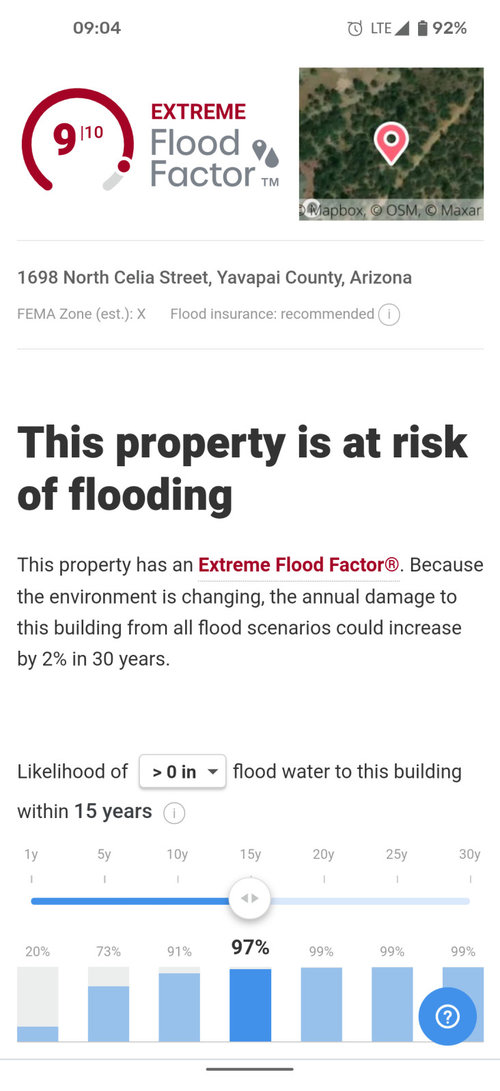
Any practical non-judgemental advice will be appreciated! I've attached screenshots of the flood risk factor that was posted with the lot listing.

Comments (24)

  • 5 years ago

    Building a home will always cost MORE than buying an existing home.

    And the equity of the land will not be a down payment

  • 5 years ago
    last modified: 5 years ago

    Call a local agent and ask what the flood insurance is should you build a house on that property.

    If you are in a designated flood zone, chances are almost certain any bank carrying your mortgage will require you to also carry flood insurance.

    I own a beach house, which isn't in the highest flood risk area. I'm actually in the first tier where insurance is just encouraged rather than required by most lenders.

    My annual premium cost is relatively manageable in the grand scheme of things - but others closer to the water than me pay over $10,000/year just for flood insurance.

    The lot is that cheap for a reason.

  • 5 years ago

    Building in a flood plain may cost more due to flooding. I.e., local cabin is 12’ above ground.

    Insurance may be higher than similar homes not located in a flood plain.

    You will spend more than the $20-50k savings on the property on engineering. Someone with experience has figured it out.

    Why do you want to live in a flood plain?

  • 5 years ago

    Don't do it. That's all I'm gonna say.

  • 5 years ago

    So I'll clarify that I don't want to live in a floodplain...I'm looking at the practicality of making it work because obviously people do it. Also, this isn't a property near any body of water (in AZ!), so I'm assuming the risk comes with the annual monsoons and snow melt. Can this be a matter of proper drainage to direct water away from foundation?

    I like the idea of researching what flood insurance would cost. Any recommendations to have the lot construction surveyed before purchasing?

    Also, I know that building will cost more than buying 👍 I don't need advice on building vs buying, I know the pros and cons as it relates to my situation.

  • 5 years ago

    If you're in an actual flood plain, that is not something you're going to mitigate with a drainage ditch! If it were that simple, millions of people along the Mississippi would be a whole lot happier.

    The whys I don't see, but the map tells you there is over a 90% chance your house will see flooding in relatively short order - potentially as deep as 3 feet. Again, that's not something you will fix with a drainage ditch.

    Start with a call to an insurance agent. That lot may be a cash only build for someone and if so - don't you be that moron, unless you like your stuff really water-logged.

    The lot is that cheap for a reason. :)

  • PRO
    5 years ago

    Altering the potential for flooding on the subject property will alter the potential for flooding on adjacent properties. In order to propose that, I think you'll find the need to jump through a lot of bureaucratic hoops. And even if you make the bureaucrats happy, you'll need to find an underwriter willing to take the risk on issuing a mortgage. That's a big maybe.


    I suspect an expensive lesson goes with this property. I think I'd stay home from school and not add that particular lesson to my experience.

  • 5 years ago
    last modified: 5 years ago

    I just looked it up because I was curious.

    They've been trying to sell this lot since 2018. They cut the sale price more than in half. It finally went under contract, and and now it's back on the market. The potential buyers may have gotten the flood insurance quote. ;)

    The land is in a low spot, subject to flash flooding. I would keep looking. This lot carries far too high of a risk, for me anyway.

  • 5 years ago

    It really is site specific on the flood mitigation. We are building on a beautiful lot on the Columbia River in WA. In order to address the flood risk, our main floor is above the 100 year flood level, and the garage and unfinished storage are on the ground level. So our entire house was designed to mitigate the risk. I would start with whatever city or county is in charge of issuing building permits to ask about your specific site requirements. We went through months of working with the county before we were allowed to build. We are also dealing with a protected coastline so that made it even more complicated.

  • 5 years ago

    Oh my.


    With the more extreme weather we're seeing, and the rains and monsoons that rip through AZ (and apparently would flow right through your property) this is REALLY HIGH RISK. Like - not lazy flooding where the water rises risky - but like millions of gallons of water trying to sweep your house off the foundation and destroy it risky.


    I wouldn't want the houses directly beside that lot either.


    Flood plains get redone every few years - they are not shrinking.


  • PRO
    5 years ago

    " I would start with whatever city or county is in charge of issuing building permits to ask about your specific site requirements."


    Excellent advice. See if the lot is buildable.


    A guy down here on the gulf coast of Florida bought a beach lot for a million dollars and thought he stole it. Unbuildable and now he's suing. Didn't do his due diligence. That's a lot of money for a place to park an RV.

  • 5 years ago

    I would not build on that property even if it were given to me. Yes, you could elevate the house but what about your vehicles? Also, do you want to lug groceries and suitcases up stairs or spend money on an elevator to provide access to a raised house? That's a pain.


    However much you save on this lot compared to others will surely be exceeded by the cost to build and insure the house.


    We've lived through flooding in LA and FL, and never want to experience it again.

  • 5 years ago

    I would avoid this lot. Tax sale and flood zone. You will have to pour money into a high foundation. The house across from it is ON STILTS like a beach house. That's a huge red flag. However high their front door is, expect to have to build 2 to 3 feet HIGHER than that.


    This lot looks unbuildable for a reasonable price. Look at Google streetview and satellite view and check out the county appraisal map. The lot is at the lowest point of a valley, in a creek bed. Although it "looks" dry right now on the map, that area has now been planned out as drainage. Look at Studebaker streetview. The builders know it's a huge low, drainage spot. They built a bridge with a GIGANTIC culvert and built up the road and houses 6 feet.


    On county maps it shows two huge neighboring lots as FEMA FLOOD HAZARD ZONE. The lot has a Warranty Deed and before that a Special Warranty Deed and is owned by somebody out of state who bought from a TAX LEIN COMPANY. Meaning, it was bought from a Sherriff's Sale for pennies on the dollar because the original owners stopped paying taxes on it. I'm betting they did so because it's worthless land.


    https://yavgis.maps.arcgis.com/apps/webappviewer/index.html?id=40c6f0e9f1eb458a91f92666477338d7#


    https://gis.yavapai.us/v4/search.aspx#


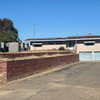
    neighbor house


  • PRO
    5 years ago

    Well, no risk, no reward. Any interest in opening a gila monster swim training facility?

  • 5 years ago

    You could build a houseboat...

  • PRO
    5 years ago

    @Jennifer K,


    Think bigger: how about a cruise ship to nowhere?

  • 5 years ago

    Don't do it. Too many stories in my neck of the woods of people losing their homes in floods - and flood insurance in these zones is well nigh impossible to get.

  • PRO
    5 years ago

    Has anyone else built in the flood zone nearby?

  • 5 years ago

    There are different types of flood zones; some you can fill in and stay above floor elevation, some you build up on piers. I agree with others; see what you can find out from municipality. Then have a (free) chat with a civil engineer to see what may be involved.

  • 5 years ago

    I was reading last week about how flood insurance rates are going to increase very sooner to more accurately account for flood risk. I wouldn’t even take the lot adjacent to that.

  • 5 years ago

    My friend bought a house 6 years ago not in a flood plain but with a small creek on the backside of her 5 acre property. This weekend's torrential downpours in the Middle Tennessee area left her property flooded for the FOURTH time since she's lived there. The water doesn't reach her house but it's taken down fences, entered garages and just made a big horrible mess that they are now cleaning up for a second time since January of this year.


    I'm one of those people whose home was destroyed by a freak act of nature in January 2020 (a microburst only 75 yards wide with winds 80+mph that slammed into our house and flipped a fully loaded semi trailer onto its side). I've learned to never say never and there's no way in hades I'd build in a flood plain. EVER.

  • 5 years ago

    Thanks everyone for your input! Yep, it's a pretty dumb idea haha. But now I've learned more about what to look out for when we find another potential building site 🙂

  • 5 years ago

    I have to echo shead’s comments. You can talk risk and flood insurance, but think about what the actual situation would be like. Can you empty the contents of your basement at a moment’s notice? How would you clean up your basement if it were flooded? Are you prepared to lose all of your landscaping? Having your property flooded by a river is a terrifying experience. You do not want to go there. Our property was flooded and while our house was saved with an emergency dike, it is an experience we will never forget. Spend the money and live far, far away from a river.

  • 5 years ago
    last modified: 5 years ago

    Never mind the safety of pets and children (and adults too!). And then the resale issues by everyone else in the future.

    Building on a flood plain makes sense if the property is unique, has a view etc. We built an oceanfront house - they are all automatically in a flood zone in my area. And even then, anyone reasonable makes sure they are as elevated as they can be.

    As an aside, our municipality requires we carry flood insurance - so even if you don't need a mortgage, it is still required. We built as high as feasible, pay much less than anyone around us but have still gone from $1,200 to $4,000 over 8 years.