Software
Houzz Logo Print
baligirl

Engineered hardwood to complement existing red oak floors

5 years ago

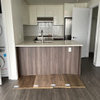
We're remodeling our great room and will be installing an engineered hardwood over radiant in-floor heat. The issue is that the great room meets the kitchen in two sections (see one of the transitions in the photo) and the kitchen has 2 1/4" naturally stained red oak hardwood floors.


I don't believe we would be able to match the existing red oak flooring. What suggestions do you have for an engineered hardwood (preferably pre-stained) product for the great room? I'm thinking wide planks and a darker stain, but can't find something that looks like it will complement the strong yellow tone of the existing red oak floor (the photo is a bit yellower than in person, but it gives you an idea of the strong yellow tone...) Should we stick with oak as a species or is it better to do something completely different? A recommendation for specific product would be awesome!


Thanks!


Comments (8)

  • 5 years ago

    Not a pro, but engineered wood and this red oak likely won't flow. If it's over radiant heat, why not some kind of tile or stone? Or extend those 2 1/4 " planks (easy to find) into the other room and refinish all the same color. Good luck.

  • 5 years ago

    Why must you have in floor radiant heat for the wood areas?

  • 5 years ago

    Wouldn’t put two different types of wood flooring side by side.

  • 5 years ago

    Radiant floor heat makes for comfortable rooms here in Minnesota, plus it allows us to put in built-ins along one wall where we currently have baseboard heat.

    Engineered wood can be any species and stain (it's real hardwood over a composite base) but I doubt we can perfectly match the existing flooring. This is why I'm asking for suggestions on a complimentary wood.

  • PRO
    5 years ago

    You can get unfinished engineered red oak to match what you have, no need for pre-finished flooring search stress.

  • 5 years ago

    I'm in Canada, so I get the cool feeling. As a cork flooring professional I have 'issues' with in-floor radiant heat because the product I LOVE (love cork....LOOOOOOOVE IT!) cannot go over top. Cork has TOO HIGH of an insulation value. It counter-acts any heat that is trying to push through.


    Wood is a semi-conductor. It will allow 'some' energy (ie. heat, electricity) through while blocking the rest of it. For that reason, most people who want in-floor radiant heat to warm their toes use tile, stone or carpet (are you trying to heat the HOUSE with the radiant heat or are you warming your toes?).


    The other issue I have with in-floor radiant heat = it severely limits the product you are allowed to use over top. The BIGGEST issue is with ELECTRIC HEAT. Sigh....the stuff that is used most often in 'renovations' with radiant heat.


    Ahem....electric radiant systems are not the one's who tell you what can and cannot go over their product. They will 'claim' just about anything to get you to purchase their product. Nope. It is the FLOORING manufacturer who says, "Appropriate for use with hydronic in-floor radiant heat."


    Notice I changed to 'hydronic' with that last statement? Yep. Hydronic = water/oil/gel. It is the most efficient, expensive and the most rigorous to install. It can (potentially) raise the floor height of the room by more than 1". It can be hung from the subfloor BELOW the floors (that means you need access to ceiling in your basement (assuming you have a basement...I can't tell). That will keep the floor-raise to a minimum (or zero...). It is still expensive to install.


    So...my question is: which TYPE of in-floor radiant heat are you using? Hydronic? Electric? Or my favourite 'oldy but a goodie' = Forced Air (yes...I've seen it! Soooo interesting...from a house built in the 1950's)?


    The TYPE of in-floor radiant system AND the REASON for the heat (whole home system or just warming your toes) will dictate WHAT you are allowed to put over top.

  • 5 years ago

    Thanks, SJ. It will be hydronic. it will be heating just our great room. The rest of the house has traditional radiators. We will be covering some of it with a large area rug so that does worry me a bit. We'll have heat pump in the room but that won't help when it's -20 degrees F! But the HVAC company has been doing this for 100 years so I think it will be ok. But with the hydronic, it does need to be engineered hardwood vs. solid hardwood.

  • 5 years ago

    OK...so you are able to work with wood. Go with the THINNEST hardwood that makes sense. You do not want any more material than you need. The more wood over the floor, the less heat you will feel. The large area rugs won't do anything to the SYSTEM....but it will greatly reduce the warmth being radiated into the room. I would NOT use a rug pad. Weird things happen when you heat up 'chemicals' (like in a rug pad) and then lay something HEAVY over it. Some of them turn mushy or their fibres can imbed into the hardwood finish...weird things like that.


    An area rug that goes straight down on the wood = no problem. Just remember, you are trying to get the heat INTO the room....not keep it out. Anything laid over top of a heat source WILL BLOCK the heat. It's like trying to heat your metal thermos by putting cold water in it and then putting it in the OVEN. Yep. Wrong way to go about it. You need to get the heat into the room...not keep it out. Which is why I have issues with radiant and cork.


    I've had cork floors installed in basements in Northern Canada (closer to the N. Pole than you are to Florida). With the right insulation (6mm cork underlay) and the right floor (11mm cork floating floor) the temperature raised 7 C (12.5 F) just by installing the cork. And that's at -40 C (-40 F).


    Check to see if you will have to have the floor raised (are you on slab or is this over a basement/crawl space) to get the hydronic in.

Sponsored
The Steele Group
Average rating: 5 out of 5 stars1 Review
Industry Leading General Contractors in Franklin County, Ohio