Software
Houzz Logo Print
rorosie_1

Drywall question - is asbestos a concern for partial demo?

5 years ago
last modified: 5 years ago

We had a backed up sewer drain in our basement that we discovered this past weekend. We have a crushed sewer pipe that will need to be replaced. We bought the house (built in the late 1940s) a little over 6 months ago, and we know very little about the history of the house.

Anyway, my question is about the cleanup. We had a company come to the house yesterday to suck up the sewage backup and spray everything down with anti-microbial. The crew told us that water had been absorbed into some of the drywall, about 12-18 inches high. These walls are from a portion of the finished part of the basement. I have no idea when this section of the basement was built -- or even if it is a remodel. I might guess it was probably installed sometime over 30 years ago.

The crew gave me some options, including cutting out the bottom 2 feet or so of drywall (floodcut). They are also giving me the option of utilizing fans along the walls to run for 3-5 days, and they would cut holes in the wall along where they removed the baseboards. Of course, I assume the other options are to finish sucking up water on the floor under the tile and finish the anti-microbial clean on the den floors and bottom of walls and do nothing else or just run fans without drilling after the cleanup.

I have been trying to read whether removing portions of walls is necessary, or whether the fan and drilling is necessary. The guy on the crew said if we didn't want to remove the wall, we could cover it in Kilz in case mold develops.

I am concerned about cutting out the wall, or even drilling, because I don't know what’s in the walls. Don’t drywalls and sheetrock have asbestos in them? (Again, I have no idea what these walls installed as part of a renovation are made of). I've been reading about asbestos in drywall, and I am afraid that cutting or drilling will release dust that might contain asbestos. I'd definitely rather not mess with that. Seems like it would make a bad situation worse. I even called a local asbestos tester who didn't sound too interested in coming out to run a test. He just said it should be alright, since drywall usually contains less than 1% asbestos if it contains it at all, and although the mud or spackling can contain it, the mud is usually put along seams or the bottom or over nail heads. I also don't know whether these wall cavities would contain insulation, and what type of insulation it would be.

I am thinking, wouldn't it best to use the fans without drilling and get a dehumidifier, and then monitor the situation? There is a backlog in construction/contractor availability, and I have no idea when a contractor would be available to replace the wall or fix the holes, and we’d just have cut out or drilled walls for many months if we did that route. I also don’t really know how big these holes would be. Couldn’t we monitor it, and if mold develops in the coming months or even years, we would deal with it via a contractor who can do the wall replacement all at once, rather than piecemeal over the course of many months? However, I also understand that most remediation companies strictly recommend replacing water damaged drywall (especially if it is water from a sewage water damage).

I know the previous owners had at least one major sewer backup two years ago and they did some remediation for that. I don't know what remediation was done, except that it was done with a company (the same one we are using). The fact is the doorframe in the den has always shown severe water damage markings, at least 6 inches high or so (whether water actually got that high or the doorframe acted as a wick), and it was that way when we bought the house. So, there obviously has been water damage around these same walls in the past, and they have looked fine thus far.

As far as our insurance company goes, they have said they will cover any demo and re-intstall, so money doesn't seem like it will be an issue.

Any thoughts would be welcome, particularly because I seem to be making all the wrong decisions about house maintenance no matter the issue.

TLDR, cut out drywall of 18 inch high watermarks after sewage spill one inch deep on floor, or just dry it out and Kilz later?

Comments (19)

  • 5 years ago

    The risk for asbestos contamination is extremely small: less than the risk of illness from mold or bacterial contamination. So I would have 2 feet of drywall removed.

    rorosie_1 thanked Seabornman
  • 5 years ago
    last modified: 5 years ago

    Thank you. This is the direction I am leading. You put the crux of the issue perfectly: it is the risk of mold, bacterial contamination, and pathogens vs. the possibility of asbestos contamination. Both would be bad, so that is the choice. They would have to cut out probably 2 walls worth of drywall up to two feet high, but I am not sure exactly which walls or how many feet of the walls they would do.


    Just gives me a lot of stress.

  • PRO
    5 years ago

    Your issue is one of risk management: balancing the unknown risk of asbestos, the highly probably risk of mold/mildew/micro contamination, and the risk/cost implications of removing too much drywall. Drywall is cheap. Remove whatever you need to in order to dry out the space quickly--before mold and mildew take over.

    rorosie_1 thanked Charles Ross Homes
  • 5 years ago
    last modified: 5 years ago

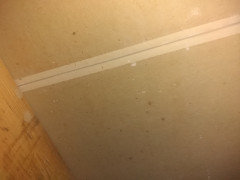
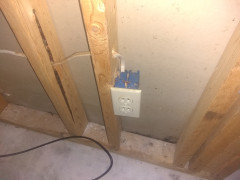
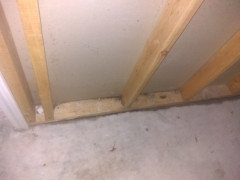
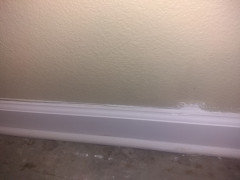
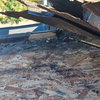
    Thank you all! Some of the walls are unfinished on one side and finished on the other. Here are some pics from the unfinished sides. Can't know what's in the drywall I guess. It at least pre-dates 1992.

    Any thoughts on what kind of material this is?


  • 5 years ago
    last modified: 5 years ago

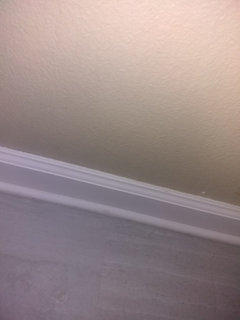
    And here are some pics from the finished sides of the walls. Don't know if any of this would indicate anything one way or another. Unfortunately, the most affected wall is finished on both sides, but presumably that wall is made with the same building material as the above unfinished walls. That wall seems to be the biggest concern since the damage would also be inside the cavity.


  • 5 years ago

    @kudzu9 Thank you for your response. These would be prudent steps. I ran my concerns by our cleanup crew, and they agreed I should talk with my insurance adjustor about asbestos testing before cutting/drilling. I would like to get this testing done, and then proceed with a floodcut.


    My only concern is what could go wrong with running tests. Even just running a test for asbestos is required on a seller's disclosure. If asbestos is detected, we'd have to do an abatement team to address underlying issues or do nothing due to the presence of asbestos. Then we'd have to disclose to future potential buyers the results of the testing.


    Still, it would be a relief for the test to come back with asbestos not present (or under the EPA standard of 1% I guess), and then proceed with correct remediation. Thank you for your insight. I really appreciate it. I am planning to proceed with testing and then proper wall removal.

  • 5 years ago

    @Charles Ross Homes Thank you for your response. You put the issue perfectly for me, and I agree it is a choice of risk management. I appreciate your insight.

  • 5 years ago

    rorosie-

    Although asbestos was sometimes used in wallboard historically, its use in sheetrock (and many other products in the home) was phased out starting in the late-1970s and going into, perhaps, the mid-to-late 1980s. It's hard to say exactly because federal regulations were being put in place during this time, individual manufacturers were making decisions about changing their product formulations, and even some products banned from production were still installed until existing, old supplies were used up.

    Having said all this, I think there is a good chance, due to the possible more recent age of your house, that this may not be an issue for you. Good luck with the testing.

    rorosie_1 thanked kudzu9
  • 5 years ago

    I'd spring the $100 for a lab test to be sure. Of course, most renovators won't bother with such namby pamby stuff. Even if there's no asbestos in the drywall, there will likely be in the compound and tape.


    (As I fill up the wastebasket every day with used tissue, I fear what all I breathed in during two decades of renovations.)

    rorosie_1 thanked worthy
  • 5 years ago

    worthy-

    I agree that there could also be asbestos in the tape or mud if the house was old enough. But since this house was possibly built after these products were being used, there is also a fair chance that there is no asbestos. anywhere in the walls.

    rorosie_1 thanked kudzu9
  • PRO
    5 years ago

    @worthy,


    We had a saying: asbestos for breakfast and lead for lunch.

  • 5 years ago
    last modified: 5 years ago

    FYI: The house was built in the late 1940s, and the renovated walls pictured above were put in sometime before 1992.

    I am a bit nervous that a test will reveal asbestos above EPA limits and that will lead to costly remediation. No idea how much abatement of three walls of drywall with asbestos would cost or what my insurance would say. Might have to bite the bullet and have the cleaning team just do the flood cut. I called a local asbestos test company, and the expert there told me, “should be ok.” Of course, when I asked the cleaning crew how they would cut the drywall, they told me they would just saw across the wall.

    Anyway, the vast majority of people whose opinions I have sought have said they would just do the cut.

  • 5 years ago
    last modified: 5 years ago

    Mold can be a more immediate health hazard.


    The owners of this house moved out when they got tests showing the whole place was dangerous to them and their children thanks to the previous EIFS (synthetic stucco) reno. Rather than tear it apart, they demolished and re-built.


    rorosie_1 thanked worthy
  • 5 years ago
    last modified: 5 years ago

    Just highlighting worst case. (But do get it tested and remove the damage properly to forestall future health problems.)

    I had a senior lawyer friend who despite my advice to not just scrape off the '60s popcorn ceiling in her post marriage condo, let her painter do it his way: scrape, sweep and vacuum. She's in her 70s and not really worried about 30 years down the line!

    rorosie_1 thanked worthy
  • 5 years ago

    OP update: Just did a close inspect on the unfinished side of the walls in question, and there are multiple panels with manufacture dates of 1993. So, that's all good as far as zero presence of asbestos. I thank everyone for their feedback and insight as I panicked my way through this whole thing.

  • 5 years ago

    rorosie-

    Great news! I understand it was stressful, but you were just being prudent. What is even more stressful for people is when they realize after the fact that they unknowingly did something risky -- like dry scraping a popcorn ceiling with asbestos -- and they can't go back in time.

    Enjoy your renovation :-)

    rorosie_1 thanked kudzu9
  • 5 years ago

    Thanks, kudzu9! Onward to restoring the finished basement better than before.

  • PRO
    5 years ago

    Get the asbestos test done to e sure, But the minimal exposure does not cause asbestos related issues.