Software
Houzz Logo Print
originalpinkmountain

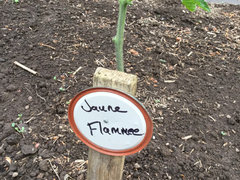
How do you mark your plants and rows?

5 years ago

Last year I made my own plastic plant stakes by cutting up milk jugs into the shape. They got lost in a plant jungle. This year I tried popsicle sticks to avoid using plastic ones, they too got lost and with all the watering, the ink ran, even though I used permanent marker. Any ideas of something I can buy or is very quick to make? We don't have time to make custom wood stakes. Wondering about something we could mark anew every year. I've seen the metal stakes but I'm wondering how to mark them and how well they work/hold up over the season? I don't want to use anything plastic. Need something quick and easy. Our tomatoes are a complete loss, hubs planted them hurriedly and ditched all the markers. I basically have a garden full of mystery tomatoes. Going to be tough with the seed saving this year . . .

Comments (21)

  • 5 years ago

    I use plastic markers and write on them in pencil. They do get lost in the foliage, but I place them near the stem so that I can unearth them if I need to.


    Here's an idea, so that you will know what the varieties are if the markers go missing. Plant alphabetically! Whether you do that or not,, it's wise to keep a master list in the house ;).


    Linda


  • 5 years ago
    last modified: 5 years ago

    I gave hubs a schematic map of the rows, with what varieties to plant where, which he insisted I make to his exact specifications . . . and then he promptly got rushed and disregarded it . . .He also didn't put the little blurry popsicle sticks with the names next to the plant either. He was in "git 'er done" mode . . . I can't blame him too much, really late hard frosts kept our poor potbound starter tomatoes inside way too long, they were desperate to get in the ground . . .

  • 5 years ago

    Next year, you will have to write some kind of tie-on labels and attach them to the seedlings! I have used popsicle sticks for crops other than tomatoes, and they were very difficult to decipher at the end of the season. The white plastic markers, either purpose-bought or made from venetian blinds or from cut-up yoghurt containers lasted all season.


  • 5 years ago
    last modified: 5 years ago

    Dark pencil on popsicle sticks works well. One disadvantage in popsicle sticks is that they are quite small, and tend to disappear. But as marker stakes in seedling pots, they are excellent.

  • 5 years ago

    Rather than putting markers at the planting spot (my tomatoes get about 3' wide and 5' tall), I put the markers at the edge of the raised bed. What is planted in front of the tomatoes is obviously basil.

    That way the markers don't get lost under the plants

  • 5 years ago

    Personally, I keep track of different varieties using a planting map, and some degree of separation... and because I save seed, I separate different varieties as widely as possible. If I was growing plants for consumption only, I would put them all in one place, and their names wouldn't matter. ;-)


    If growing tomatoes, presumably some type of support will be used? You could make durable tags from strips of aluminum cut from aluminum cans, and engrave them with a point (or even by pushing hard with a ball point pen). Fold the tags over the top of the cage or support. The engraving would not fade, as I have observed some "permanent" markers will when exposed to the elements. When the season is over, just throw the flattened tag in with the saved seeds, to be used the next time that seed is grown. OR... just throw it away, since they are cheap & easy to replace.

  • 5 years ago

    A few years ago I bought 50 12" x 1.5" heavy duty plastic markers. I write on them with a black paint pen and at the end of the season they look exactly like they did on day one. In fact I reuse the same ones every year since I got them. The paint does not fade at all. I use them for peppers and tomatoes only. I don't mark rows of anything as I don't think it is necessary.

  • 5 years ago

    Yes, hubs has never saved seeds, so he was thinking, "What's the big deal, they're clearly all tomatoes" when he put them in the ground. I might not even save any seeds this year, I still have many left over. But want to be ready for next year . . .

  • 5 years ago
    last modified: 5 years ago

    Tomato seeds are viable for years, so you can use the same seeds again next year.


    Maybe you could just place markers in the pots if hubs plants them for you again.

  • 5 years ago
    last modified: 5 years ago

    There were markers in some of the pots, and for the other pots it was written on the outside. And I made a diagram with all the names of all the varieties and in which row to plant them. And hubs just stuck everything in the ground as fast as possible and disregarded all of it. It was our community garden spot so I was not there to supervise, I had to work. Hubs is retired. I am so grateful for his help, don't get me wrong, but sometimes . . . so anyway, now trying to figure out how to at least go back and mark something if I can . . . quick and dirty.

  • 5 years ago

    I don't mark them. I have the layout in my head....really, I do. Course, a smaller plot with a mix close together is different.

  • 5 years ago

    wayne_5 zone 5b/6a Central Indiana set up your messaging so we can contact you privately. Welcome to the Addiction...I mean Club! LOL We've got similar zones so we can trade seeds!

  • 5 years ago

    Once the plants start bearing you might be better able to figure out what they are. Many tomatoes are rather distinctive looking. You might remember from last year.

  • 5 years ago

    i just use colored craft sticks. cheap easy

    and simple. to mark out each planting bed

    they come 6 different colors a box 200 are

    $5 on amazon.

  • 5 years ago

    I record the varieties on paper as I am planting and transfer to a spreadsheet in Excel. During the seedling stage they have a small white tag that I write the variety on in pencil. With as many tomato plants as I grow it became necessary.

  • 5 years ago

    I also use the plastic mini-blinds for pot markers and I record the tomato varieties on a paper garden plan. However, I want easily seen markers in the garden, especially for some varieties that I saved seed from last year. I like to recycle too, so I have used this method for a couple of years (the lids were used for canning already):

  • 5 years ago

    I couldn't even see the few tiny craft sticks the other day in the garden, the whole thing looked so beigy under the green. Our plants aren't that grown up yet and healthy looking, and the garden is not that weed free. I see the folks using larger stakes to mark rows and ye olde string method for seeded rows, probably the best. Next year I will buy the stakes in advance. Gemplers has great ones . . . https://gemplers.com/search?q=wood+plant+stakes

    I could also have hubs make some big permanent ones that are taller and just fasten different labels on them every year. That would work for rows. Also seeing that I might need colored wood stakes for out in the garden. This is my first go at a really large scale gardening plot. The kind that needs to be plowed or roto tilled . . . little popsicle sticks get lost visually in a landscape that big. Not sure if we will do the big garden again next year though, depends on how it goes this year . . .

  • 5 years ago

    I like the window blinds, too. They are easy to cut with kitchen shears. I used an Identi-Pen from Sakura. It has both a fine and medium tip. Doesn't fade or discolor. You can also write on plastic. I buy plants from a local grower. She cuts yogurt cups into strips but her marker fades. Any plastic plant markers I still have can be written on in pencil. Then next year I use a kitchen scrubbie pad to wash it off. Only takes a little scrubbing and Dawn dish detergent.

  • 5 years ago

    I second the pencil writing if you do use plastic and want to reuse it. A good eraser will take off the marks if you don't like scrubbing. A good marker for outdoors is Sharpie Extreme or Sharpie Industrial. They do not fade in UV light like the regular Sharpies do. Paint markers work, too, but are not what I like to use.


    For natural markers that are easy to see, I use trimmings from my trees and bushes. I cut approximately 1 inch diameter branches into 2 - 3 foot lengths. They are great to mark planting locations for cucumber, melons, squash, pumpkins, potatoes, etc. When the plants are large you can see where you should water to actually get the moisture to the roots. If you cut the top at a sharp angle you can mark on them...just not a very long name. If you make them long, you can cut the buried (and often rotting) end off and use it as a shorter stake the next year.


    I try to also have a backup map. Stakes sometimes get disturbed by animals and people and move or go missing. Planting time is busy and hectic and maps and labels are easy to ignore. But it is soooo nice later to have them.

  • 5 years ago
    last modified: 5 years ago

    While I use plastic markers for some stuff my preferred method of keeping track of tomato and pepper varieties is using the smart phone and make videos then make sure I back them up to the computer promptly. While they are growing indoors I have the containers marked with white duct tape and a black sharpie permanent marker. At planting out time I'll set the container next to where to seedling was set out and generally put a rock or some soil in it so it doesn't blow away until the video is made.