Software
Houzz Logo Print
webuser_250784160

Can you roller oil based poly?

5 years ago
last modified: 5 years ago
Hi,

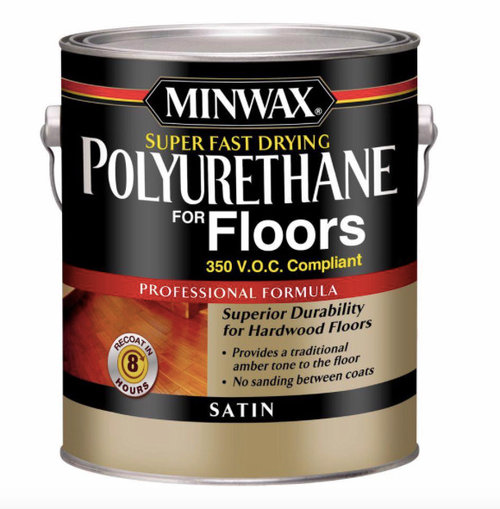
I bought this to finish my floors, Minwax oil based poly. On the can it says to use a brush or synthetic paint pad, it says not to roller it. But I have understood from others that oil based poly is in fact ok to put on with a roller. Is it?

The can also says no need to sand in between coats. Trying to understand what is the best protocol to follow...

I have raw pine floors, we will stain them with oil based stain then poly. Should we use 2 coats of poly or will we need three?


Comments (19)

  • PRO
    5 years ago

    You can roll it, depending on your experience. This is a high solid finish With poor leveling properties. Inexperience will get you roller marks and orange peel finish. You have to work the finish.

  • 5 years ago

    @User: "Craptastic quality product...."

    Reviewers do seem to like the competing Bona Woodline Poly Satin (Quart, Gallon).

  • 5 years ago

    It’s all I can get in the country I live in. We are not blessed with many products like you are in the USA or Europe. We have minwax and we have Varathane. We also have very very bad local brands, much worse than this. Is it better I have my guy apply with a brush?

  • 5 years ago

    ^ What he said.

    A lambswool will provide the best result. Make sure you mix thoroughly and keep it mixed while you're applying. Oil poly can be thick so I suspect that bubbles might be an issue if you roll, in addition to not flowing out properly. Contrary to commenter above, it doesn't lap and of course it ambers. It's oil poly.

  • 5 years ago

    Thanks! I will see if I can order lambswool from abroad as we don’t have it locally

  • 5 years ago

    I have applied many gallons of oil poly,including Min-Wax and here's my opinions based on my experience. ANY poly is subject to bubbles when rolled and fast drying make's it worse. There is no need for exotic applicator material,esp one that might shed. Even wiping brush on can lip can introduce bubbles. Aside to bubbles,the #1 mistake made by professionals and diyer alike is trash dried in finish. There is no sound reason to sand between coats UNLESS you've let trash into finish. The source of trash is sanding dust on surface or dust settling out of room air and landing on wet finish. A tiny hair size lint look's and feel's like a grain of sand in dry finish. Even if room has been rid of trash,wearing same clothes as worn while sanding will introduce lots of trash into finish. Another source of trash is from brushes that people THINK they cleaned last time it was used. Few,make that v-e-r-y few people,including so called pros know how to clean brushes. The best way to judge cleaness of room air and brushes is strong lighting. If you haven't seen trash floating in air when subjected to strong light,you need not read futhur nor ask. With room free of floating debris ,flex bristles by wacking back and forth across a table edge,chair back or other stationary object. Poly or other hard drying finish that remain's on bristels due to inadiquate cleaning will shatter into tiny flakes when whacked as above. Each time bristles flex while painting,flakes break off into wet finish and look like sand when dry. Just because they wear shirts with names on them or put Pro below their forum name doesn't make them a professional. With that,if you have to go on line looking for how to tell your floor finish how it's done,you are in for disappointment when job is over.

  • 5 years ago

    So roller or not? I'm not sure I understand what your advice is on what type of applicator is best.

  • 5 years ago

    All I can tell you is EVERY TIME I've seen poly rolled there were bubbles,lots of bubbles. I use hvlp on large projects and brush for small projects. For one's first attempt,I'd reccomend brush but others are saying you can't go wrong with lambswool roller so take your choice.

  • PRO
    5 years ago
    last modified: 5 years ago

    Use a lambs wool block applicator, no roller for beginners. Lambs wool roller is too thick of a nap for poor leveling oil base polyurethanes.

  • 5 years ago

    Well, i hired a guy to do the poly, he is not a beginner. He said he always uses a roller. I’m thinking of getting him the applicator, but this will be his first time using it

  • PRO
    5 years ago
    last modified: 5 years ago

    Do not force change on him, let him use a roller, if, he knows how. Allow him to select his own tools.

    C A thanked G & S Floor Service
  • 5 years ago

    I wanted to ask also, if you do a satin finish, do you prefer the first coat or two is gloss for more durability then finish with a satin? Or does it not matter.

  • PRO
    5 years ago

    Does not matter, the solid % is the same. Oil base poly solid count is around 43%. if, you want better, use gym finishes. Solid count is above 50%. High solid means more difficult to apply.

  • 5 years ago

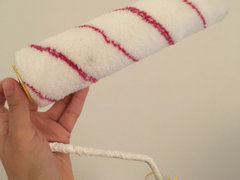
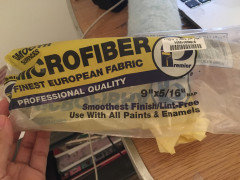
    I've been applying the poly with a brush and with a synthetic pad (Cannot get lambswool where I am). It was a grueling day. Took many hours to do one coat. I don't think I can do this again for the second and third coat, it was just too hard. I found this mirofiber roller--is this ok to use with oil poly? I need something to go on more fast for the next coats.


  • PRO
    5 years ago

    Use 1/4” nap, 5/16” is too thick. you will end up with orange peels and bubbles.

  • 5 years ago

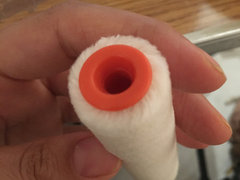
    I see. i dont think we have that here. just in a very small roller size.


  • 5 years ago

    Would a lambswool applicator have made the job go faster? The synthetic paint pad applictor took so much time. I keep dipping it in and then I had to constantly adjust with a brush. It took me maybe 8 hours to do my whole apartment.

  • PRO
    5 years ago
    last modified: 5 years ago

    You can pour onto the floor and then spread it. I pour a 24 " puddle.

    C A thanked G & S Floor Service
Sponsored
Hope Restoration & General Contracting
Average rating: 4.7 out of 5 stars35 Reviews
Columbus Design-Build, Kitchen & Bath Remodeling, Historic Renovations