Software
Houzz Logo Print
diggerdee

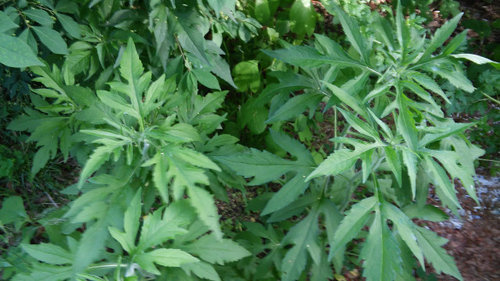
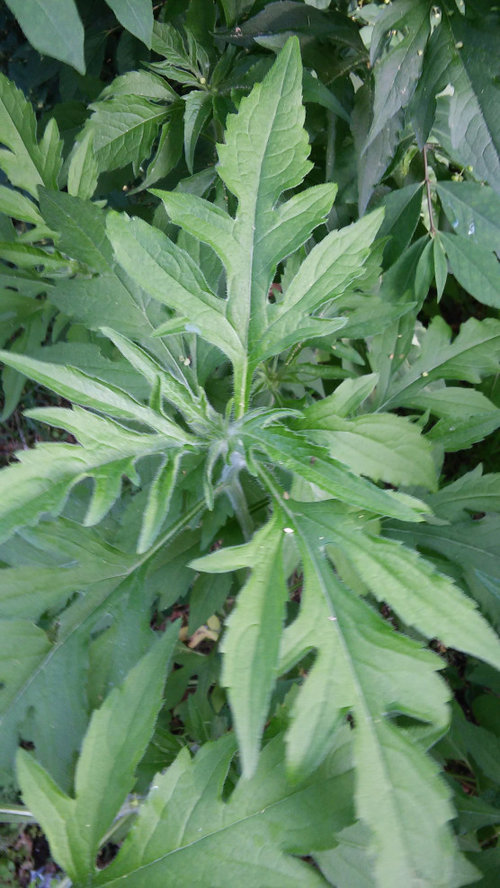
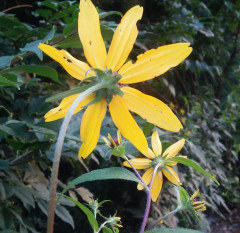
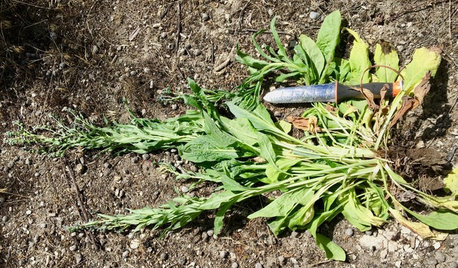
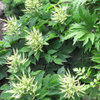
Weed ID? *********

Well, I'm guessing it's a weed. One of those that you swear is "something" when it's little so you let it go...


Any ideas?


(needed 15 characters for title (why????) so added asterisks!)


Thanks!

:)

Dee

Comments (30)

  • 5 years ago

    hm

    fitst thought was Ambrosia, but that is much finer


    could it be some kind of Hibiscus? where does it grow, a garden or somewhere in the landscape?

  • 5 years ago

    Possibly Rudbeckia laciniata.

  • 5 years ago
    last modified: 5 years ago

    Not Ambrosia artemisiifolia but perhaps Ambrosia trifida? I've never seen that species but I believe the lobing is variable. It looks a bit too furry for the Rudbeckia and I can’t think of any kind of Hibiscus it resembles.

  • 5 years ago

    So, I'm not up on plant lingo, lol, so forgive me if I use the wrong words. I googled Ambrosia trifida and from the images I'm finding, my weed looks like it has longer leaves, less rounded leaves, more "points" on each leaf, and more serrated edges.


    But, whatever it is, it looks to be indeed a weed, and if it is Ambrosia trifida, then I discovered that that is ragweed, so it's gone. Too bad, as the foliage is actually rather pretty. I too had originally thought it might be a rudbeckia when it was tiny, and there are rudbeckia in this bed, but apparently I was wrong.


    Thank you all for your help!

    :)

    Dee

  • 5 years ago

    I would leave it until a flower bud shows (says a person who has raised plenty of weeds thinking they were something better lol). I don't think it's ragweed, it looks like it has alternate leaves and not opposite as in ragweeds. I'd suspect some kind of rudbeckia.

  • 5 years ago

    Maybe I'll let it go a bit longer.....


    :)

    Dee

  • 5 years ago

    Good call on the leaf arrangement. I didn't spot that in the pictures.

  • 5 years ago

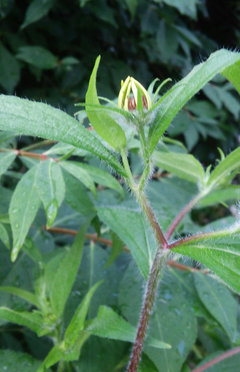
    Well I think I'm glad I waited to pull these. It looks like it may indeed possibly be a rudbeckia. Seems like it's taking forever to set bud and bloom. And an awful lot of foliage for so few buds. Hopefully in another day or two...


    I have several annual rudbeckias in this bed but don't recall ever planting one like this.


    :)

    Dee


  • 5 years ago

    Do I sense a brand new and patented DiggerDee Rudbeckia on the horizon, winning awards for its beautiful bloom, disease-resistance, and pollinator benefits? I can feel it just around the corner...

  • 5 years ago
    last modified: 5 years ago

    Dee - I've have used this website with good results. Plant ID

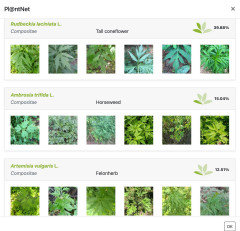
    Unfair maybe, but I took a screenshot of your picture, ran it through Pl@ntNet and it said this:


    Hope that was okay by you. It's a good website, IMO. Happy blooming!

    Kindly,

    Jane

  • 5 years ago

    Nice resource. Thanks Thanks, Jane

  • 5 years ago

    Thanks Jane, of course it was fine. Fingers crossed its the r. laciniata. I haven't looked at the site myself yet, and the photos you posted are small, but i do think it most resembles the r. laciniata.


    Deanna I couldn't be so lucky lol. But you reminded me of a funny story. Years ago our group of CT gardeners here on this forum had two swaps a year, and one year someone brought me a white lilac. We would arrange some swaps beforehand and label the plants with the person's name, and other things we just brought and everyone shopped. While most attendees were folks we all knew or new-to-the-forum people who introduced themselves and stayed and ate, drank and chatted with us, there often were a few folks who came in, didn't talk to anyone, grabbed stuff, and ran, and we never knew who they were. At the swap with the lilac, someone took the lilac that had been labeled for me. Another swapper said, hey, maybe we can find the person when someone posts on the forum with a question about a DiggerDee Lilac. We figured since that was the name on the lilac, they'd think that was the cultivar!

  • 5 years ago

    How about Helianthus divaricatus?

  • 5 years ago
    last modified: 5 years ago

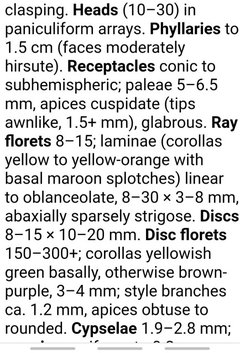
    I don't think Helianthus divaricatus has lobed leaves. I think this plant is probably an unusual sport of Rudbeckia triloba that has longer than normal ray petals. Hybridization between Rudbeckia is rare or maybe nonexistent, and there are no named hybrids listed, even though their ranges overlap so much. If you still suspect it's a hybrid, can you get a photo of the involucre? It could help, but I still think it's just an unusual mutation of Rudbeckia triloba. Everything about this plant fits into the parameters of the key. This plant has a 3 lobed leaf, whereas Rudbeckia laciniata has leaves with 3 leaflets that are lobed. And laciniata flowers are different with green disks. I'm not totally backed up with facts, and this is just speculation, but as far as I know, most Rubeckia cultivars are the result of discovered natural mutations, or the discovery of isolated populations that have mutated to their surroundings. They aren't the result of hybridizing. Henry Eilers discovered his rogue colony of Rudbeckia submentosa growing along an abandoned railroad track here in Illinois.

  • 5 years ago

    See? We’ve got a DiggerDee Lilac hiding out somewhere, and now this Rudbeckia. One day I’m going to brag that I knew you *before*….”Oh, yea. Digger, she and I are totally tight. Like, we connect every week.”


    (I hope the forum counts as ”connecting.”)

  • 5 years ago

    Jay, the lastest photos with the flowers don’t look like the leaves are lobed. That is why I suggested an alternate.

  • 5 years ago

    Babs, I did notice that the last pictures of the top of the plant looked very similar to Helianthus divaricatus. That would have been my guess too, if I hadn't already known about the lobed leaves. I don't know about NH, but that woodland Sunflower is very common around here.

  • 5 years ago

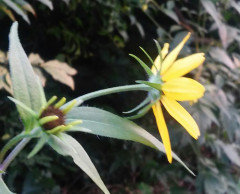
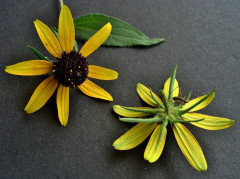
    Jay, is this what you wanted to see?


    Sorry, you guys know a lot more about botany than I do - I had to look up what involucre meant lol. What's the difference between a mutation and a hybrid? I'm guessing hybrid is a mix of two plants, whereas a mutation is a different growth pattern from the original. But what causes a mutation, and will this mutation return? I'm still trying to figure out how this happened, so since I had triloba in the garden a mutation would make sense, but curious as to how a mutation occurs.


    Thanks for your knowledge and patience.


    Deanna, don't worry, I won't forget you little folk. And yes, the forums definitely count as connecting!!


    :)

    Dee


  • 5 years ago
    last modified: 5 years ago

    Thanks for the photo Dee. The underside of your flower matches Rudbeckia triloba, and it's very different from all the other species mentioned. There is a lot of variation in petal lengths

    with this Rudbeckia. They can range from 8 - 30 mm. If these are self sown the offspring can all be different, and some will have longer petals.

  • 5 years ago

    Dee you are right about mutation vs hybrid. Some mutations are stable but some seem to revert, at least as far as what we can see expressed in how the plant grows.

  • 5 years ago

    Rudbeckia triloba. It's a bi-annual that can bloom first year. I have them and they seed around nicely but not aggressively so. Second year plants form a big airy mass of flowers.

  • 5 years ago

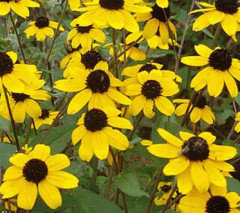
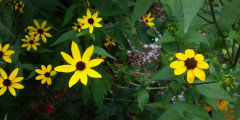
    sw_gardener do your triloba have that pointed petal shape and configuration? The ones I had in the past (up to this year) were more like this:


    That's why I wasn't sure what it was.

    :)

    Dee

  • 5 years ago

    Mine lack the pointed petals🤔. I couldn't find the comment but I think someone previously suggested it might be a hybrid? The flower almost looks like it crossed with a wild R. hirta.


    What's the plant form like? Typical triloba is about 4' tall with a cloud of blooms.

  • 5 years ago
    last modified: 5 years ago

    Rudbeckia triloba has a lot of variability in the ray petal lengths. I think that is the reason the petals happen to be longer on this plant. Not a hybrid or a mutation.


    You can measure the ray petals and if they are longer than 30mm,then we can explore whether or not it's a hybrid. The characteristics of this plant are completely triloba, and no characters of Rudbeckia hirta are showing anywhere, except the petal length which is similar and a coincidence.


    Rudbeckia triloba

    I have a triloba plant that's 2' and blooming, and another triloba that's 8" and blooming. Depending on conditions they can typically be all different heights. Helianthus divaricatus has yellow-orange disk flowers, and not brown 'eyes'.

    So this chance variation doesn't happen often, so maybe 1 out of every 500 plants has it, or even less. It's like having three kids and one of them a whole head taller then the other 2, same deal.

  • 5 years ago

    Thanks sw and Jay. I'll go out later and measure the petals (a little shy of the garden at the moment since I got stung 10 times by hornets last night!) I am enjoying these plants but have to admit I like the triloba I always had in the past, that had the rounder, more closely aligned petals. I've been letting these self-sow for years; perhaps I will sow some new seed next year and see what I end up with from each.


    :)

    Dee

  • 5 years ago

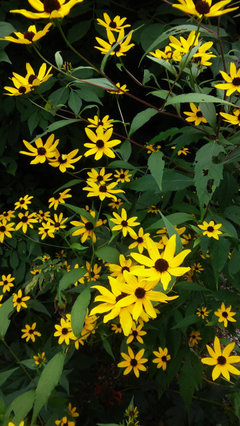
    Okay, I've finally decided to step foot in my garden - hesitantly lol. Just not going near the veggie garden where the hornets are, although I have to say my triloba are uncomfortably close to the veggie garden! So I measured the petals and they are about 2 CM, which I believe is about 20 mm. So I guess that's that.


    I did notice, however, that there are plants with the blooms I am accustomed to, the smaller, more tightly spaced, rounder petals, some right next to the other plants (see below). Hmm, I'd have to go and look again, but I believe these "regular" triloba are shorter than these new ones. I have to say I prefer these with the rounded petals.


    Either way, I'm happy I never did pull these. Enjoying their exuberance. And they just happen to be lined up along the back of the garden so it's a great backdrop!


    :)

    Dee

  • 5 years ago

    The variation in bloom sizes adds a nice contrast.

  • 5 years ago

    It looks like another thing that sets these apart, is that the petals “reach upwards”, instead of being a bit reflexed, as is usual with R. triloba?

  • 5 years ago

    Hmm, this didn't post the first time so let me try again. As I was saying, lol, you're right, gdinieontario - I hadn't noticed the difference in the way the petals curve!


    :)

    Dee