Software
Houzz Logo Print
webuser_460932056

Lawn care advice for newbie

5 years ago
Hi,


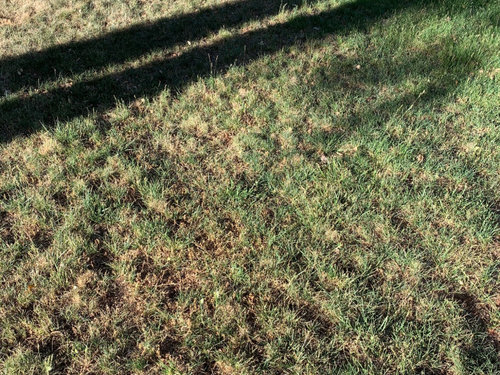
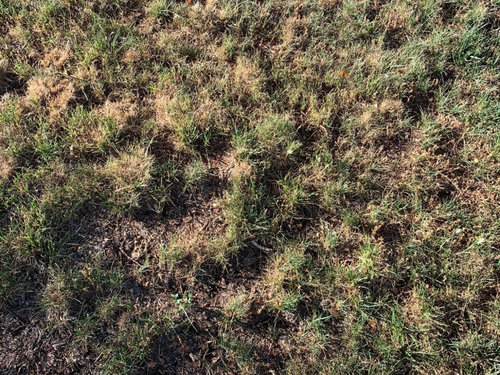
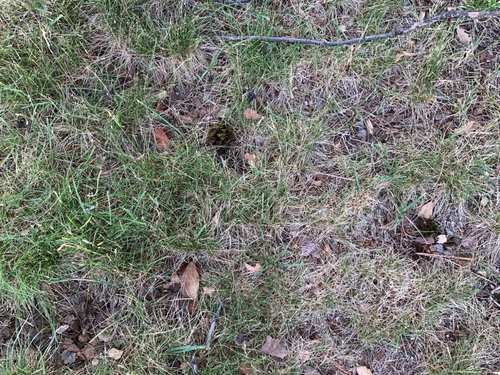
We bought our first house almost three years ago. The lawns have slowly started to yellow and look really bad over time. I live in Northern California and the soil has a ton of clay in it. I never added any type of fertilizer until about six weeks ago, I added Scotts Turf Builder Weed and Feed. I also have a bag of Scotts Turf Builder Lawn Care that I haven't used. I water the lawns first thing in the morning 4 times a week for ten minutes per zone.


I feel like the lawn is a mix of weeds and grass. I really don't want to tear it all out, add soil, and reseed. Does anyone have advice? I'd love suggestions on how to clean up this mess.


I was always taught to keep the outside of my house clean and looking nice so I'm starting to get pretty embarrassed of the situation.


Comments (7)

  • 5 years ago

    Where in NoCal do you live? Please be fairly specific. "Bay Area" is not specific enough.

    What grass seed did you put down?

    I am going to come back and suggest changing your watering quite a bit. You seem to be watering too frequently.

  • 5 years ago

    Hi,


    I live in the foothills outside of Auburn. Unfortunately, I do not know what type of grass is in the yard.


    After reading a couple posts here, I measured how much time each zone takes to apply 1" of water. I have adjusted the watering schedule to apply 1" of water in one watering period per week. Once it's over 95 again, I will apply 1" of water twice per week.


    Should I add see or fertilizer to fill in the patchy areas and turn the yellow areas green?


  • 5 years ago

    Sometimes I really really hate Houzz. I just spent an hour replying to your concerns, clicked Submit, and it all disappeared. I'm going to write it up offline so I can paste it all in here and maybe avoid whatever problems Houzz has. Watch this space.

  • 5 years ago

    Auburn is far enough inland that you should be going with a warm season grass like UC Verde buffalo, bermuda, or St Augustine. It looks like you have a cool season bunch grass like fescue or rye. Those grasses need too much water to thrive in inland California. I realize lots of people have them, but anything you can do to conserve water is good. The buffalo and bermuda grasses can go for months without water and still rebound like new with rain or irrigation. St Augustine can go months, but it won’t rebound as quickly as the others. The buffalo and bermuda both need at least 5 hours of unfiltered sunlight to thrive. They will thin out and look very poorly in any amount of shade. St Augustine does fairly well in filtered sunlight like under trees and behind shrubs. It suffers badly in full shade, though. Secondly, with the bunch grass you have, the only way to make it dense with full coverage will be to add more seed. So you’re going to have to do something if you want it to look manicured/clean. Now is not the time to seed cool season grasses. If you can stand it looking like it looks now for the next few months, August is the time for seeding fescue, rye, or Kentucky bluegrass. Wait until after the summer heat breaks. It might be September, but don’t try to do it in the summer heat. If you want to put down bermuda seed and transition to a warm season grass, then you can do that in the hottest part of summer. Now might be too early, as bermuda really likes hot soil for germination. Wait until late June and it will germinate in 3 days. Do it now and it will take weeks until it warms up enough. UC Verde goes down as plugs, so you could intersperse those plugs and let them spread. They spread fast, so in a month you’d have full coverage. St Augustine goes down as sod and you might not even be able to find it in your location. Call some nurseries if you’re interested in that. I would not be surprised if it was not available.

    I really don't want to tear it all out, add soil, and reseed.

    Unless you want to change to St Augustine or a hybrid bermuda, you will not have to tear it out. You’ll almost never need to add topsoil. Where that idea ever got started I do not know, but it’s a waste of time and can cause other problems. Reseeding or plugging is in your future so just start planning for it. Let me know which way you want to go, and I’ll give you my low-hassle method for weed-free installation.

    Should I add see or fertilizer to fill in the patchy areas and turn the yellow areas green?

    It is the wrong time for seed. Seeding cool season grasses comes in August/September. Seeding bermuda would be in late June. The slow yellowing was probably from the watering schedule. That’s normal for too much water.

    As for your clay soil, in 20 years of reading lawn forums, about 90% of the people who think they have clay soil have little to no clay at all. Try doing the jar test. Take a jar with straight sides and fill it half full with soil. Measure the height of the soil with a ruler. Then fill the jar with water and a couple drops of shampoo or dish soap. Cap it and shake, shake, shake until all the dirt clods are broken up. Set the jar down and don’t touch it again. After a minute measure the soil that has settled on the bottom. That will be the sand and gravel layer. After an hour measure the soil height. That will be sand/gravel plus silt. After 24 hours measure and note how clear the water is above the soil layer. I’m going to guess that all the soil will have settled and you will be able to see through partly cloudy water. Clay particles can remain suspended for days, so if you have all the soil you started with back settled on the bottom, then you have very little clay. It is much more likely that you have a salt imbalance (salts include calcium, potassium, magnesium, and sodium). Certain salt conditions mimic a clay soil. Both conditions can be fixed, but the fix is different for clay than it is for salt imbalance. You just need to know what to fix. If you change your mind and think you have a salts issue, then send a soil sample to Logan Labs in Ohio (not to UC Davis). Get the $25 test. If you decide to do that let me know and I’ll tell you where to get a reading on the test from guys who have been reading Logan Labs test since 2008. They do it for free, so the $25 is very well spent. But they won’t read a UCD test - only LL. They will tell you what products to use, where to buy them, how much, when, how often, and why - all for free.

    You already used the weed n feed, so what’s done is done. Don’t do that again. It is much better to use a real herbicide to kill weeds (in mid April) and a real fertilizer to feed the grass (in late May, early Sept, and late November). Weed n feed is hard to apply properly, and most people are disappointed. You can use the turf builder on Labor Day.

    I water the lawns first thing in the morning 4 times a week for ten minutes per zone.

    Thanks for doing some research on watering. Your lawn might crash if you go cold turkey to deep and infrequent watering. Start by deep watering and watch it until it seems to be dry anywhere in the lawn. Then water deeply again. The next time it will go longer before looking dry. The idea is to train the roots to go deeper to get moisture. Also it helps to mow at the mower’s highest setting. Taller grass grows deeper roots. Taller grass also shades the soil better helping to slow evaporation. We’ve been lucky with rain, and I’ve only watered twice this year. Seems like now we get it every other day, so I don’t expect to water again until July.

    At this point I’d like to add a plug for organic fertilizer. A lot of people think organic fertilizer is a hoax of some kind. I converted to organic fertilizer in 2002 after years of fertilizing with chemicals and getting less and less happy with the results. For some reason it seemed like using more didn’t work, either. Then I heard a guy on the radio talking about organic fertilizer. I went to my local feed store and read the ingredients on bag after bag of organic fertilizers. They all had generally the same ingredients; ground up nuts, beans, seeds, and grains. They had soybean meal, alfalfa meal, corn meal, corn gluten meal, etc. Since I was already in the feed store, I could buy these products in 50-pound bags. I started with ordinary corn meal since at the time it was $3 for 50 pounds. The application rate is 15 to 20 pounds per 1,000 square feet. I put it down and 3 weeks later I was very impressed. My lawn had never looked that good, ever. Sure it took 3 weeks, but at least I didn’t have the worst lawn on the block anymore. Here is a picture posted on this forum by mrmumbles 10 years ago. He put a handful of alfalfa pellets on his zoysia lawn in mid May and took the picture in mid June.


    You can clearly see the improved density, color, and growth in the adjacent grass. Organic fertilizer really works.

  • 5 years ago

    Thank you for the detailed response.


    Based on the information you provided, I think it would be best to plant UC Verde plugs to fill in the gaps. I will also perform the clay test you mentioned today and get back to you with the response.


    I'm all for going organic in any way possible so looking into a source to acquire organic fertilizer makes sense to me.


    Thanks again for your help.

  • 5 years ago

    I performed the test you recommended and according to the results, it looks like we have clay in the soil. Below is a photo, please ignore the one hour mark. As you can see in the second photo, the dirt is red and compact. In your previous email you said there is a way to treat clay soil. Do you mind sharing?


  • 5 years ago

    Sure! There is a way to fix clay, but I'd rather you get that from a person with more experience with it. There is another website, which I cannot link you to, but you can search for it. Besides doing soil test readings, they have what they call the Triangle Approach to getting rid of weeds. With that in mind, search Google for "the triangle approach weeds", and join their forum. Post these pictures in their Lawn Care Basics sub forum, and they will walk you through it. While you are there, check out the soil test advice in the Soils subforum and see if you want to get a soil test read by them. Almost everyone there uses organic fertilizers, so you can learn a lot from them.