Software
Houzz Logo Print
justin_lejeune39

Ponytail Palm Losing Leaves and Browning

5 years ago
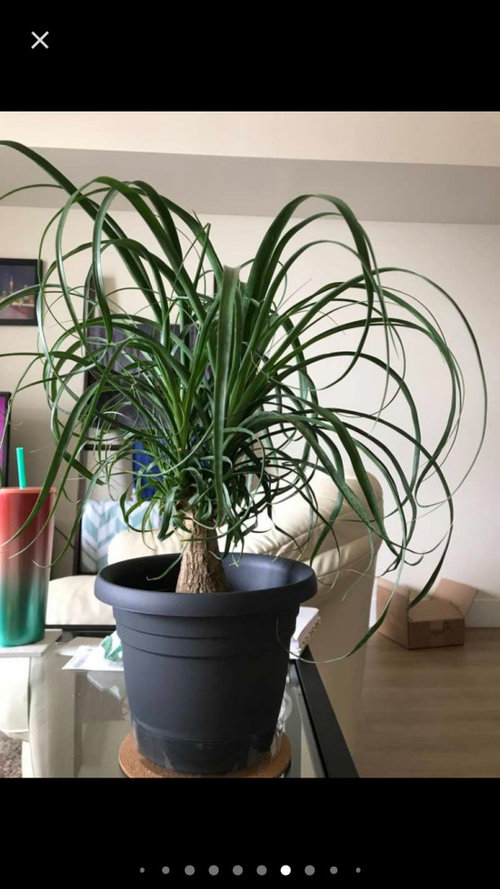
Hello,

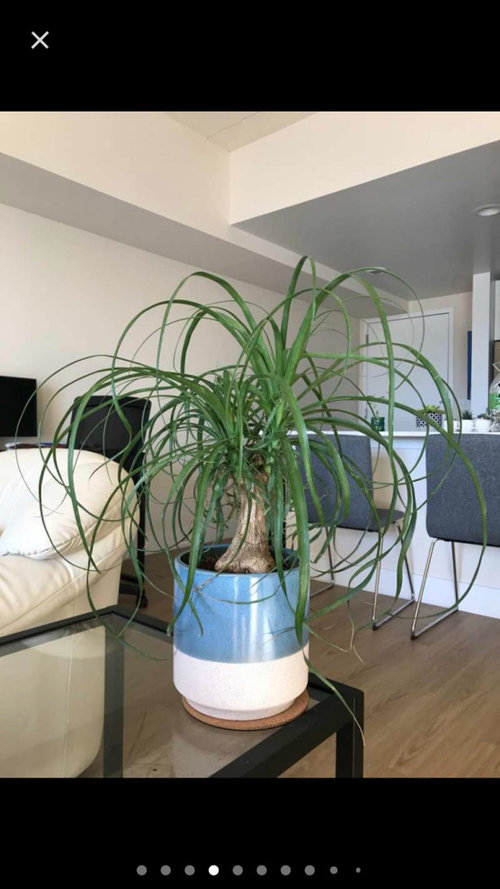
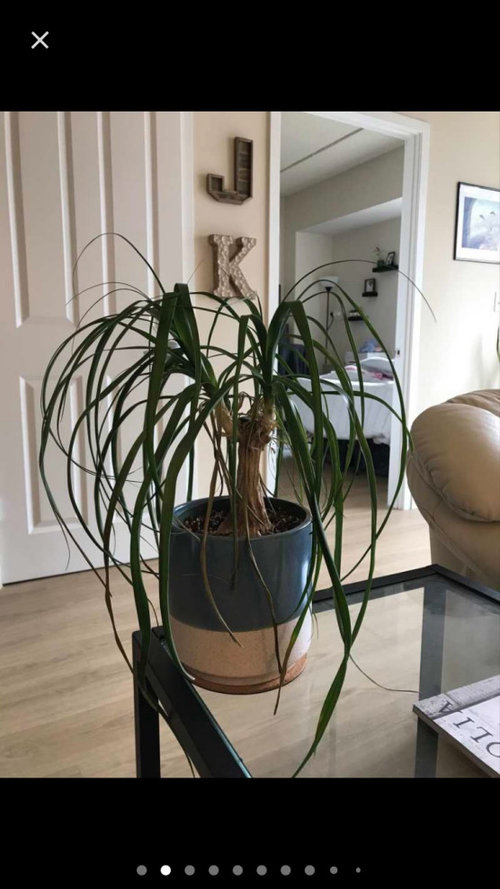
I’ve had a ponytail palm for about one year almost exactly. It started out full and thriving mostly indoors in my apartment (which tends to be on the drier side for humidity and receives a good amount of indirect sunlight). For perhaps 6 months out of the year, it prospered, and then throughout the winter and into this summer began having a tough time. It began with leaves browning, turning crispy, and dropping. Initially I thought this was normal as everything else looked healthy, but it continued until the plant began to look much more sparse from when I got it.

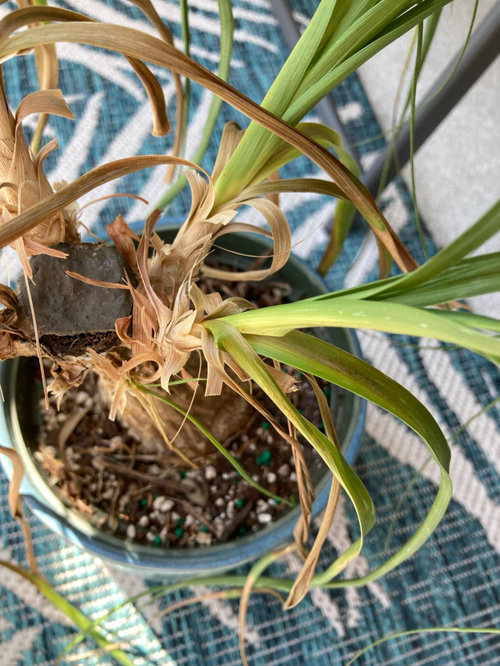
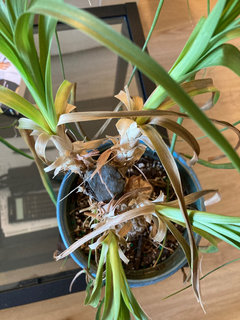
Fast forward to today, I recently fertilized it on schedule and placed it outside for the soil to dry quicker, trying to cautiously avoid overwatering. It almost appears to have gotten worse in just a few days outside despite the increased sun it is getting. The base of the leaves are now starting to look a little yellow/drained of color, which I imagine is not a good sign.

Does anyone know what I could have done wrong and if it’s possible to turn this around? I’ve searched all over the internet and can’t get a conclusive answer; would really appreciate advice from anyone with experience with these or similar plants.

Comments (16)

  • 5 years ago

    Hi Ken - thank you for all these considerations. To answer your questions, I put it outside for more sun, but the spot only gets direct sun a few hours - doubt it’s sunburn just yet (could be wrong).
    It is typically in the middle of the room, yes. I’ve worried about lack of light, but it did pretty well for 6 months - curious why it would turn abruptly like that.
    The pot has gravel at the bottom for draining and generally water every 2-3 weeks or until soil is completely dry and water with fertilizer every month in summer (using an app for care instructions).
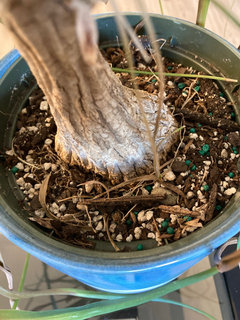
    Fertilizer pebbles you see are from when I bought it a year ago - I have been using liquid fertilizer since I bought it
    Fertilizer schedule is less frequent (maybe once or twice) over winter
    Live in Jersey City outside NYC, it was not above a heat register
    Temperature outside the past few days has been 80s and relatively humid
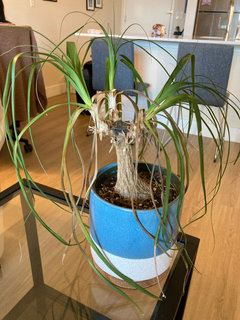
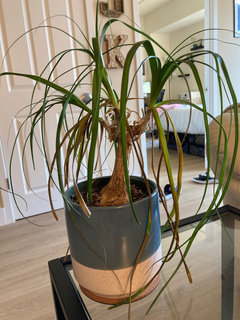
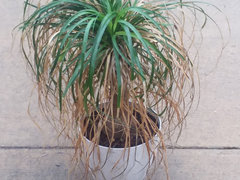
    Have since brought it back inside since outdoors didn’t seem to help - attached are a few more pictures of plant currently

  • 5 years ago

    I would repot it and check root health. These seam to do better in shallower pots.


  • 5 years ago

    It sounds and looks very dry. Hopefully it's not because there was too much water at some point, and just from basic thirst.


    Your plant may survive soil that has lost all of its' moisture, but it will look like it has survived something too, not thriving. Does this pot have a drain hole? The rocks alone can't successfully approximate drainage, only an actual hole can do that.


    Overcompensating for inability to drain by letting the soil get too dry is a lot of stress for a plant to endure.


    Any plant that is not used to significant direct sun will burn within a few minutes if taken outside. It does look like your plant needs more light. Starting with a spot closer to a window would be good, then increase to a covered spot outside where maybe the first or last hour of the day shines right on it.


    Your plant does not look dead, but it would probably benefit greatly from being put into a pot with holes. You could use one that sits inside a more decorative pot so when it's time for a drink, you can take it to the sink and thoroughly drench the soil because the excess water will flow away and not cause problems.


    I hope you see some new leaves forming after it has revived from thirst.

  • 5 years ago
    last modified: 5 years ago

    I see a regular plastic pot inside cache-pot: so i think plastic pot has holes?

    the main trunk looks shrivelled and the 3 shoots are bending at the neck. i think its either super dry or rotting.

    when overwatered the plant will loose most roots . if it’s then watered abundantly, it will cause rot. if its kept too dry it will also loose most roots. basically in either case it needs to be rerooted by bare-rooting, trimming all dead roots and planting it in very well draining mix like bonsai mix (this is a desert plant) or with 1:1:1 bark/perlite/soiles mix.

    you need to examine the root ball to see how much roots you have left to decide on a course of action. i agree that yr pot is too big and needs to be shallower.

    hi, purple ! long time no talk! 😁

  • 5 years ago

    Hi Petruska! Good to "see" you!

  • 5 years ago

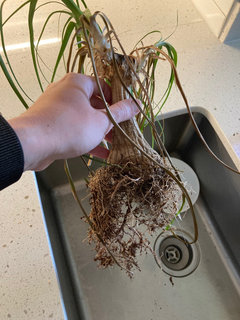
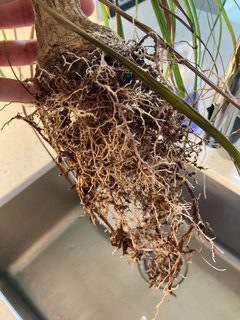
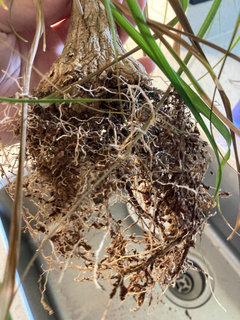
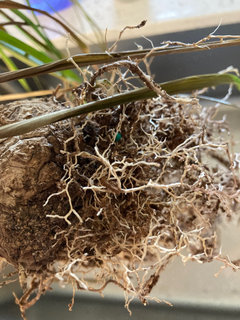
    Thank you all for the helpful feedback. Here is a picture of the root ball. Not super knowledgeable about what roots are supposed to be like, but this doesn’t look good. They feel bone dry and almost wiry to the touch. Kinda white in color. Perhaps this is beyond saving, but let me know if these pictures help.

  • 5 years ago

    the roots are ok. white and wiry is good. dry roots just flake off in yr hands. rotted are brown and soft , you can just pull them off by touching them.

    so i think you can repot in loose fast mix. you can use houseplant mix with perlite 1:1.

    if you have small bark then you can do mix half soiles and then 1/4 bark 1/4 perlite.

    large (horticultural) perlite is better then fine.

    i hope you know how to fill the pot with mix: a little mix at a time and push it down lightly with your fingers or small spoon. or even chopstick. add more mix, repeat.

    water well. wait 1 week. check the moisture level by inserting chopstick to the bottom: it's measy to see on wood how moist the mix is, like testing a cake.

  • 5 years ago
    last modified: 5 years ago

    oh, and you need to put it in the pot that just fits the root ball and has an inch or so on the bottom and around the sides for soil. this is a succulent, so it should dry between waterings.

    botanical name is Beaucarnea recurvata. they grow in deserts and can survive sev months without water by storing water in the trunk. But when the trunk is wrinkled it means it exhausted all the water stores. Once it plumps up you should be good. but you need to wait and pamper it a bit: warmth and very good early/late morning sun will be good, but not right away. outside will be ok only if it's in shade, no direct sun until it recovers.

  • 5 years ago

    I'll 2nd petrushka's advice. Ponytail palms are slow growing plants, so it's going to take some time to recover. The best place for it right now is somewhere outdoors in a brightly lit, shaded location.


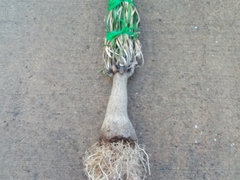
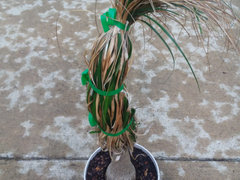
    I just spent some time repotting one of my smaller ponytails. Luckily, I took a a few photos along the way. Hopefully, it gives a good example of what a healthy plant with healthy roots looks like...


    Usually, I'd pull off any dead foliage from my ponytails as they send out new growth, but with this one, I decided to leave it as it is, to give it a more natural appearance. To make it easier to handle during the repotting, I laid the plant on its side and "combed" the leaves up and tied the leaves temporarily together to keep them up and out of the way. Once I was finished, I just cut the ties and combed the leaves back out.


    Ponytail palms actively grow during the spring and summer months. During this time, they need both water and sunlight in order to grow properly. I don't even really care for my ponytails anymore. I move them outdoors in the early half of spring and ignore them for the most part until it's time to move them back indoors. When autumn arrives, any new growth is fully formed and has had sufficient time to completely harden off. Ponytail palms are no longer growing during this time, so both water and sunlight aren't as necessary. My ponytails get moved back indoors before the weather gets too cold for them outside, and they spend the winter indoors where they'll probably get watered once a month. Any more than that and they'll try sending out new growth before spring has arrived. That new foliage won't grow like it should, and you'll encounter a whole new set of problems.

  • 5 years ago

    Thanks all, this feedback is really great. I have done everything here to give it the best shot, but it doesn’t look great unfortunately. Will continue trying to recover it. Photo synthesis: your point about watering over the winter makes me wonder if that is what went wrong. I didn’t water it too much more but perhaps a little more frequently than once a month, and there was new growth. It was also around the winter time that it’s health began to deteriorate. Just curious if maybe I didn’t let it lie as dormant as I should have.

  • 5 years ago

    I haven't noticed any dormancy in my ponytail over winter.

  • 5 years ago
    last modified: 5 years ago

    I wouldn't say that they go dormant; just that their new foliage has finished growing. Any new growth won't start until spring. That's when the frequency with which they're being water should be increased, as well as the amount of sunlight they're getting.

  • 5 years ago

    Thank you for the additional explanation. That is not what my plant does, it just grows at about the same pace all year.

  • 5 years ago

    Yeah, I'm not saying that they can't grow during the winter months either. But this time of the year isn't the best for growing new foliage. The sunlight is at its weakest, on top of most people growing their ponytails indoors during these months. More often than not, it's better to keep watering to a bare minimum, and to just let the plant(s) hold off until spring arrives. Otherwise, most people end up with ponytails trying to grow whole new foliage, with little to no sunlight, which is where most people end up having issues. These plants have evolved to store the water they need to carry them thru the dry winter months in their natural habitat. Overall, they're far better off going with a bare minimum of water, than they are trying to grow year-round. So that's the advice I follow, and that's the advice I give to others.

  • 5 years ago

    Beaucarnia recurvata come from tropical Mexico- Vera Cruz, Tamipaulas, Yucatan...they are used to humidity & a hot rainy summer season BUT need to dry out quickly. I have mine planted in Al’s 511 mix. I try to water less frequently in winter as thats its naurural dry season but t if I wait too long to water, leaves brown up & fall off. Brown leaves are from underwatering, or at least, IME. If you fertilize too much, leaves will take on a ”spring green/yellowish” cast, not unlike the color of new leaves at the crown. Mine goes outside 3 seasons & indoors for winter. I water it outside about 2x/wk or whenever the chopstick tells me its dry. My winter watering avgs out to be about 1/2-3wks, or whatever the chopstick says. Its about to be repotted this week. IME, these have been really easy to care for. I think your problems are dehydration based, rather than oveatering, by the look of it & I think it can be saved if you act fast, put it in a good draining pot & soil as others have said & increase light & watering frequency for summer.