Software
Houzz Logo Print
corvallismom

Additional fan to bedroom?

In addition to the regular fan that exhausts air to the outside, we're thinking of installing a fan above our bathroom door. After a shower, we're just trying to remove the warm, moist air from the bathroom. Most times of the year where I live, the rest of the house could use some warm, moist air so why blow it outside? Is there something fundamentally wrong with this idea? We currently use a portable fan for this purpose, and have had no issues with excess moisture.

Comments (14)

  • 5 years ago

    "Is there something fundamentally wrong with this idea?"

    Not at all.

  • 5 years ago

    Great idea. Consider an transom of sorts -- a short wide sliding window over the bed/bath door such as is often put in a basement -- and a shelf on which you can set a small fan about 10"-12" or so across.

  • 5 years ago

    The building code requires bathrooms to have opening windows or exhaust fans. It's not just for toilet use because exhaust fans are often mounted above showers. You haven't said where you live but moist air from bathing can condense on cold windows and cause damage.


    I bought a second house a few years ago and there was evidence of mold and water damage on window sills and frames in a second bedroom, bathroom, and hallway. My inspector noted it and wondered if the windows leaked. The seller said the windows and frames often got wet or fogged up in wintertime (this is in Southern California!) so I asked him to have the integrity of the windows checked and have the frames recaulked. Once we took possession, because we're a bit more conscious of clearing moisture after bathing, we found there's no moisture problem at all, not a stitch. We've experience no window condensation or damp window sills at all. They apparently didn't open windows or use the exhaust fans.


    If your house is dry in wintertime, opening the door should spread the air around on its own without a fan. But I'd encourage you to use the exhaust fans instead and add humidity with equipment sold to do that.

  • PRO
    5 years ago

    Open the door a bit WHEN you shower. Leave it wiide open after a shower. Solve the other issue separately. You don't say location f your home...or type of heat. That would help.

  • 5 years ago

    Mold the reason is mold. There are codes for reasons.

  • PRO
    5 years ago

    IMO a humidfier is the answer if soaces outside the bathroom need humidity not what you ar eplanning IMO a good bathroom exhaust fan will remove all that stemy moisture properly .

  • 5 years ago
    last modified: 5 years ago

    We have gas forced air heat and live in the Willamette Valley in Oregon. I just thought it sounded more efficient/earth-friendly/cost-effective to circulate the moisture we're already producing rather than pushing the moist air outside and buying a second unit to product moist air!

  • 5 years ago

    I wouldn't alow Nanny followers to sway you from from trying origional ideas. Some of them thought Ken Wright and Domaine Roy were bootleggers and Pinot Noir a Bonnie Parker style sidekick. After being told all three had spent time in the barrel they advised people not have anything to do with them.

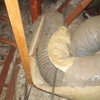
    if construction inspectors and code enforcement do what they claim,why do we hear about so many botched jobs by contractors who pulled permits? More to the issue at hand. Is blowing humid air from bath to attic ok because if you go in the attic to look few actually terminate outdoors?

    Woe to those who don't consult with and pay Nanny her dues.

  • 5 years ago

    So during cooling season, most find themselves with excessive humidity in the house. You likely want to exhaust that humid bathroom air to the outside... not to mention likely Code Requirements.

  • 5 years ago

    Ah yes,I'm certain the day isn't far off when bounty is offered to those reporting scofflaws who violate code and those that rip off "Do not remove under penalty of law" tags.

  • 5 years ago
    last modified: 5 years ago

    If a survey were taken of real experts - architects, structural engineers, energy engineers and consultants, quality licensed contractors of relevant trades, I suspect the consensus would be that code requirements are a bare minimum and beyond compliance being a given, doing more is better. That's certainly been my experience in dealing with such people.

    Anonymous and contemptuous internet opinions? Well, they're probably viewed with the gravitas they deserve.

  • 5 years ago
    last modified: 5 years ago

    Ah "klem1" is back attacking posts by others that were intended to be helpful.

    The mention about code requirement was not intended to suggest that fear of bounty hunters coming into your home to nab you. Rather the code exists to provide guidance based on professional evaluations as to structural, safety, and other considerations.

    Fail to have a code required exhaust fan may, for example, result in difficulties when selling... or may result in excessive humidity during the cooling season.


  • 5 years ago

    You could add the transom and a vent fan if you have no window and then you decide what to use/open and when depending upon conditions at the time.

  • 5 years ago

    If you forego shower use of the existing exhaust fan by installing a permanent secondary fan above the door, I suspect it is more psychological than what the humidity from a shower is realistically going to change your comfort level in, say, throughout a 1200sf house. If you live at the YMCA with constant showers or in a tiny 200sf house, then maybe. If it's the Master shower into a closet, ewww. If it's a hall bath then your thermostat is probably there and that may temporarily affect the rest of the house to it's detriment. If you have dry air issues, invest in a furnace humidifier which will place the air into each and every room in proportion.

    If you put a transom with a small fan on a shelf, or even jerry-rig the discharge duct on an actual wall exhaust fan, don't forget lots of duct tape to complete the redneckness. Just stick with leaving the door open and your counter/stand fan that can be put away as needed.