Software
Houzz Logo Print
originalpinkmountain

Phlox replacement for cottage garden

5 years ago
last modified: 5 years ago

I have a very small cottage garden in front of my house, which is a memorial garden for my late mother. A lot of the plants were hers or favorites of hers. It's full of phlox, which I love and my Mom loved, but the phlox is overrun with mildew and nothing I have tried can get on top of it, and I've tried everything--milk spray, removing all diseased vegetation, neem oil, air flow, cutting, etc. It's just endemic at this point to the phlox collection and they are very unsightly and deformed by the time they start blooming. As sad as it makes me, I am going to remove them, at least for now. Hopefully at some point I can bring some varieties back, but who knows. For now I just have to bite the bullet.

I'd like to replace them with something of similar colors, bloom time, height and leaf shape as phlox. Something tall but not something that has to be staked a lot. I don't want to do digitalis or hollyhocks or even cleome because I don't want to deal with the biennial issue and there's not room for self seeding. I also don't want delphiniums, even though I love them, because I already have white tall valarian right next to that spot with a similar leaf shape.

The other plants in the garden are: tulips in spring, white old fashioned valarian, russian sage, a bit of pink yarrow, chrysanthemums, peonies, pink coneflower, lavender and thyme and some paper white narcissus. A couple of heuchera and some white columbine.

The garden is mostly sunny but shady in the late afternoon and evening. It's zone 5b/6a. Southern MI, my county can't decide if it wants to be interior zone 5b or lakeside 6a. Mostly 6a with 5b weather challenges cropping up occasionally.

I have some iris that I think will fill one spot. I love daisies but I don't want a lot of white. I'm thinking to bite the bullet and get some asters if I can find them, but that's not going to fill the phlox bloom time bill.

So far the candidates are: some type of salvia?? (wondering about height with that), a light colored bee balm, which is a flower I find underwhelming other than the red monarda, but maybe there is one with a color that doesn't look like a washed out lavender? Penstemon, which would be lovely but certainly not as showy as phlox, same with spiderwort. Obedient plant, not that impressive color wise and wrong bloom time. Wondering about an astilbe that could tolerate some sun? Maybe if I could find the pink version of persian coneflower . . . OR, perhaps this is where I could try my hand at some tall oriental lilies?!

Nothing yellow or orange or red. Peach is OK. This is a blue, lavender, pink, peach color scheme. No roses, I have a rose garden behind this garden. I did think about some small shrub versions of pink cinquefoil or clethera but they just don't fit the bill it seems as far as the form of phlox . . .

Comments (28)

  • 5 years ago

    There are some tall veronicas that should work in terms of colour, height and bloom time. I have a light pink one that starts blooming with early phloxes and is about 3 feet tall. Unfortunately, it was mislabeled and I wasn't able to identify the cultivar.

    Bee balm mildews for me worse than phloxes.

  • 5 years ago
    last modified: 5 years ago

    Hmm, forgot about campanula . . . I guess there are some taller ones . . . I might even be able to find some veronica in pots on sale somewhere right now . . . I see also a "mildew resistant" pink agastache . . . that'a a real issue I didn't think about too much, finding something to replace it that isn't going to pick up the mildew. It doesn't bother any of the other plants I have currently . . . I thought that the mildew would be species-specific. But it does get some rainwater from the downspout so the plants I think have to be mildew resistant in general. Although ALL my phlox regardless of where they are growing, are overrun with mildew. I moved a bunch to an open, drier spot because I thought that might help but they are the same there. Just the phlox have this problem . . .

    The garden isn't wet, it just gets some runoff occasionally. It goes over a wide area. It's not a low spot so dries out right after a rain.

  • 5 years ago

    Veronicas could be a good choice - but they seeded around a lot for me so I prefer Veronicastrum - the white is what I have and is most common but there are other named varieties that are shades of blue-purple (e.g. Fascination, Apollo, Cupid etc.) They are likely to be harder to find.


    As Magda said, I found Monarda to be as bad or worse than phlox re mildew! The only reliable phlox I have that has never mildewed is 'David' - it is white though and you said you wanted color.....


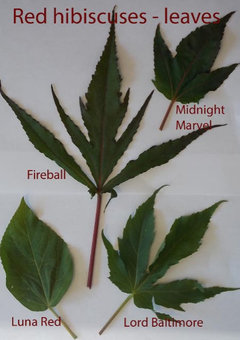
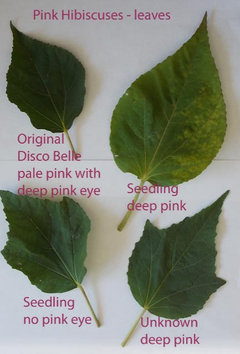
    The best mid-late summer color here is hardy hibiscuses. Their leaves can be very variable in terms of shape so most would not look very phlox-like - but I love the color they add - and they are great to plant with/over spring bulbs because they 'wake up' late so let the bulbs make a show and then hide the dying foliage (or plant with autumn crocuses to have late bulbs in flower after the hibiscuses can be cut down and the hibiscuses hide the spring bulb foliage as it dies back....) I took these pictures years ago to show the variability of the leaves of some of the hibiscuses here:


    The Luna or Disco Belle have the simplest leaf shapes - but not much like Phlox :-(

  • 5 years ago

    There are phlox species that may be less troubled by mildew (maculata, carolina, and glaberrima come to mind, but there are others). Phlox is not defined by the tall garden phlox hybrids.

  • 5 years ago
    last modified: 5 years ago

    Actually that is my consolation prize, since I am going to plant some of the spring flowering, low growing phlox in the back yard. But the ones in my cottage garden are the tall showy old fashioned phlox. Those are the spots in the front that need filling with something similar but mildew resistant. By similar I mean tall but no staking, showy and July blooming.

    The phlox seed around too, I don't mind pulling them but don't want to constantly move around biennials that self seed. I'd sort of like this garden to be low maintenance, I have high maintenance vegetable garden, and planters that take up a lot of my time. I do maintenance on it, but I'd prefer just the dead heading, weeding kinds of stuff, not moving around a lot. Most of my plants aren't aggressive spreaders. I had day lilies in there but they got pulled FAST. They didn't jibe with the foliage or color scheme either . . .


    I love hibiscus but they are not reliably winter tolerant around here. The "rose mallow" is. It's always been an underwhelming color to me, but it would fit the bill as far as height, and have some of the qualities of hollyhocks, the old fashioned kind . . .

  • 5 years ago
    last modified: 5 years ago

    If you want low maintenance, skip the (dis)obedient plant. it spreads aggressively.

    And in my garden, the Clethra bloom much later.

    Think about one of the Penstemon digitalis cultivars.some have deep purple foliage and some green, and there are types with white flowers, but I have one with purple foliage and lavendar flowers. Mine are just finishing bloom now.

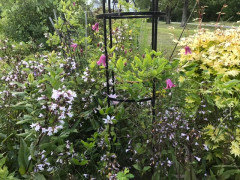
    Another option might be to look at some of the non-climbing, very short clematis cultivars. Ihave a couple, and they come in various shades of pink, white, and blue-purple. I am trying out Chloe this season to see how it does, but there are others. Or even choose one of the smaller climbing clematis and let it either scramble over a shrub or up an obelisk.

    Would you consider one of the summer blooming perennial Geraniums? They aren’t as tall or of similar leaf shape, but so nice!

  • 5 years ago
    last modified: 5 years ago

    id really like to know which phlox you were growing.

    I had two older varieities "Dodo Hanbury Forbes" and "Bright Eyes" which were very mildew resistant; there's another white besides "/david" ; and some new ones that score very high on mildew resistance. Perhaps you can buy one of each and grow them together in a separate bed and see how they do for you.

    Meanwhile, if you haven't already done so, acquaint yourself with places that do plant trials and rate plants on garden qualities such as disease resistance, flower quality, length of bloom, etc. A couple are MT Cuba, Chicago Botanic Garden, MOBOT (Missouri Botanic Garden) They all have excellent websites and more info than you can probably use.


    Not that I disagree with any of your choices but you put so much thought and love into your garden it seems a shame to throw in the towel on a big category of plants when it may just wrong choices.

    And continue to be meticulous about fall clean up and disease prevention....by working to prevent, not just control.

    But who knows, You just may just have the right/wrong conditions for powdery mildew! No one will blame you if you try something new. Good luck and check back next year, will you?

  • 5 years ago

    Usually, mildew on plants is caused by dryness, not wetness.

    David has been very good for me in regards to mildew. David seedlings also seem to share that trait, and come in different colors. Unfortunately, tall phlox are something the deer like also.

    Balloonflower is a very showy July bloomer.

  • 5 years ago

    What about Liatris? They are tall, and colorful, and have about the same approximate bloom time, and several species to choose from.

  • 5 years ago
    last modified: 5 years ago

    I have no idea what kind of phlox they are, they were in the garden I inherited from my late mother. I assume she bought them at various nurseries or big box stores in this rural section of MI. I'm not saying I'm never going to put phlox back in that garden, I'm just tearing out these mildew overwhelmed ones. I use the MBOT "Plantfinder" site all the time. I started using it when I was in charge of a small arboretum back in the early 2000's. Also the Arnold Arboretum in Chicago often has extensive notes on various types of plants.

    The hardest thing is not getting rid of phloxes, like you said, I can always replace them with new mildew resistant varieties. The hard part is tearing out Mom's actual plants. But I have been fussing over them for five years, nothing works. She had them crammed under a dogwood tree, not good for either plant. I moved them to this sunnier spot, spaced them out more, was fastidious in garden clean up, nothing for a mulch that could harbor mildew like dead leaves . . . destroyed any mildewed foliage, moved some of them away to another spot with even more space, sprayed, pruned . . . and they just get worse and worse. They've been in this spot for five years. I am going to tear out the worst offenders, hoping to spare the less prone ones.

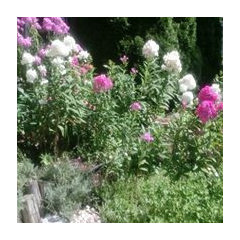
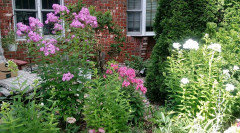
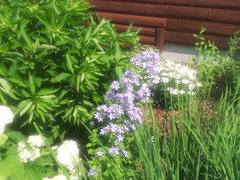
    Here they are. The tall lavender and white ones in the back are the worst. I think the pink one in the foreground is not too bad. This year the plants are mildew all the way to the flower heads and deformed. Even after repeated spraying with neem and milk spray, And I cut them back last year and destroyed all the mildewed foliage. They don't lack for water, it rained for two weeks end of June.


  • 5 years ago
    last modified: 5 years ago

    Edited to add that the deer stay away from this spot. I was never previously able to grow campanula and echinacea due to bunnies and deer eating them, but for some strange reason we are bunny shy here. Groundhogs, deer, chipmunks and squirrels plus evening raccoons, skunks and opposums a plenty.

    Edited to add that I'm kind of interested in the idea of a clematis growing on a obelisk. I have never been able to have any success with them, nor my Mom. But this spot fits their bill, with other plants shading the roots . . .

  • 5 years ago

    For a summer blooming aster, consider kalimeris.

  • 5 years ago

    you didn't ask, but perennial geraniums are very English cottage garden.

    You may already have Rozanne for bluish-purple and its sprawling blowsey form is informal.

    Unrelated in color but a beauty is salmony pink Mrs. A.T. Johnson. It took awhile for mine to get established. It's well behaved, the foliage stays 'good', and it is perfect for a spot about a foot & half square. It blooms a long long time. I really did hijack your question with unsolicited advice. Even so I'll not delete, but wish you well!

  • 5 years ago

    What about Jupiter’s Beard?

  • 5 years ago
    last modified: 5 years ago

    Marie I used to work at an arboretum where we grew both Rozanne and Mrs. A. T. Johnson. Gorgeous plants. I am actually working on a garden in the back where I hope to fit in some of the singular geraniums. And some creeping phlox. And/or maybe some of the beautiful blue singular wild phloxes.

    Jupiter's Beard is what I have known as "red valarian." I like it but a little too red for this garden. Easy to grow though. If I was considering that, I might also consider joepye weed, but that blooms a little later than I would like. Really looking for an early to mid July bloomer. That's why I've resisted asters for this spot. It's small and I already have four chrysanthemums in three colors . . ,.

    I'm going to visit a big town in the next couple of weeks and see what I can get. I'm really intrigued to maybe try a clematis. Maybe I'll start a thread about what variety to try . . .

    Kalimeris sounds beautiful. Someday I will expand the garden along the front of my yard. I have dreams of a wildflower-ish garden along a split rail fence. But I cannot execute that right now, as I am trying to focus on the back, as I mentioned, with a shady wildflower garden and some plantings along the back of the house which is really a big mess right now due to ongoing drainage issues. We've solved some but not all of it yet.

  • 5 years ago
    last modified: 5 years ago

    The first thing that sprung to mind is Campanula lactiflora "Pritchard's Variety". Maybe Culver's root?


    ETA: Here's a photo of "Pritchard's Variety". Its a young plant, only in its second season, but good enough to give you an idea what to expect:


  • 5 years ago

    Bellflowers and balloon flowers are dead easy to grow from seed too. I may try some if I can't find any plants. Like I said, I've always avoided them because of the bunny issues I've had in some other garden spots I've stewarded . . . I love the flowers! I was in charge of the Children's Garden but could not keep the balloon flowers or bellflowers around, between the rabbits, deer and groundhogs . . .

  • 5 years ago

    Swamp milkweed (A. incarnata) is another one to consider. I just love them. Have the regular 'ol pink ones and "Ballerina" pure white. They typically bloom this time of year, in July.


    Hardy hibiscus are indeed hardy in Michigan -- I'm farther north than you (firmly zone 5) and have no trouble with them. You can find native hibiscus (non-hybrid) at the native plant nurseries in the state. My pink ones are around 5' tall and are show-stoppers. They don't bloom until later though -- maybe late July but usually August.

  • 5 years ago

    Hmm. I grew hibiscus, it overwintered but not happily. I grew it from seed. The one I grew was the one with the huge flowers. https://parkseed.com/luna-mix-rose-mallow-seeds/p/51370-PK-P1/?gclid=Cj0KCQjw24qHBhCnARIsAPbdtlIP4DXWq9C_JRLs5RO8gYDLKf49l6xoCEgRbr_D3aFsXMChdeRclLsaAiA4EALw_wcB

    I've heard the native hibiscus referred to as "rose mallow." https://michiganflora.net/genus.aspx?id=Hibiscus


    https://garden.lovetoknow.com/wiki/Rose_Mallow


    Not sure why mine floundered. Other people near me also had trouble getting it to survive the winter. Who know though, maybe the deer or where it was growing . . .


    I also grew swamp milkweed. It smells lovely too. Never thought about that one!

  • 5 years ago

    I thought it might be lack of water too but you say no. I would email the people at Perennial Pleasures in Vermont. They're phlox specialists and might have some helpful ideas. I grow a lot of tall phlox and sometimes get mildew but the following year may get none. I wonder if air circulation has anything to do with it.


    In the past I"ve found clematis frustrating but the viticellas seem to be more vigorous, tougher plants and you might have luck with those. I am enjoying trying a number of those.

  • 5 years ago
    last modified: 5 years ago

    Mine are the native H. moscheutos:

    Hibiscus moscheutos - Michigan Flora (same website as your link but different page)

    Mine are the color in the link, and I also have one clump of pure white with red eye.

    If you had hybrids, maybe they were fussy?

    It's easy to find swamp milkweed nowadays, it's having its moment of horticultural hotness. Yes, they smell lovely! I find the white "Ballerina" isn't as fragrant as the pink.


    ETA: If you look closely at the pic of the H. moscheutos, you'll see stands of swamp milkweed in the background :0)

  • 5 years ago

    Was at a nursery this weekend. They had mallow, astilbe chinensis, and huge smelly oriental lilies. No balloon flowers or campanula of any type. Also my favorite shasta daisy, "crazy daisy." I was frozen with indecision. The lilies came two to a pot, $9.00. I would have needed at least 4 to fill the space where the worst phlox is. I wanted to get them but I have zero experience growing them so had no idea how they would fare. Also, the phlox are about to bloom and my heart is just not in tearing them out right now, not a good time to transplant things. I would have had to keep the lilies alive in a pot until fall, which would be fine but I have so many other things in pots that I'm attending to I just wasn't enthusiastic about that.


    Later we went to a lakeside restoration site where they had a lot of swamp milkweed growing. They looked like they would meld nicely with the oriental lilies. They had a form similar to phlox. Not classic cottage garden plants though. That's why I'm leaning towards some of the classic ones popular in Great Britain or Europe. This little garden is not really a wildflower one. I have a wildflower area along our property that borders a river . . . and another one along the road.

  • 5 years ago
    last modified: 5 years ago

    Tall balloon flowers are really hard to find nowadays, if you find one grab it and run. Thankfully I had the foresight to take a clump from my other house, and I also started some from seed but they take a few years to start putting on the growth -- but they're coming along.


    ETA: Same w/Campanula. You can find the ground-hugging types pretty much everywhere, occasionally the peachleaf and glomerata, but good luck finding much else. I mail-ordered the "Pritchard's Variety" from Select Seeds, and Digging Dog also carries taller varieties of bellflower.

  • 5 years ago

    Luckily campanula are fairly easy to grow from seed. I used to run a plant sale and offered a couple of varieties I knew would be fun to grow and difficult to find at a typical nursery, but they didn't sell because the sale was in spring and they weren't in bloom. Which is why I know now is the time to find perennial July bloomers at the nurseries . . . and why I have experience growing campanula. I always grew what didn't sell in our Children's Garden or Arboretum. I loved the balloon flower but so did the bunnies and deer . . . sigh.

  • 5 years ago

    While trying to solve a tomato blight problem, I ran across this set of articles about using Bs bacteria to stimulate an immune response in plants against powdery mildew. Gonna give it a shot. We've had luck with other organic bacterial and nematode treatments. Using Bacillus subtilis (and other bacteria) to treat powdery mildew.

  • 5 years ago

    Wouldn't you know they had bellflowers on sale at my local big box, 3 for ten dollars. They were astra blue, which is OK but not exactly my favorite. Also some other dwarf variety which looked weird, IMHO, huge bells but not hanging down, sort of spread out among some foliage that looked stunted to me, not "dwarf." Kind of like it had a genetic abnormality and not a good one. They also had a hot pink agastache that looked appealing and all kinds of phlox, just labeled "phlox." They already had mildew on them. This is an unusually damp humid year but I imagine this is the kind of phlox my mother got since that's where people go in my small home town, there are no local specialty nurseries. They also had hibiscus. I think hibiscus is just a tad too big for this spot. Plus they were red which is not a color I want to add. I think I am going to wait and get pink tiger lilies for the spot in the back where the tall phlox are growing.


    I think I am going to bite the bullet and get at least one of the bellflowers, the astra blue. I have a spot in a tiny garden in the back for it. I call it the "cursed spot" because everything so far that I have planted in it has died. The rest of the spot seems to not have this problem . . . oh well, I can risk 3 bucks to try a bellflower there.


    I don't have a spot for the agastache but I'm tempted to get it an try to keep it alive for a year or so in a pot until I can find a spot . . . sigh. I'm an addict.

  • 5 years ago

    rose geranium? I had a plant spread over 5 square feet in my back yard, it grew beside an espaliered 'Mermaid' rosebush.

    Lux