Software
Houzz Logo Print
kelli_ga

Quartz or Solid Surface countertop?

4 years ago

I have done a LOT of research on this. The kitchen is small. The price difference between solid surface and quartz countertops is probably about $400. I was hoping I could save more with solid surface. I think solid surface prices have gone up, or quartz prices have come down.


I am looking at a pure white countertop or white with subtle marbling. I have a quartz sample that works, and I’m sure I can find a solid surface sample that I like.


Solid surface scratches more easily but scratches and stains can be buffed out with a white scotch brite pad.


Quartz has a lot of advantages and looks more polished, but it chips and stains may be harder to remove. (I read the quartz thread.)


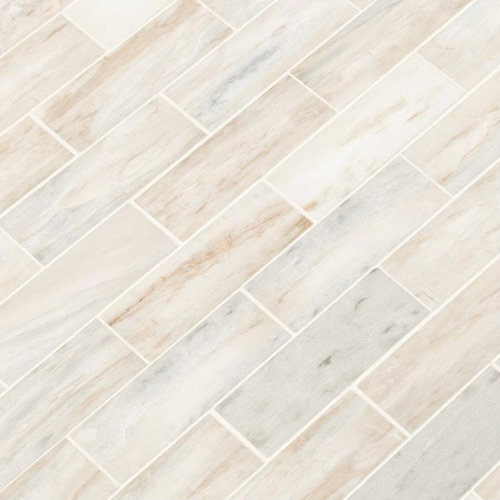
The backsplash will be polished marble subway tile. That decision is firm. The marble has a white base with a ton of different colors in it, so if it stains or chips, it will still look fine. Cabinets are white.


So the decision is really about aesthetics and renewability. Is the aesthetic appeal and durability of quartz worth sacrificing the renewability of solid surface? Does quartz really look that much better than solid surface? I don’t want to have to call the fabricator to fix problems.


Here is the backsplash marble - it’s gorgeous!


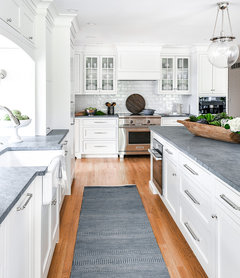
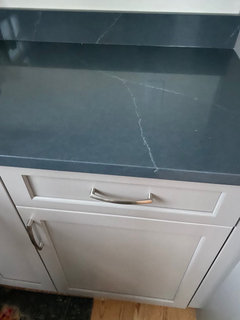
Quartz countertop
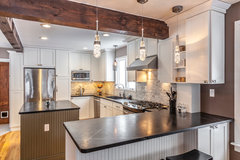
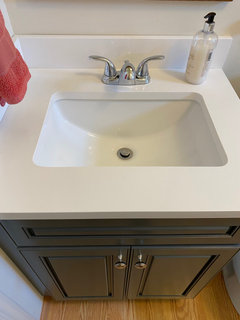
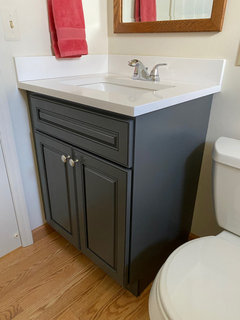
Solid Surface Countertop

Comments (23)

  • 4 years ago

    No certain what material you are referring to with the term “solid surface”. Please share what your alternate choice is.

  • 4 years ago

    A surface like corian. I have not picked a specific sample yet - I am open to multiple brands. Assume Corian for now.

  • 4 years ago

    https://www.hgtv.com/design/remodel/kitchen-remodel/quartz-vs-corian-pros-cons

    Strength and Durability = Quartz

    Quartz scores high marks in this category.

    Quartz has a stately appearance.
    Quarts is low maintenance.
    Quartz is virtually invulnerable to nastiness like stains, mold and bacteria.
    Quartz is extremely durable.
    Corian attracts scratches.


    Heat Resistance = Tie

    This is roughly a tie between the two materials with traditional kitchen use.

    Corian surface scorching can be sanded out and repolished.
    Quartz has a higher heat resistance for hot skillets.


    Visible Seams = Corian
    The bonding adhesive inherent with Corian creates a seam that is all but invisible.
    Seams in quartz surfaces are covered but visible.


    My take: if you are going to be super upset about a visible seam then go with Corian.

    But if the slight seam does not bother you (and since your kitchen is small a seam may not be needed with quartz... depending on the configuration of course) I would go with Quartz for the durability.

    Bias: I have friends who have Corian and they love, love, love it, personally it reminds me of a high end RV kitchen. I also have friends who have quartz and it is beautiful and functional.

  • 4 years ago

    Whether you do solid surface or quartz, I agree with Diana - get a solid color. That backsplash is really pretty and doesn't need competition.

    kelli_ga thanked stillpitpat
  • 4 years ago
    last modified: 4 years ago

    Love your backsplash choice! I think you should find the counter you love 400$ difference is not much. It should be what you think looks best with your cabinets and BS.

    what about soapstone to further muddy your decision? not sure what your floors are?

    Saucon Valley Classic · More Info


    White Shaker Kitchen with soapstone countertops · More Info


    kelli_ga thanked Jennifer Havin
  • 4 years ago

    We use our kitchen heavily and chose solid surface for many reasons - renewability, integrated sink. backsplash, and drainboard. Color, stain resistance, resilince. Our house has seasonal movement. It's a warmer material. (our kutchen faces north). Had nothing to do with price. No regrets.

    kelli_ga thanked tdemonti
  • 4 years ago
    last modified: 4 years ago

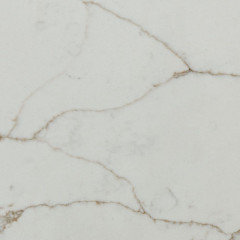
    For the quartz, I’m leaning toward this Stonemark Calacatta Prado. There may be others that work with the marble, and I could go with white to match the cabinets. The pic below doesn’t look like it will go, but it does, sort of.

    In artificial light 4000K, or maybe warmer, my Calacatta Prado sample almost perfectly matches some of the marble tiles. In natural light which I think is more full spectrum, the marble looks more pink, and this quartz is in between the marble and white cabinet colors - kind of a dark white but not gray. However the countertops and backsplash will be installed on the dark side of the kitchen, so they won’t get much natural light. Maybe one part of them will get a bit of natural light, some coming through clear glass windows and some through a low E366 glass door which has a bluegreen tint. Also the kitchen walls are currently red (yikes!) but all the red will go away. I still think the undertones of most of the tiles tend toward pink in natural light even if the red walls go away.

    The countertops will be very choppy, so I am not worried too much about a large vein pattern. The largest length is 4-1/2 feet, then 3’ and 2’ not counting the sink which is black. Also some of the marble tiles have similar veins. The marble tiles are very diverse - a lot of them look like seascape paintings while a few others look like they have yellow coffee stains. A few others have fissures - we’ll see how many of those make it on the wall - the tiles are on a mosaic mesh. I loved the character of the tiles, and I get excited looking at each mosaic sheet because each tile is unique.

    The MSI web site pairs this (and other) quartz colors with tile made from the same type of marble but in smaller mosaic patterns, which tend to use darker marble than this 2x6 subway pattern. MSI sells the backsplash tile I chose.

    The overriding reason for choosing this patterned quartz over pure white would be that I could mask any stains, especially coffee stains. I tend to spill coffee a lot. Who doesn’t? I can be careful and use trays or silicon trivets where I am messy. Otherwise I don’t cook much.

    At any rate, I could go with any solid or simple patterned countertop and be happy, though I’m not sure about going too brown or too dark. I lived with black granite for awhile and was not a fan. I think soapstone or concrete would be beautiful if there were a lot of natural light. I live in the woods, so it is already pretty dark in the house.

    I am going to install the backsplash myself, so I can choose the tiles in the bottom row to either blend (beige/white) or contrast (grey) with the countertop. The pinker tiles can go above the bottom row, and I assume I’ll use a bright white silicon caulk line in between, but I may have to rethink the caulk and tint that if I can. Something else to consider.

    (I have not selected any solid surface samples yet.)


    My sample seems a lot brighter than this pic. And with fewer veins. It’s mostly white.

  • 4 years ago

    I don't like the feel of solid surface -- it can look wonderful, but it feels flat and dead under my hands - too plastic-y when compared to quartz.

    kelli_ga thanked Toronto Veterinarian
  • PRO
    4 years ago

    IMO neither if you want a work horse counter forget plastic as a choice . A nice polished white granite will be close to bullet proof and probably not cost much more than quartz. I also think in your situation with so many bits of counter an allover speckle like granite is a nicer look,

    kelli_ga thanked Patricia Colwell Consulting
  • 4 years ago

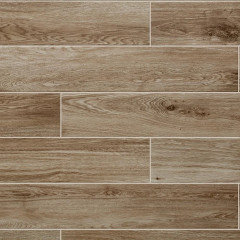
    Here are the floors - porcelain wood look tile:


    And it’s unlikely that I will drop a lot of stuff on the countertop. Most upper cabinets will be out of reach or will contain lightweight items, and the microwave is on a separate cart. Also the counters are choppy, so there is only one section that is vulnerable even when I get something out of a high cabinet. Stuff is more likely to fall into the sink.

  • 4 years ago
    last modified: 4 years ago

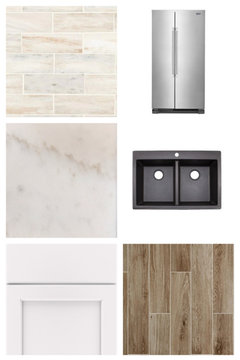
    Here is a sample board, but I cannot get good pics of the quartz, and the quartz and tile are out of proportion:


    From this pic, it looks like I should definitely go with a pure white countertop. I would just be more worried about stains. Hence the discussion about quartz vs solid surface. With solid surface, I could buff away the stains myself (or so I was told).

  • 4 years ago

    I have glacier white Corian, and I wipe up our frequent coffee spills with a wet cloth. It can be cleaned with soft scrub with bleach if need be, but I don't need to do that very often. No buffing needed. I think that's reserved for deep scratches. Glacier white would probably be too bright with that marble though. Order a few sample colors and stain-test them at home, along with the quartz sample you have. That's the best way to have confidence in whatever you choose.

    kelli_ga thanked stillpitpat
  • 4 years ago

    @kelli_ga depends on tge finish. Do read the warranties. i tested the different surface samples by rubbing with wet baking soda. Our Corian is semigloss and shows every mar. That was the trade off for me, knowing it could be renewed. Our fabricator suggested nothing short of professional buffing.

    kelli_ga thanked tdemonti
  • 4 years ago
    last modified: 4 years ago

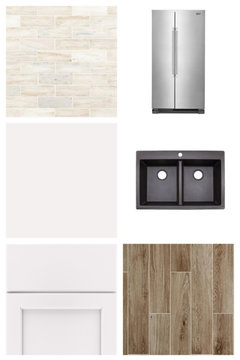
    Here is a sample board with glacier white solid surface (home depot site didn’t specify the brand in the build and buy app):


    The white is a lot easier on the eyes and I’m sure I could find a shade of white that works with the countertops.

    I’m also looking at this web site for stone options, but that’s a lot tougher. I like bright colors, modern clean lines. Marble intrigues me, but granite I have not fallen in love with. I’m trying. They have a lot of pretty stones in this site:

    https://granitegroupstone.com


    Here is a 13-year-old thread on white corian (lots of positives, a few negatives):

    https://www.houzz.com/discussions/2424898/white-corian-solid-surface-i-am-crazy

  • 4 years ago

    I had Cambria White Cliff quartz in my last master bathroom and had no problem with staining, even with hair dye. The stains came out easily with a clorox w/bleach cleaner. Spray, let sit for a few minutes and the brown stain would disappear.

    kelli_ga thanked chispa
  • PRO
    4 years ago

    "Strength and Durability = Quartz

    Quartz scores high marks in this category.

    Quartz has a stately appearance.
    Quarts is low maintenance.
    Quartz is virtually invulnerable to nastiness like stains, mold and bacteria.
    Quartz is extremely durable.
    Corian attracts scratches."


    These statements lack context. What is the definition of "durability"? Anyone who says engineered stone is invulnerable to stains hasn't been paying attention, especially in comparison to solid surface which is virtually stain proof. Corian scratches more easily than engineered stone, but is easily refinished to factory new. Engineered stone is harder to scratch, but when you do, those scratches must be removed professionally if they can be.


    Heat Resistance = Tie

    This is roughly a tie between the two materials with traditional kitchen use.

    Corian surface scorching can be sanded out and repolished.
    Quartz has a higher heat resistance for hot skillets.

    Visible Seams = Corian
    The bonding adhesive inherent with Corian creates a seam that is all but invisible.
    Seams in quartz surfaces are covered but visible.


    Since all engineered stone and all solid surface manufacturers require the use of trivets, both surfaces are equal in the heat resistance department. Saying Quartz has a higher heat resistance is irrelevbant. Many heat-damaged solid surfaces can be abraded away, depending on color, particulate, and severity, but all can be repaired. Engineered stone can be catastrophicly damaged by hot pots.


    kelli_ga thanked Joseph Corlett, LLC
  • 4 years ago

    Since your backsplash is picked and a sure thing, keep the countertops simple. the backsplash is pretty and busy, dont compete with a busy countertop also. quartz or ss, which ever one has the best match to the countertop And cabinets. just my opinion

    kelli_ga thanked User
  • 4 years ago

    Thank you everyone. Right now I’m leaning toward 3cm solid white quartz if I can find the right color to match the cabinets. Mostly because it’s polished, like the marble.


    The poll came out more even than I expected. Quartz is winning so far.


    White quartz will be better than a pattern for the choppy countertops and the black-and-white combination of sink and appliances. I plan to get a beveled edge which I hope will reduce edge chip risk. I can probably tolerate small chips anyway since the marble backsplash by nature won’t be perfect.


    Regarding stains, I think someone suggested a cleaning product which sounded like it would work. I can put a pretty tray under the coffee machine. I can be very good about cleaning my prep area and drying the countertop often to prevent mineral buildup. (I have to dry the black sink several times a week anyway for that reason.) It really isn’t a big area, so it is quite manageable.

  • 4 years ago

    I have Silestone Quartz soapstone counters in my kitchen and white quartz counters in my bathroom / laundry room. No issues with either counter❣️No scratches, no stains, no chipping. Easy cleanup with dish soap and water.

    kelli_ga thanked kculbers
  • 4 months ago

    When advising on countertop materials on behalf of STONIM™, it’s important to clearly present the strengths and trade-offs between quartz and solid surface, so you (or your clients) can pick what fits best for the project, budget and usage. Below is a comparison tailored for high-end interior fit-out projects (such as your luxury interiors business in the UAE) and a recommendation in context.

    What we’re comparing

    • Quartz slab (engineered quartz): Engineered-stone slabs made of ~90-95% ground natural quartz (or similar minerals) combined with resins.
    • Solid surface sheet (acrylic/ATH): Man-made surfaces (aluminium trihydrate + resins/pigments) used for seamless countertops, integrated sinks, etc.

    Key comparison points

    Composition & manufacturing

    • Quartz: ~90-95% natural quartz/mineral aggregates + resin/pigments.
    • Solid surface: Mineral dust (often aluminium trihydrate, ATH) mixed with acrylic or polyester resins and pigments.
    • Because of their manufacturing, both are non‐porous materials (no sealing required) making them hygienic and low maintenance.

    Durability / wear & tear

    • Quartz is very hard, more scratch‐resistant and more chip resistant; edges and surfaces stand up well.
    • Solid surface is softer; more vulnerable to scratching, chipping and heat damage, but repairable (sanding / refinishing) is relatively easy.
    • Heat resistance: Quartz wins. For example solid surface may handle only ~250-320°F (~120-160°C) before risk of damage, whereas quartz may handle up to ~680°F (~360°C) in some tests.

    Aesthetics & design flexibility

    • Quartz: can imitate natural stone (granite, marble etc) very convincingly; large colour/pattern range; heavier slabs; tends to show visible seams (especially when matching veining).
    • Solid surface: Seamless finishes possible (pieces can be joined & sanded so joint nearly disappears); great for curved shapes, integrated sinks, bespoke forms.

    Installation & maintenance

    • Quartz: Requires skilled fabricators, heavier slabs, specialised tools. Seams more visible. Once installed, maintenance is low (wipe down).
    • Solid surface: Easier to install (lighter, easier to cut/shape). Repairs (scratches) easier DIY or by fabricator. But may require periodic refinishing or polishing to maintain surface.

    Cost & value

    • Generally, quartz is more expensive (both in materials and installation). Solid surface tends to be more affordable.
    • For high-end clients and luxury fit-outs, quartz offers strong resale value and premium positioning.

    Best use scenario

    • Quartz: Ideal for busy kitchen worktops, high-traffic areas, where durability, premium look and value matter.
    • Solid surface: Excellent for bathrooms, vanity tops, commercial settings where seamless, custom shapes matter, or when budget is more constrained.

    Recommendation for STONIM™ & Your Fit-out Business Context

    Given your business (luxury interior fit-out in the UAE) and client expectations, here are my tailored recommendations:

    • If the project is a high-end kitchen in a luxury villa/apartment where buyers expect premium materials, go with quartz. It aligns with the market positioning and will support resale value for your client.
    • If the project is a vanity, bathroom top, or an interior feature where seamless flow and form matter more than ultra-high thermal resistance, then solid surface is a smart choice. Especially if you want integrated sinks, curved edges, bespoke shapes.
    • Since UAE environment can include high heat and strong sunlight (and very heavy use in premium kitchens), the robustness of quartz gives you a safer bet for long‐term performance.
    • From a budget & project management viewpoint: consider the overall cost, installation complexity and timeline. For example, if lead time or fabricator skills are a constraint, solid surface may allow faster, more flexible execution.

    Final Verdict

    If STONIM™ had to pick one “default premium countertop” material for luxury residential kitchens in the UAE, I’d advise: go with quartz. It ticks most of the premium boxes: durability, look, resale value.

    However, keep solid surface in your toolkit for projects where design customisation (seamless curves, integrated sinks) and a more affordable upfront cost are key.

  • PRO
    4 months ago

    Omg AI is on a tear today

  • PRO
    4 months ago

    "Quartz slab (engineered quartz): Engineered-stone slabs made of ~90-95% ground natural quartz (or similar minerals) combined with resins."


    This is a measurement of weight, which is meaningless, not volume, which is relevant. Engineered stone is 66% quartz and 33% resin. This is not up for debate.

Sponsored
RHS Remodeling
Average rating: 4.8 out of 5 stars25 Reviews
Loudoun County, VA's Top Handyman Service | Best of Houzz 2018-2019