Software
Houzz Logo Print
nhbabs

Need suggestions for WI drainage banks, preferably native

4 years ago
last modified: 4 years ago

As a somewhat recent widow without kids, I have made the decision to move back to the midwest to be near family as I age, while I still have the energy to make the move. So after much searching I found and bought a house that meets all my requirements, just 8 doors away from my sister’s family in the eastern suburbs of Madison Wi.

In chatting with a neighbor last weekend, I discovered that the drainage corridor behind my house (but not on my property) has had erosion issues and is going to be altered to slow down the water, modifying the channel a bit and adding rock, etc. It is an area that does not have a constant flow, but sees a fair amount of water after rainstorms and during snow melt. While the band of wooded land won’t be stripped of all plants, they will need to do some removal to fit in equipment and move materials. The neighbor, who is on the town board, said that they might welcome input for replanting. The area is quite shady, though one edge gets late afternoon sun. After work is finished I expect that a fair amount more sun will penetrate. There is currently a mix of natives and invasives such as shrubby honeysuckle/Lonicera and Norway maple, with more of the shrub layer invasives and more of the trees and herbaceous plants native.

I am looking for plant suggestions to pass on for replanting in this area since it is so different from my NH property with its acid, sandy loam. Somewhat alkaline, dense clay soil, part sun to shade, tolerant of flooding and some current when the water is particularly high, but also some average to dry periods. Preferably native or at the very least noninvasive, and capable of helping hold the soil.

I have thought of Joe Pyeweed for sunnier areas, and the native shrubby dogwoods, small native willows, and red maple/Acer rubrum, and there are already silver maples. Has anyone had experience with winterberry holly/Ilex verticillata in a similar setting? mine suckers well in NH. Is Madison too cold for Nyssa sylvatica/blackgum?

I welcome suggestions for me to research.

Thanks so much from this former and once again midwesterner.

Barb

Comments (24)

  • 4 years ago

    I had good luck with getting coreopsis and mountain mint to establish under similar circumstances. Reason being it was dry more than wet. Also a gorgeous plant that actually NEEDS wet is sneezeweed. Would have to water if prolonged drought.

    NHBabs z4b-5a NH thanked l pinkmountain
  • 4 years ago

    Sorry to hear this, Barb but I’m encouraged by your outlook. I pray things go well.

    I would start by contacting the Soil and Water Conservation District for that area for suugestions and feedback on your choices.

    https://www.countyoffice.org/wisconsin-soil-and-water-conservation-madison-wi-648/

    tj

    NHBabs z4b-5a NH thanked tsugajunkie z5 SE WI ♱
  • 4 years ago

    So sorry to hear about your loss Babs. There is a group called the Prairie Enthusiasts that operates mostly in Wisconsin. The guy in charge of prairie and wetland restoration is Dan Carter. He's a member here at GW also, but hasn't been active here in quite awhile. I'm sure he would be happy to give you some great advice, about what to plant in that area.


    https://www.theprairieenthusiasts.org/tpe_landowner_services

    NHBabs z4b-5a NH thanked Jay 6a Chicago
  • 4 years ago
    last modified: 4 years ago

    @l pinkmountain, by sneezeweed you mean Helenium? That is a great suggestion! I have seen the on Utah riverbanks, so the soil pH should work well even though they do fine in my acid garden soil as well as along my riverbank in NH. is the Coreopsis you have used one of the thread leafed or something like lanceolata? I like the idea of mountain mint as well, though these two may not get enough sunlight longterm.

    @tsugajunkie z5 SE WI ♱ That is also a really helpful suggestion! I will check that out and see what other local government and other conservation organizations that might have info on riparian buffer plantings.

  • 4 years ago

    Thanks for that link as well, Jay!

  • 4 years ago

    It sounds almost exactly like my swamp, particularly now that a house has been built across the street, and culvert was replaced to handle more water flow. The shrubby dogwoods are by far the most populous shrub. They sucker, tip root, and generally take over ground, so are very good for soil stabilization. There was a wild pussy willow at one point, and what I think was arrowwood on higher ground.

    Trees need some altitude here, but that is related to the water table. I've planted some buckeyes down there, and some paper birch. Oaks and maples seem to reach some size, then die off.

    WATCH THE PH!!! When I moved here from Philadelphia, that was the most difficult thing to adjust to. There are a lot of plants that you consider easy, idiot proof, can't kill it if you try, that will not be able to handle the soil. I've never tried Nyssa since almost every source claims it needs acidic soil. Winterberry does reasonably well here, but is about the only ericacious plant I can think of that does. In the wild, it grows in vernal pools, so can handle a fair amount of water.

    About the only native perennial down there is skunk cabbage, so I don't have a lot of experience there.


    NHBabs z4b-5a NH thanked mad_gallica (z5 Eastern NY)
  • 4 years ago

    Yes, best wishes on your new home and community. I can only imagine how difficult it must be under the circumstances, and I sincerely wish you happiness.

    My soil conditions are closer to what you had in NH, and I will only affirm that Nyssa will grow in Madison. The original Nyssa 'Carolyn' was developed by UW Professor Ed Hasselkus, and I think the original tree is still growing at Longenecker Gardens. There are also a some nice specimens at Olbrich Gardens in Madison.

    NHBabs z4b-5a NH thanked maackia
  • 4 years ago

    Babs, I'm sorry to hear about your husband's death. I'm sure I'm not the only one who wondered where you had been recently.

    Because it's getting to be too much for me to properly care for the property where I've gardened for over 25 years, I too am moving soon. But I'm moving only 3 miles down the road to a tiny town where I'm building the first new house in probably 100 years. Building during a pandemic and with material costs and supply chain delays are proving an immense challenge, but I too hope to landscape some--and certainly have a vegetable garden again.

    Good luck to you in your move. I think the only plant I can suggest for the shady areas--if it's moist enough--would be cinnamon ferns.


    NHBabs z4b-5a NH thanked laceyvail 6A, WV
  • 4 years ago

    sorry to hear that

    all the best for you and enough strenght to settle in at your new place


    ages ago I heard a lecture by this prairie restauration specialist who traveled for a convention to Europe, Neil Diboll ...


    I remembered his name/the name of the nursery


    they offer different plant combinations,

    one is for "raingardens" where run-off water is supposed to drain into the soil, perhaps that could fit


    perhaps you get some inspiration from their info


    here a link to the website and some "pre-planned stuff"


    the prairie nursery, plant suggestions

    NHBabs z4b-5a NH thanked linaria_gw
  • 4 years ago

    My sincere condolences. I know nothing about gardening in Wisconsin but I want to wish you well in your relocation. You have always been a valuable contributor in these forums and I hope that you continue to be so.

    NHBabs z4b-5a NH thanked sweet_betsy No AL Z7
  • 4 years ago

    Thanks all for the kind wishes and condolences. I love my home in NH - an old farmhouse with lots of land, some of which I manage and some of which the local dairy farmer plants. It is by far the most beautiful place I have lived, and I will miss it, but the women in my family live to a ripe old age, and I cannot imagine living here in my 90s. Because I already have family and community in Madison, it seemed to make the most sense, and I can get a direct flight to other siblings, who are scattered around the country.

    @maackia, I appreciate the confirmation that Nyssa will grow in Madison. I will be quite close to Olbrich Gardens and have visited there several times. I will be on the look out for their Nyssa specimens when I am there next. I am not familiar with Longenecker Gardens and so will have to check that out. I planted a Nyssa along my NH riverbank, and so far it has pulled through despite very little care.

    @laceyvail 6A, WV Best wishes on a timely completion to your new home and an uneventful transition. Thanks for the suggestion of ferns. There are currently some of one of the bigger ferns on the property, either ostrich or cinnamon, I didn’t look closely, so that is an excellent idea.

    @linaria_gw, I am impressed that you remembered his name and the nursery name. I will look through their lists as well, and see what other rain garden lists I can find.

  • 4 years ago
    last modified: 4 years ago

    I am in the same boat, relocating to MI after years in NE PA. Lots of great resources in the Madison area. So sorry for your loss. There are so many varieties of coreopsis, I can't really nail down a specific cultivar. They all did well. I managed a rocky, wetish hillside and planted whatever was left over from our plant sale. If it survived, great. You mentioned natives, but ironically a plant that surprised me doing well was irises. My boss had tons of them so planted some spares, thinking if they lived, great and if not, no big deal. I think there are some native irises. Another thing you might try that is native is cardinal flower, in the salvia family. I used to think it needed damp soil, but it can tolerate dry. A swale or ridge even if it takes rainwater, will be mostly dry. You just need something with roots strong enough to hold on with the occasional water inundation, not something that needs damp soil all the time. Columbine is also remarkably hardy in waste places . . . but the best thing is maybe hook up with a cool native plant nursery. But I can't say enough about the mountain mint, it is great for pollinators too. A lot of folks swear by these groundcover wild geraniums, although a lot are not native. Not particularly invasive though.


    Edited to add, sorry that most of my suggestions are for sun. I have found that finding native plants that thrive in dry shade in carpy soil is quite a challenge. Not iris or coreopsis or cardinal flower. I don't know about the mint . . . in theory they can tolerate some shade but in practice they do better in sun. Perhaps the geranium. Ferns are difficult to establish. Ajuga did OK. Myrica gale for a shrub. Amelanchier. Fothergilla. Witch hazel. In theory, spicebush but I can never get it to thrive, don't know why, it grows wild all around me. The stuff you get in the nursery I think is genetically weak.

    NHBabs z4b-5a NH thanked l pinkmountain
  • 4 years ago

    On a tangentially-related note, my mother relocated from Boston to Wisconsin in her late 70s and she now loves the Wisconsin countryside, people, and quiet life even more than the sophisticated Boston life. (The pandemic had a lot to do with that.)


    My mother completely re-learned how to garden and is now properly obsessed with it. She first lived in a Madison suburb, but they have recently sold that and live full time in a house along the Wisconsin River, in a rural area. It makes me so happy to see how enthused she is for her new life, and how active she is with the garden. And goodness do things grow well there. So lush and rich! Nothing like my stingy Montana gardens.


    One thing truly remarkable about my Mom's story is that she got remarried at 77. The family still can't quite believe she did that, but they are over-the-moon happy. I'm not at all suggesting that path for you, but only to point out that life takes twists and turns - some for the worse, and some full of serendipity.


    We are also pondering a move that would be a major uprooting and not without sorrow. I really feel you, but also I think/hope there's abundant garden potential awaiting you in Wisconsin! I hope you "take root" there and embark on a rewarding next chapter in life.

    NHBabs z4b-5a NH thanked karin_mt
  • 4 years ago
    last modified: 4 years ago

    Something that you can thrust stems into the ground and have grow (not weeping willows) -- I do that myself. The streamco willows that the state planted along my border stream do well -- they stay a meduim size (15-25 ft max).

    https://www.musserforests.com/prod.asp?p=STW

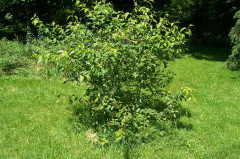
    Bald cypresses do well along streams too & are surprisingly cold-tolerant -- mine below:


    NHBabs z4b-5a NH thanked bengz6westmd
  • 4 years ago

    Well, maackia stole one of my recommendations - to visit the local gardens and university arboretum. I would add to that: check into the University of Wisconsin horticulture department and cooperative extension service publications. They are rife with very locally apt suggestions for plants.


    Having hailed from deep Wisconsin roots (Mom is from Middleton, just the other side of town from you; Dad was from Kewaunee, on Lake Michigan), I spent quite a bit of my life visiting extended family since we were the disjunct population in Kentucky. I carried that habit into adulthood and professional career, often visiting nurseries and garden centers in northern Illinois and Wisconsin. Johnson's Nursery in Milwaukee 'burbs is well worth a visit; Mike Yanny is propagator extraordinaire, and has a very keen eye for selected populations among the local flora. McKay Nursery is topnotch; I think that they have a garden center location as well near Madison. Knight Hollow Nursery is a great producer right in Middleton; Deb McCown is a force.


    AND I CAN:T BELIEVE NO ONE HAS SUGGESTED A VIBURNUM YET!


    Had to get that out. Here's a bunch more woodies that could be considered, many of which could be live-staked to get started and several of which are prodigious colonizers.


    Aronia arbutifolia, A. melanocarpa

    Sambucus canadensis

    Cephalanthus occidentalis

    Carpinus caroliniana

    Viburnum dentatum, V. cassinoides, V. prunifolium, V. lentago, V. trilobum

    Ilex verticillata

    Amelanchier sp. (many)


    Good luck establishing your own deep Wisconsin roots. You must post wearing an inaugural Cheesehead chapeau, and give us ratings on the local breweries. I can send you the family gastronomic itinerary, too, should there not be plenty of advice previously forthcoming.

    NHBabs z4b-5a NH thanked ViburnumValley central KY Bluegrass z6
  • 4 years ago
    last modified: 4 years ago

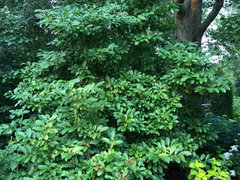
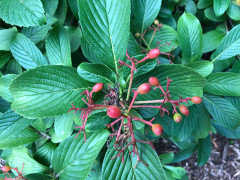
    I’ve got a Viburnum to recommend, I’m just not sure which one it is. Maybe SOMEONE can help. The pics are from early August. There was no label on this one, or it would’ve been on Botanical Jeopardy.


  • 4 years ago

    Viburnum sieboldii. Depending on where you saw it, it could be Wavecrest, or Ironclad, or Seneca, or just a seedling looking for its purpose in life.


    Caress the next one you encounter. You'll come away unforgettably remembering the green pepper fragranced foliage.

    NHBabs z4b-5a NH thanked ViburnumValley central KY Bluegrass z6
  • 4 years ago

    Red-osier dogwood stems can be thrust into the ground and grow too, that's how I grew this one. Have to be watered first year if the soil dries out.


    NHBabs z4b-5a NH thanked bengz6westmd
  • 4 years ago
    last modified: 4 years ago

    NHBabs..I'm sorry to hear about the loss of your husband..

    wishing you the best on your move and your new life..

    one plant suggestion that I don't think was mentioned..Northern Sea Oats..I planted one in a wet shady area and it's spread a lot..I like it..much prettier than what used to grow there..a variety of weeds..one was stinging nettle..ugh..


    the seedheads are pretty..

    NHBabs z4b-5a NH thanked nicholsworth Z6 Indianapolis
  • 4 years ago
    last modified: 4 years ago

    Thanks again to all for the support.

    Nice list of shrubs, @ViburnumValley central KY Bluegrass z6. I have many of them growing here in NH, but I was not certain which would grow in the very different soil in that part of WI. I am in the process of checking out county occurrences of Viburnums for Dane County on BONAP and The USDA Plant Database I can also just wing it on my own adjacent property to experiment, and I can definitely go to the arboretum and Olbrich Garden when I head back there later this fall. Perhaps I can take some starts of my Clethra, Sambucus canadensis, Viburnum from here in NH with me to WI as bare roots. I appreciate the nursery list also also. And while I cannot quite see myself wearing a foam wedge of “cheese” on my head, I can attest that Great Dane has a couple nice brews, and Delta Beer Lab has had several I have really enjoyed (though a couple have not floated my boat) as well as a great atmosphere.

    @bengz6westmd, I doubt that bald cypress will grow in WI except perhaps right along Lake Michigan, but I will check out dawn redwood (I know, nonnative) which has a similar feel. And I will check out native WI status and size of various willow species.

    @nicholsworth Z6 Indianapolis I have seen photos of northern sea oats/Chasmanthium latifolium but have not been tempted to plant it in a garden due to its enthusiastic seeding, but I think it might work well here. Thanks for that suggestion.

    I am getting a good list started now. I may add some of the smaller cultivars of Thuja occidentals, the native arborvitae, but ill need to make arrangements to prevent deer munching.

  • 4 years ago

    I'm not sure I'd bother with Clethra. I've tried it several times, and just cannot grow it. Those nasty pH issues. Itea doesn't die, but doesn't do much else either.

    NHBabs z4b-5a NH thanked mad_gallica (z5 Eastern NY)
  • 4 years ago

    Taxodium are fine there. The UW Longenecker Gardens has a nice one.

    Here’s an old thread on their conifer garden…

    https://www.gardenweb.com/discussions/1881788/u-of-madison-longenecker-gardens-conifer-collection#n=23

    And next spring when you’re settled in, a visit to the Janesville Rotary Gardens would be worth the trip.

    tj

    NHBabs z4b-5a NH thanked tsugajunkie z5 SE WI ♱
  • 4 years ago

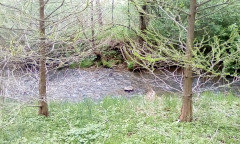
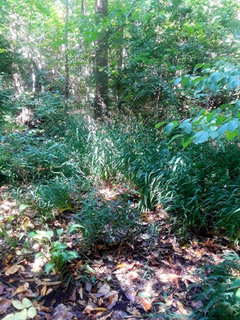
    Here is my swamp/streamlet/drainage path.


    I can get in there to take pictures because the town just replaced the culvert, and cleared out a space with heavy equipment. In spring, the low parts have some skunk cabbage, but usually they are fairly bare. Gray dogwood is the most prevalent woody plant. They are just starting to turn color in the middle. Trees have not done well. Red maples get to a certain size, then die off.

    NHBabs z4b-5a NH thanked mad_gallica (z5 Eastern NY)