Software
Houzz Logo Print
outspokenagain

Fiddle fig mystery grey spots

4 years ago
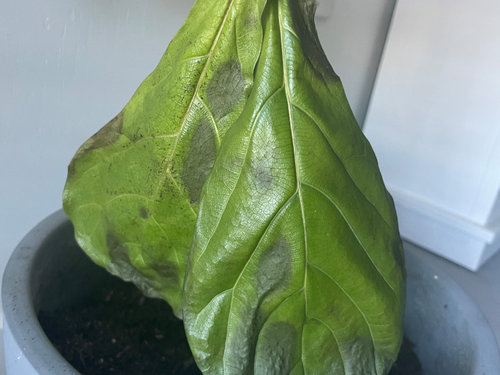
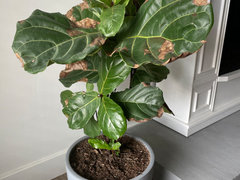
So I took the plunge and separate a fiddle fig that had 4 thick stems all coming from the bottom. I removed 2 (made sure they all had some thick roots, but left most of the roots on the last 2 stems, that i kept on the plant. I expected my plant to be in shock and drop leaves, but im getting these grey spots on my plant now. I’ve inspected the roots twice and only found one bad root, so I off and have been letting the roots dry out for the last couple of days. But these mystery spots are now on the last couple leaves, and I’m afraid my plant is dying. Can anybody help save my 2.5 year old plant? https://imgur.com/gallery/vh8ScnB


Comments (8)

  • 4 years ago

    how about you post the rest of the pix here???


    before they drop.. as you expected.. why cant they do this???


    i dont understand with roots stressed this much.. you are now starving it of water??? .. and you keep unpotting it ...


    perhaps all that is in the other pix ...


    ken

  • 4 years ago
    last modified: 4 years ago

    W/o consideration given to the probability that anything on this list of 3 caused the problem, it looks most like sunburn, second most like a reaction to a topical phytotoxin (something poisonous to plants applied to leaf surfaces), or chill injury.

    What did you use for/as a grow medium; and, did you keep the roots WET for the entire duration of the rootwork? It doesn't look like what I would expect it to if the plant is suffering from desiccation of a large fraction or all of its fine roots; however, if one applies the law of parsimony (Occam's razor) it's clear the potential of roots drying out while you worked on them deserves some consideration.

    Did you leave it in full sun for more than a half hour or so? Have you applied anything to the leaves or treated them with any product? When did you last fertilizer the plant? With what?

    Al

  • 4 years ago

    Its been in the Miracle Grow cactus mix for about 2 years, and I’ve topped it off when the roots start to show. I didnt know much about fetilizing until this year, and have been using a little Miracle Grow All Purpose Plant food mixed in a latge container of Brita filtered water, around once a month during this during growing season.


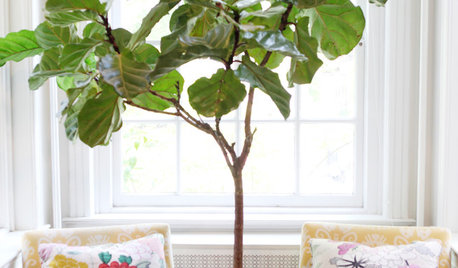
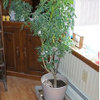
    When the leaves get dusty, I would cycle wiping then with a little water and Dawn and some diluted Neem oil. I’ve attached a picture from early this year. It has some brown, because my watering schedule never seemed right (I live in a desert). But I haven’t wiped off the leaves since before the plant was divided.


    Its been in the same position for the 2 years, a North facing window that gets indirect light late in the day (its the brightest window in my apartment). And Ive made sure to rotate if it was doing better on one side.


    I’m not sure what the best course to rake is right now, I’ve never had this spot pattern before.


    Image from early this year:


  • 4 years ago
    last modified: 4 years ago

    Household cleaning products are made to clean household items like dishes, floors, countertops, not leaves. Dawn dishsoap alone has at least 11 phytotoxic ingredients, some of which destroy the wax in leaf cuticles (skin), which help plants limit water loss and act as a barrier to insect herbivory and disease pathogens. It also makes the plant more sensitive to light.

    Also, the additional images suggest over-watering has been a chronic issue for some time. Important: Does the pot have a drain hole? If there is no drain hole to allow you to regularly flush the build-up of fertilizer salts out of the grow medium, the salts continue to build to the level that water begins to be pulled from cells by the same mechanism by which curing salt pulls water from meats like bacon, ham, summer sausage, .... . As you might imagine, that is to be avoided.

    I'll leave a couple of things I wrote about household cleaners and how to manage moisture levels deep in the pot via use of a wooden 'tell'.

    Detergents

    The advice to use solutions of dishsoaps/ detergents is short-sighted for a number of reasons. Dawn, Palmolive, Joy, ...... dishsoap, as an example, are each and all a mishmash of chemicals, at least eleven of which are phytotoxic. If the above-ground parts of a plant is sprayed thoroughly with even mild detergent solutions such that all surfaces including leaves are covered, the detergent can easily dissolve the protective coating of cuticular wax on the leaves of the plant. Since these waxes have evolved to 1) prevent leaves from excessive water loss 2) provide a protective barrier to fungal and bacterial pathogens which denies them a pathway by which to enter the plant 3) acts as a sunscreen to protect the plant from harmful UV rays 4) act as a deterrent to some forms of insect herbivory. Some solutions will even dissolve cell membranes, causing death of cells.

    If a detergent solution is used as a soil drench or makes its way into the soil as a consequence of over-spray or run-off, the effect on roots is immediate. Because one of the main function of roots is to absorb water and nutrients dissolved in water, they lack the waxy protective coating that benefits leaves. Detergent solution in contact with root cells can quickly dissolve the lipid membrane surrounding cells, killing the cells and inhibiting water/ nutrient uptake. Hair cells growing as appendages off larger roots do the lion’s share of assimilating water and nutrients, and these very delicate cells would be the first casualty of any detergent in the root zone.

    There are widely available insecticidal soaps, designed to be used topically and made mixing potassium with only long chain fatty acids, carefully selected and specifically formulated to be safe for mammals & birds, death on most insects they contact, and most important, safe for plants. If you need something "soapy", it would be much better if you selected a product intended for use on plants than one intended for other purposes; and, it doesn't matter how many growers attest to the fact they've used it for a hundred years with no problems. If 50 million people practice an imprudent measure not recognizing it's imprudent, it's still imprudent.

    While a water/ dishsoap solution might rid the plant of some insect pest, it can also leave the plant much more vulnerable to the next wave of insect predation, more vulnerable to fungal/ bacterial pathogens, at greater risk from solar damage, and limit the plant's ability to remain appropriately hydrated because of increased evaporative water loss.

    Using a 'tell'

    Over-watering saps vitality and is one of the most common plant assassins, so learning to avoid it is worth the small effort. Plants make and store their own energy source – photosynthate - (sugar/glucose). Functioning roots need energy to drive their metabolic processes, and in order to get it, they use oxygen to burn (oxidize) their food. From this, we can see that terrestrial plants need plenty of air (oxygen) in the soil to drive root function. Many off-the-shelf soils hold too much water and not enough air to support the kind of root health most growers would like to see; and, a healthy root system is a prerequisite to a healthy plant.

    Watering in small sips leads to avoid over-watering leads to a residual build-up of dissolved solids (salts) in the soil from tapwater and fertilizer solutions, which limits a plant's ability to absorb water – so watering in sips simply moves us to the other horn of a dilemma. It creates another problem that requires resolution. Better, would be to simply adopt a soil that drains well enough to allow watering to beyond the saturation point, so we're flushing the soil of accumulating dissolved solids whenever we water; this, w/o the plant being forced to pay a tax in the form of reduced vitality, due to prolong periods of soil saturation. Sometimes, though, that's not a course we can immediately steer, which makes controlling how often we water a very important factor.

    In many cases, we can judge whether or not a planting needs watering by hefting the pot. This is especially true if the pot is made from light material, like plastic, but doesn't work (as) well when the pot is made from heavier material, like clay, or when the size/weight of the pot precludes grabbing it with one hand to judge its weight and gauge the need for water.

    Fingers stuck an inch or two into the soil work ok for shallow pots, but not for deep pots. Deep pots might have 3 or more inches of soil that feels totally dry, while the lower several inches of the soil is 100% saturated. Obviously, the lack of oxygen in the root zone situation can wreak havoc with root health and cause the loss of a very notable measure of your plant's potential. Inexpensive watering meters don't even measure moisture levels, they measure electrical conductivity. Clean the tip and insert it into a cup of distilled water and witness the fact it reads 'DRY'.

    One of the most reliable methods of checking a planting's need for water is using a 'tell'. You can use a bamboo skewer in a pinch, but a wooden dowel rod of about 5/16” (75-85mm) would work better. They usually come 48” (120cm) long and can usually be cut in half and serve as a pair. Sharpen all 4 ends in a pencil sharpener and slightly blunt the tip so it's about the diameter of the head on a straight pin. Push the wooden tell deep into the soil. Don't worry, it won't harm the root system. If the plant is quite root-bound, you might need to try several places until you find one where you can push it all the way to the pot's bottom. Leave it a few seconds, then withdraw it and inspect the tip for moisture. For most plantings, withhold water until the tell comes out dry or nearly so. If you see signs of wilting, adjust the interval between waterings so drought stress isn't a recurring issue.

    Al

  • 4 years ago

    Thank you for this great info! That’s an interesting about detergent. I was recommended to do that when I had a spider mite infestation and continued that practice just in case. I see your point that a common practice doesnt necessarily mean a good practice.


    Originally when I got the plant, I was very new, and replanted the fiddle in this container, which has a drainage hole but its only one. And I went a year wiping water off my floor when it drained until I got a plastic dish to catch to water. I also purchased a moisture meter probably 2 months back, and that has helped a lot. id seen people talk about the bamboo method; i havent tried it, but I feel like i should. It feels more intuitive to understand what the plant needs.


    So just to clarify to make sure i understand: the brown spots suggest inconsistent watering/trapped water im the container and the grey spots suggest sunburn? I could move the plant out of the way, so the light isnt as harsh. I was confused because it seemed to do well in that spot, but maybe the poant division just made it sensitive?

  • 4 years ago

    Thank you for the thoughtful responses! It can be difficult sifting through the mass amounts of information about plants online, so I appreciate you taking the time to take through some concepts with me.

  • 4 years ago

    My pleasure. Let me know if you have other questions you think I might be able to answer for you. Best luck!

    Al