Software
Houzz Logo Print
holly23675

DIY wood counters - raw lumber or pre-fabbed butcher block slabs?

4 years ago
last modified: 4 years ago
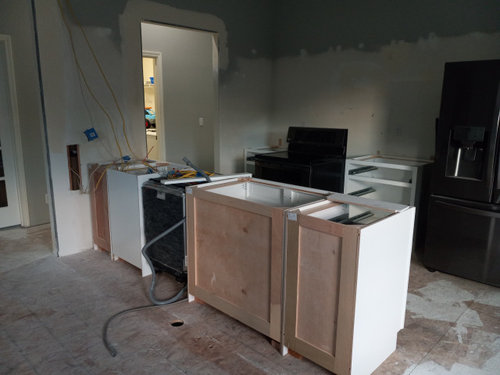
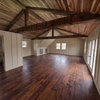
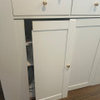
My husband and I are full swing into our kitchen renovation. If anyone has been following along or looks at my older posts, after exploring several options we went with knocking down the wall completely and installing a cabinet island with seating. Thanks to everyone who offered advice to help us get there! The cabinets are in place and now we need to figure out what we are doing for a countertop. Here's what it looks like so far:


For the countertop, we love the wood look, and we are going to do it ourselves because, honestly, we are already over budget and just cannot afford $3k or more to have something custom built. We ended up having to hire a contractor to handle the plumbing, electrical, rebuild/repair work, etc. so that hurt. But we did all the demo ourselves. That was fun. Anyway, we are looking at 2 DIY options for our 10' x 37" wood island countertop (width is flexible - we can go as narrow as 36" or up to 40")....

Option #1. Buy pre-fabbed butcher block. PRO: already planed, tight, and smooth CON: I cannot find any that are both the length and width we need (unless anyone has any ideas/sources?) Again, we are trying to NOT go custom so we are stuck buying off the shelf. I can find 10' x 25" OR 6' x 36, 39, or 40," but not 10' x 36, 39, or 40".

To make this option work we would have to buy two slabs and then join the long sides to make it the width we need. Buying wider, but short panels and joining them on the short side is not an option for us - the seam would be too visible. At least when joining on the long side the seam would run parallel to the lines created by the glued pieces already there.

Option #2. Buy 2x6 boards and join them together to create a wide plank countertop. PRO: I like this look the best. CON: I can only find rough lumber and so far I can't find a big box store, nor even a lumber yard that is willing or able to run the pieces through a jointer and planer. We are not going to spend $1000+ to buy this equipment for just this one project, and after an exhaustive search I can't find any companies that either rent the equipment (Home Depot will rent a hand planer but not the machine where you run the boards through), nor any that offer this type of service. Finished boards from the big box stores are not long enough.

To make this option work we could select the straightest lumber we can find, then rip the ends with a table saw and maybe use a hand planer, then sand it really really well. We'll end up with a rustic, imperfect countertop, which I would LOVE but only if we don't have to pour on gallons of polyurethane to make it functional for a family with kids. The whole reason we want wood counters is to keep it natural with mineral oil for a matte finish. Would that be good enough for planks that might have minor gaps or not be completely smooth?

Which option would you go with? Are there any considerations I haven't mentioned here? Whether we go with #1 or 2, we would of course use a biscuit joiner, glue, and pocket screws to get either the butcher block panels or 2x6s to fit together as tightly as possible. Any insights from those who have done either or both of these types of projects would be greatly appreciated. Thanks!!

Comments (5)

  • 4 years ago

    I just put a first coat of mineral oil on off-the-peg Lowe's maple countertops. Happy with the results so far.


    I certainly wouldn't use dimensional lumber. It's too wet, and will likely warp in this type of large layup. If you can find a hardwood supplier somewhere nearby they should be able to 1) source kiln-dried hardwoods and 2) plane them for you. Pocket screws and/or big clamps and wood glue should get you the rest of the way.


  • 4 years ago

    The easiest option is two 10' x 25" slabs run through a jointer to square the edge on each to be joined. Then marked with a pencil acroos both when side by side every 8 inches. Use a biscuit or tenon cutter at each mark. Apply glue like tightbond or epoxy. Insert the biscuits in one side. Push the two sides together and clamp every couple feet with protective wood pieces to save the edges. Wipe off glue squeezeout and scrape off remaing squeezeout with a scraper or razor blade. Both sides. Let it cure for a couple days. Cut lengthwise to your desired dimension.

    Two by lumber is softwood. Not the best for countertops. 5/4 hardwood of your choice could be used.

  • 4 years ago
    last modified: 4 years ago

    Where are you located?

    Most hardwood sellers will run rough lumber through their planer for a modest price to get you S4S (surfaced four sides) lumber. Additionally, there are online retailers who will ship S4S hardwoods to you.

    You may have a maker space near you. Our local maker space is $300 per year to join and they have a 44" belt sander along with all the other tools to surface and join boards.

  • 4 years ago

    Have you actually priced out custom? Our contractor had all the counters at our lakehouse done by ”his guy” for only a few hundred more than what i had priced out using big box slabs pieced together.

  • 4 years ago

    I ordered a cherry top from these guys a few years ago: https://hardwood-lumber.com/


    The price was reasonable, the shipping fair, and the quality excellent.


    They have an estimate generator on the website so you can see if it's worth pursuing. Might be more affordable than you think!