Software
Houzz Logo Print
georgeformangrill

Protecting kale seedlings


Hey there:


I'm a garden newbie who's having a helluva of a time trying to grow kale in my small container garden. I guess my concerns boil down to two questions:


1. How do you protect kale from moths and cabbage worms?


2. Is my kale growing too slowly?


Some background: I'm in southern California, and sowed seeds directly into containers back on 9/19. I'm using Blue Ribbon blonde potting soil mixed with a touch of compost and Dr. Earth organic veggie & herb fertilizer. I've been pretty generous with my watering, giving the seedlings a bath in the early morning and around dusk every day. Right now, I've got four plants growing about six inches apart and no row covers or other protecting from airborne pests.


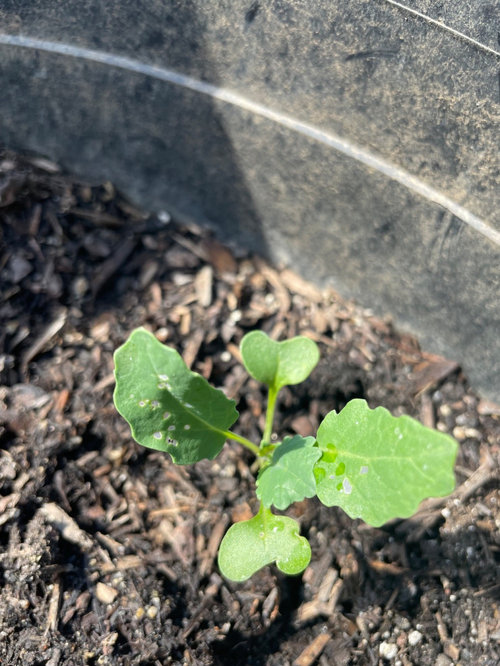
The seedlings sprouted pretty quickly, but it seems to me like they've stagnated over the past couple weeks. I also was disheartened to find the signs of cabbage worms or some other pest munching on one of my seedlings (picture attached). I understand that pests target plants that are already struggling, so what am I doing wrong that's preventing this kale from thriving?


Thanks,

George


Comments (20)

  • 4 years ago
    last modified: 4 years ago

    Protection from cabbage worms? Bt - bacillus thuringiensis. Period. Full stop. Get it at any garden store. You'll get it in concentrate, dilute it, and spray it regularly. It'll dispense with any caterpillars.

    Be careful about overwatering. Brassicas don't like soggy roots. Root rot often results. Overwatering can lead to stunting. I will add that unless it is violently hot, more plants die from overwatering than underwatering.

  • 4 years ago

    Amazing. Thanks for the tips. Super helpful! I've probably been overwatering, if that's the case with brassicas. I'll throttle back on the daily watering and grab some BT.

  • 4 years ago

    If you can't find BT readily available then inspecting the plants twice daily for the loopers is an option. I have 16 cabbage and broccoli plants and performing at least one daily close inspection of the leaves it's not too difficult to find the baby caterpillars early before they do harmful damage. The 4 kale plants you have should be easy to keep clean, esp since you found some loopers already. Watch out for little white butterflies (aka moths) fluttering around your plants, they're one of the various moths which lay the looper eggs on the leaves. Happy Harvest!

  • 4 years ago
    last modified: 4 years ago

    Note that cabbage worms and their moths are mostly nocturnal, and even then tend to hide on the underside of leaves. Daytime inspections might not do it for you. Now flea beetles should be pretty obvious, if they're the problem.

  • 4 years ago

    Thanks for the advice. Would Bt solve the flea bestle problem, too?

  • 4 years ago

    Bt will have no effect on flea beetles. It only works on caterpillars. You'd need standard pesticides, and maybe Neem for flea beetles. But again, don't start spraying for flea beetles unless you actually see them. They are small black beetles. With a serious problem, you'll see many on any given plant.

  • 4 years ago

    Perhaps ’cabbage worms’ are different here but I’m thinking if the white butterflies which lay yellow eggs and produce green caterpillars. They're very easy to see by day and they chew holes in leaves, not just removing the upper surface. These seedlings are tiny. It should be easy to spot any kind of larva. That’s why I think the damage is caused by something more secretive and mobile.

  • 4 years ago
    last modified: 4 years ago

    The caterpillars that eat my collards are wholly nocturnal. Almost never see them in the daytime. Indeed, they chew holes. Left unmitigated, the leaves will turn into mesh. They'll just leave the ribs of the leaves. It is a little strange that in your picture I don't see any actual holes in the leaves. Not a lot of real "munching" going on there.

  • 4 years ago

    I have the same cabbage worms as floral described.

    tj

  • 4 years ago

    Tulle netting will keep the white cabbage butterflies from laying their eggs on the kale. It's the only way I was able to get nice leaves without holes.

  • 4 years ago

    Thanks for the tulle netting tip. I might give that a shot. The seedlings have really tiny holes right now, which I guess means they're from flea beetles. Does netting prevent beetles from getting at plants?

  • 4 years ago

    Flea beetles are pretty small but the netting should keep them at bay. Flea beetles are hard to spot sometimes, as you approach the plants they will "jump" like a flea so quickly that you'll miss seeing them. Once you leave they'll jump back on the plants. They don't like leaving the plants if it's too dark (after sundown but still twilight) so that's a good time to inspect the plants to see if they're present. They are tiny creatures about the size of a speck of black pepper.

  • 4 years ago

    Good to know! Thank you.

  • 4 years ago
    last modified: 4 years ago

    Tulle netting or row covers--the latter come in various weights--insect barrier, regular and frost protection. I don't know how I ever gardened before row covers. And put them over the plants the minute they germinate and make sure they butterfly can't get under the covers.

  • PRO
    4 years ago

    I will definitely look into BT as my collards and even rainbow chard suffer from either hungry birds and/or worms. An immediate solution that has helped reduce the chomping is just mixing rubbing alcohol and a small amount of soap and water. Spray it daily on the leaves and stems.

  • 4 years ago

    A little extra I read was to toss some egg shells around your bed (good sized ones). The moths think they are moths already in their territory and go away!

    Well, it couldn't hurt!

  • 4 years ago

    Great tips. Thank you!

  • 4 years ago

    An easy way to check if you need to water is to pick up the container and feel it's weight, you just need to lift it a few inches. For a reference point, do this right after you've given it a good watering and remember how heavy it feels. Then do this everyday for a while. You've know when the pot feels light. When it's light, look to see if the plant leaves are drooping at all. Some plants just don't need that much water,

  • 4 years ago

    Great tip. Thanks!