Software
Houzz Logo Print
cory_hauser

Need help eliminating condensation from basement walls with poly.

4 years ago
Climate Zone 5A (Eastern Nebraska)

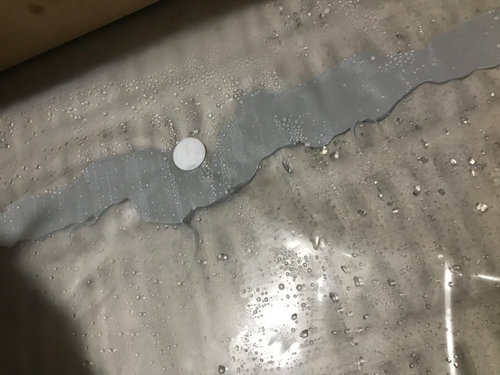
I’m needing guidance on properly insulating basement walls that already have 6 mil poly fastened to the wall as part of a basement perimeter drain system. I recently noticed condensation on the warm side of the 6 mil poly (not between the poly and poured concrete wall) and am unsure how to proceed. (basement humidity is around 50%, basement air temp around 63 degrees F, outside temp is currently 20 degrees F)

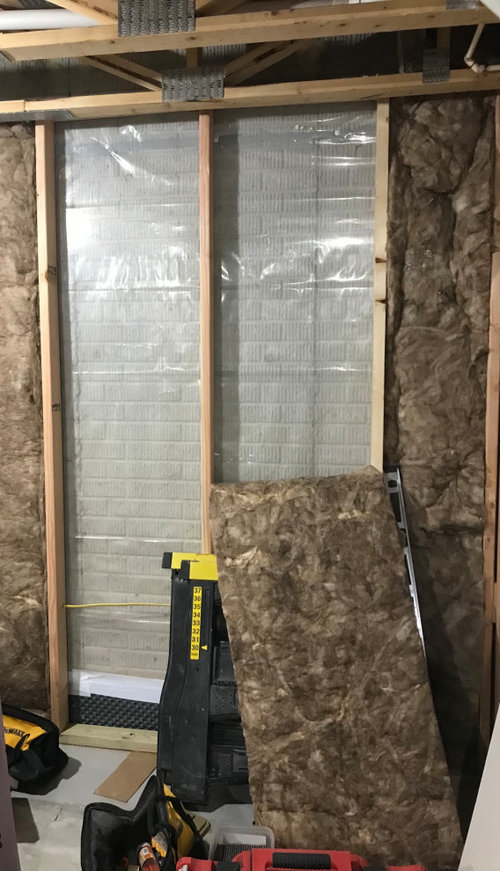
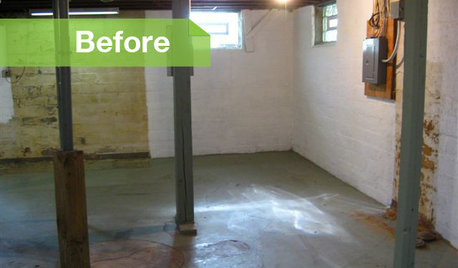
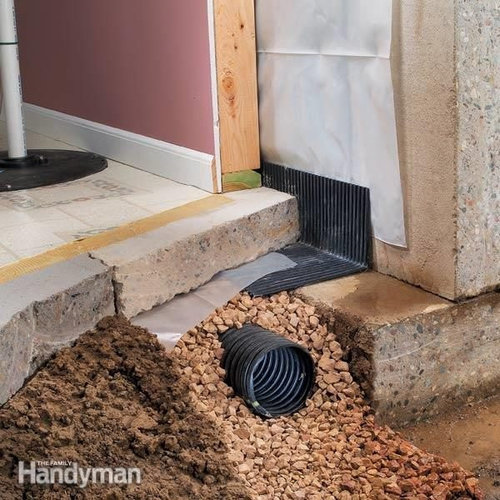
Over the summer I installed a basement perimeter drain like in the attached picture. As part of the system, I covered the walls in 6 mil poly. The 6 mil poly is tucked inside the dimple mat at the bottom and then mechanically fastened at the top with Christmas tree fasteners. I then sealed the top of the 6 mil poly with a sealant and taped the bottom of the 6 mil poly to the dimple mat. This system has been in place for 6 months and appears to have taken care of my damp basement.

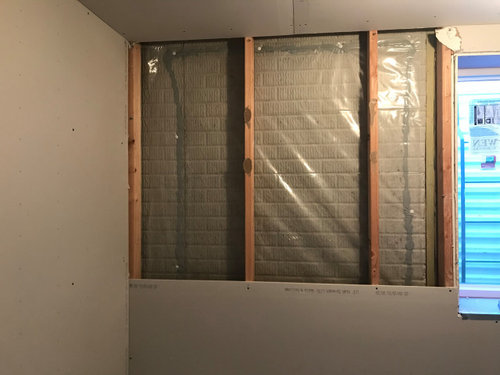
However, I recently started to finish my basement. Since I had the 6 mil poly on top of the poured concrete walls, I made the incorrect assumption that I could simply put in fiberglass batt insulation within my 2×4 cavities. Only after getting all of my drywall up did I notice condensation on the warm side of the 6 mil poly (not between the poly and poured concrete wall). The condensation is only on the top 1 foot of my poly with no current signs of condensation below that. The fiberglass batts are obviously wet, so I’ve since pulled off much of my drywall and removed the fiberglass batts in those areas.

While I have a few thoughts on how to remediate, I’m truly not sure what the best option is. I’m also very open to any other ideas you may have.

  1. Instead of filling my 2×4 cavities with fiberglass batt insulation, replace it with rigid foam board within each cavity.
  2. Move all of my exterior 2×4 walls in 1.5″. Then, slide 1.5″ rigid foam board behind the 2×4 walls, creating continuous insulation from the floor to the rim joist. (this is costly and time consuming, but willing to consider if no better alternative)
  3. Remove all of the drywall and spray foam all exterior walls. However, I had someone tell me this was not a good idea as the spray foam will not stick to my 6 mil poly. I also don’t have much space behind some of my walls to allow the spray foam to create a continuous insulation barrier behind the 2×4 wall.

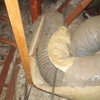
Please also notice that I have open floor trusses. As a result, there is exposed concrete wall above the top of my 2×4 walls. So, while insulating each 2×4 cavity seems appropriate, it doesn’t address the remaining concrete above my 2×4 wall.

At this point I’m fairly desperate and can’t help but feel like I messed up my insulation from the beginning. I would sincerely appreciate any advice you might have! Thanks in advance!


Comments (5)

  • PRO
    4 years ago
    last modified: 4 years ago

    Hi, Cory,

    The problem with learning from experience is that you get the test before you get the lesson. You got the test-- and, fortunately--before the lesson needed to address how to get rid of mold and mildew, too.

    Let's start by looking at what's going on.

    Indoor air contains water vapor which can condense on surfaces if their surface temperature is less than or equal to the dewpoint temperature. For the conditions you noted (50% relative humidity at 63 F,) the dewpoint temperature is around 53 F or 54 F (tough for my elderly eyes to read the psychrometric chart exactly.) So we know for condensation to occur that the temperature of some portion of the foundation wall is less than or equal to 53 F or 54 F. It appears that the band (rim) joist (installed around the perimeter of your open-web trusses) is uninsulated. The temperature on the inside surface of the band is somewhere between the outdoor and indoor temps, but certainly lower than the dewpoint, so you'll get condensation there which can then run down the plastic sheet on the foundation.

    Now for the remedy.

    You'll need to install rigid foam insulation (I like the extruded, not the expanded type) on the foundation wall, preferably bonded to the wall with adhesive, and with the joints taped to prevent any air from getting behind the insulation. You'll also need to insulate the band joist with closed-cell spray foam insulation to prohibit moist air from getting to the back side of the band and allowing water vapor to condense. Once you have the spray foam and the rigid insulation installed, you can construct a wood stud wall on the inboard side of the rigid insulation and use batt-type insulation in the cavities. I suggest you run a dehumidifier in the basement--at the very least during the summer months.

    Best wishes for a successful outcome. (I don't service the Katy, TX area.)

  • PRO
    4 years ago

    The vapor barrier always has to be installed on the warm side of the insulation. And you only want one vapor barrier so you don’t trap moisture. Remove the vapor barrier, batt your stud walls, and install new vapor barrier over the studs. The Kraft paper on paper faced insulation will be the vapor barrier if that is the insulation you have.

  • 4 years ago

    Charles' solution will work. It agrees with the scientific principles put forth by Building Science Corp. (the gurus). With the vapor barrier already on the wall, this design proposes a moisture tolerant insulation against the vapor barrier to raise the condensing surface temp, then allowing the remainder of the wall assembly to use batts and dry to the interior.


    Bob's proposal will not. The Kraft paper vapor barrier cannot be made perfect, so indoor water vapor will infiltrate and condense on the cold upper wall surface as a minimum, not to mention the leaky wall issue that will soak the insulation from the foundation side.

  • 4 years ago

    Thanks for the feedback.


    I agree with the use of rigid foam board over top of the poly. I kick myself for not doing that in the beginning.


    As the 2x4 walls are already up, would spray foam be an acceptable alternative? It would be sprayed over the top of the poly, and then better filled at the rim joist. While the spray foam wouldn’t adhere to the poly, it would expand behind the studs and be held up within each cavity. Thoughts?

  • PRO
    4 years ago

    Cory,

    In my experience, spray foam insulation installed in stud cavities will eventually shrink and pull away from the framing--in which case it will allow air to contact the uninsulated basement wall. I've seen it with both closed-cell and open-cell insulation. You need a continuous air barrier and continuous insulation. Extruded polystyrene is the ticket.


    You might also consider using steel studs or channels in lieu of wood studs--less food for mold if something goes wrong. I'd also suggest removing the polyethylene sheeting. The rigid foam will perform the same function if well adhered to the foundation wall and with all joints taped. With regard to a vapor retarder, the latex paint on the drywall is all the vapor retarder you want. The wall needs to be able to dry to the interior (conditioned, basement) side.