Software
Houzz Logo Print
jenny_klein86

White powder coming through floors

4 years ago
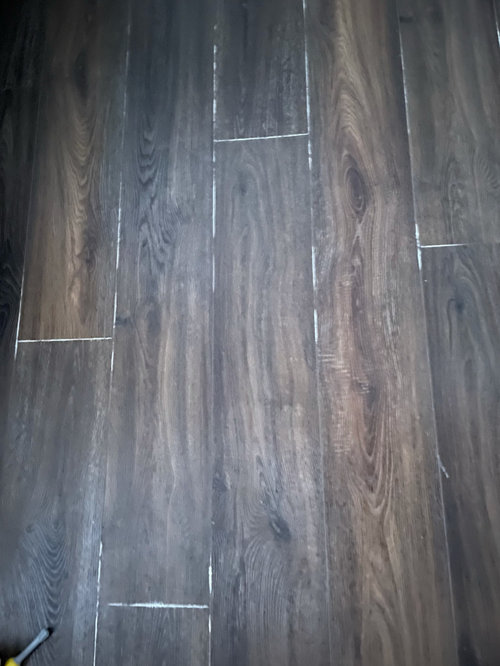
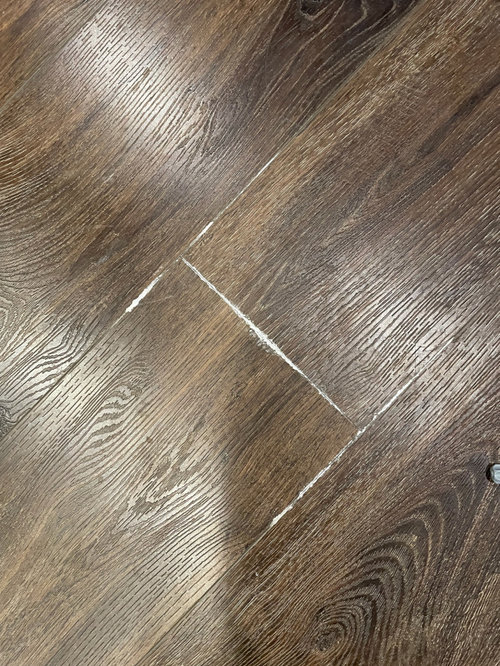
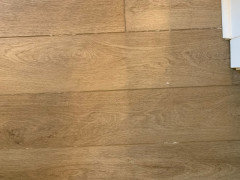
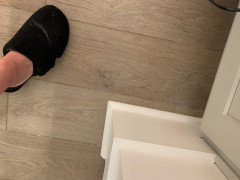
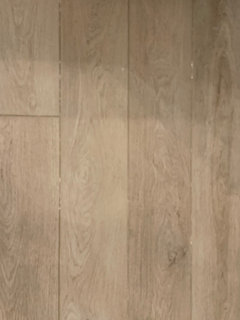
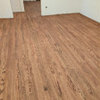
Just came home to find white powered in the grout lines btwn floor boards. We have a slab foundation so I’d assume this has something to do with that. Recently had a bunch of rain but don’t know why there would be moisture in this part of the house. Any ideas? Should we be worried or just clean it up and forget abt it?!

Comments (31)

  • 4 years ago

    Did you not put a barrier between your slab and the floor? Looks like you have a big job on your hands.

  • 4 years ago

    You say grout lines, but it actually doesn’t look like grouted tile. It looks like wood or maybe LVP. Sorry I can’t help, but it seems like the surface wasn’t prepared properly. I have no idea what the white powder is and hopefully a pro can help you.

  • 4 years ago

    Could it be efflorescence coming through?

  • 4 years ago

    Sorry, yes, LVP. I also read about efflorescence, just can’t find a real answer on what to do now aside from carrying to clean it off. Doesn’t see dangerous but I’m no expert

  • 4 years ago
    last modified: 4 years ago

    It appears to be efflorescence. You should have had a moisture barrier on that floor before you put the lvp down. The best thing is to remove it all, and have a moisture barrier installed and then have the floor layed on top of it.


    You may want to read this website https://www.nitterhousemasonry.com/tips-advice/what-is-efflorescence/

  • 4 years ago

    Hi Jenny,
    I am having the same problem but not as expansive. Can you tell me what have you done?

  • 4 years ago

    Nothing yet. My contractor sent the guy that put the floors in over, he said he'd never seen this before. He did say that the floors I have came with an underlayment on them, so their should be protection from moisture. He said he'd get back to me with a recommendation. It's been 3 weeks :( I'll let you know if/when I have more info.

  • 4 years ago

    I have someone coming to look tomorrow. I’ll let you know if i have any news

  • 4 years ago

    Is the underlayment on the underside of each plank or a moisture barrier covering the entire slab where planks are installed? I would think If it's just on the underside of each plank moisture from slab and efflorescence could still come through the cracks between each plank.

  • 4 years ago

    All attached underlayment, I have seen, doesnt even cover the whole bottom of the plank. It is not meant as a moisture barrier, it is more for a cushion for the flooring.

  • PRO
    4 years ago

    I agree. Attached backing is not the same as a moisture barrier.

  • 4 years ago

    Wondering if there should be a concern for mold?

  • 4 years ago

    i'm wondering the same thing. trust me! I have someone else coming over today to look at it

  • 4 years ago

    Let us know what he/she finds. The best thing is to remove it all, and put down a moisture barrier and then relay the floor. Some will not be reusable, so you may have to buy more flooring, and hopefully, can get a close match in lot number.

  • 4 years ago

    I’ve had no luck so far. I’m afraid you are probably right about removing it but I do wonder why only in a small area in the house. My entire house sits on a slab and has the same floor. No leak has been detected where that is happening which is a bathroom and the efflorescence is only there.

  • 4 years ago

    I know, me too! Same thing. It's only happening in one section of the house. And i don't see any area where water could've gotten in. So strange.

  • 4 years ago

    I do understand everything you said. I have two questions:
    Is there a concern for mold and would I just need to pull up that area or all 2000 sq ft of flooring that i have on my first floor? I am certain they did not add moisture barrier. My house is a new build and I was not advised from my builder nor his flooring guy that a moisture barrier should have been added. 😡
    And I am also certain they will also deny needing it. Who can I call besides them to confirm that? My plumber said to call the concrete guy.
    I guess that’s 3 questions

  • 4 years ago
    last modified: 4 years ago

    I would want it all redone. Its just a matter of time, before moisture wicks up through the rest of the floor too. Thats just what concrete does. They should have installed a moisture barrier. Here, we have mostly crawl spaces, and there are many, that have installed their new floors on top of the sub floor without any moisture barriers. Many have had problems, and had to remove the floors, and put down the moisture barrier, and then reinstall the floors. Some pieces of flooring will not be able to be reinstalled due to damage, so hopefully, you have extra flooring, or can get extra flooring, that will match in perfectly.

  • 4 years ago

    My floor guy cmae by, he said that he may consider using a sealant on the concrete before laying the new floor. He thinks we just do this section that is damaged (of course) but I mentioned that it's only a matter of time before we have the same issue somewhere else. He's going back to my contractor to discuss a plan. we shall see

  • 4 years ago

    Please dont let them, put a new floor down, without putting down a moisture barrier first, no matter what they suggest or say.

  • 4 years ago

    Ok here is my small update but it’s not much. I do need advice though.
    So since we are only 6 mos into a new build we called our builder. This is what he said:
    He will pull up the floors to see what’s going on under there but if there’s no obvious issue like a plumbing leak they we would have to pay for replacement of floors. He doesn’t feel like it’s ground moisture because there is a barrier between the ground and the concrete slab along with a spacer type (maybe rebar??) so he doesn’t think it’s moisture in concrete.
    Does this make sense? I’ve had a terrible time with the builder so I need someone to tell me that makes sense.
    FYI, no barrier (besides under padding of flooring) between concrete and lvp. Please help!

  • 4 years ago

    As stated my situation is not nearly as bad as Jenny but I’m thinking it’s a matter of time

  • 4 years ago

    "FYI, no barrier (besides under padding of flooring) between concrete and lvp. Please help!"


    There absolutely must be a moisture barrier between the concrete and the floor for sure or you will have issues. Not if but when.....................

  • 4 years ago

    Thank you!

  • 4 years ago

    @millworkman you don’t happen to be in NE Georgia are you? 😊

  • 4 years ago

    Nope. Long Island, NY.

  • 4 years ago

    Been gone too long from this thread but it occurs to me that the manufacturer should have provided installation instructions that indicate what should be used underneath for various types of subfloors. Often these are not followed by installers (I am not one, just saying based on my reading here and personal experience). So get hold of the info for your product and find out what they SHOULD have done, not what they SAY is OK.

  • 4 years ago

    thank you for the tip. I'm still waiting on my contractor to update me with a plan. Apparently, it's become standart to just not say anything until I ask about it again. It's been months of back and forth. So frustrating.

  • 4 years ago

    You may have to escalate. Ask him if he would rather hear from someone else like your attorney. They have little to no incentive to deal with a job that's already done and paid for.


    Imagine how fast he's going to get it done when there is ACTUALLY A PLAN.


    Anyway you can still contact the manufacturer or look up the product on their website and find out what should have been done.

  • 2 years ago

    The reasons you can see this in one area of the slab but not through out is actually simpler than you think, it can just be the terrain outside that allows the water to pool outside the house in that area where it is showing. It could also be a slight flaw within the slab (or if it has a vapor barrier underneath) that allows more moisture to come through in that area.

    The efflorescence you both are experiencing is not dangerous itself, its the dissolved minerals coming through a more porous part of your slab. You are seeing it at the joints of your LVP because even though they have attached pads, at the joints is where it can wick through.

    The LVP once all locked in place is a large moisture barrier itself over the slab, the joints and perimeter of the flooring are the only places anything can escape.

    If RH (moisture) was getting too high under the LVP for long period of times you would start to see more than just efflorescence, commonly you would start seeing LVP failure. The most common is peaking/curling in the butt joints (the short joints).

    Every slab is different on if it would need a 6 mil plastic or roll on membrane before putting down an LVP. It also varies on where in the US you live. Most manufactures state they "suggest" a 6 mil plastic or some type of moisture mitigation but it is not required unless testing shows there is a RH issues prior to installation. Every manufacture states different forms of requirements they allow for testing the slab prior to installing the LVP to make sure it's within guidelines. The industry is regulated all by ASTM by how we can test concrete slabs and these options are what the manufactures quote in their installation instructions.

    Get to know your exact flooring line, pull up the instructions and do the research. Nothing is more powerful than an consumer with knowledge.