Software
Houzz Logo Print
justin_walters62

My new garden is sinking when steeping on it

4 years ago
last modified: 4 years ago

so i
Ok so ill try and clear some stuff up.
1st I live in Victoria, Australia which at moment we are either in a heat wave or thunder storms.
2nd: we recently built a 1st home and my 1st task is to make the backyard usable. Before the backyard was just a waste land of clay mixed with leftover/broken building material.
The yard is 10.5m x 10.5m overall. Im made a garden be at 10.5 x 6m using 150mm timber sleepers and filled it up with top soil.
We had some major rain the other day followed by a few 34°+ days. And the other day some rubbish had blown in the area so I 1st I took a few steps to make sure the ground was solid. Then when I got half way in to the middle I started to sink in to a fluffy slush of mud.
And reason this is happening?? And how to fix? Is this from lack of soil/air pockets in that area?

Comments (22)

  • 4 years ago

    Yes, the ground must be packed down to prevent the problem.


    Are there mud trails from the bed, if so the soil may be eroding from the bed with the rain water.. This would also create more localized holes. I would expect these to appear near the retaining walls around the bed.

  • 4 years ago
    last modified: 4 years ago

    how about some pix ...

    dont walk in it ...the goal is light fluffy soil for the roots to grow in easily ... one of my usual spring posts... is to stay out of your garden in early spring .. to avoid compaction of the soil ...

    the soil should settle itself.. not have to be compacted by you ...

    try some strategically placed patio stones ... or a defined path .... and stay out of the rest ...

    150 mm is about 5 inches ... why so shallow?? ... define the native soil .. is it clay .. are you trying to work above it ... does the native soil drain?? .. did you work any of the presumably good new soil into the sub soil???

    ken

  • 4 years ago

    Im in a new house and the backyard was just clay. Wanted to avoid having to try and dig the clay up. So I choose to make a bed 150 to lay on top of the existing yard.


    Was told by the person. I purchased the soil of that its top grade soil and perfect for what I wanted it

  • 4 years ago

    Clay underneath that does not drain quickly plus lots of rain in a bed surrounded by sleepers(?) equals a bathtub of water filled with your new soil. The soil is not settling. You are stepping into a waterlogged mud hole. Without drainage, this will be an ongoing problem in heavy rain and melting snow.

  • 4 years ago

    Where do you live? I'm guessing Australia.

    What are sleepers? ...and how do they affect the issue?

    Did you bring in new soil to go on top of the old soil? What was the drainage like before you started the project?

  • 4 years ago

    Sleepers are the timbers supporting railway tracks. They would be the walls of the bed. I’m guessing that Justin is in the UK and that she’s talking about a newly laid lawn. If that’s the case the soil should not be fluffy. This is a lawn not a flower bed. I would suggest rolling the area to compact the soil more. But the use of ’yard’ is making me wonder if I’m right. If I’m mistaken a photo would be helpful.

  • 4 years ago

    Sleepers are timber sleep and yes i live is Australia

  • 4 years ago

    Ok so I updated the main story better.


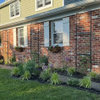
    I haven't got a photo of at the moment but this is what it looks like


    And before any one ask about the gap at the bottom. In side the bed i placed a 2nd sleeper inside to stop dirt from slipping at


  • 4 years ago
    last modified: 4 years ago

    Sleepers = railroad ties. Rubbish = plant debris.

    For a lawn, yes, you should roll and firm the soil first. Even if that step was missed, settling should be minor in 150mm of soil. It is sounding like a drainage problem.

    "my whole foot sunk" I'm using the literal American English translation of that.

  • 4 years ago

    Rubbish isn’t just plant debris. That plastic bottle would be rubbish.

  • 4 years ago

    I see a dog. I don't see a plastic bottle. I sure hope that picture is as blurry as I am seeing it. The sleeper isn't a railroad tie either. It's possibly timber landscape edging from the garden shop.

  • 4 years ago

    Thanks for all the new information.

    What's done is done, but I don't think you needed the raised garden to be successful with a lawn. But here we are. It would seem that poor drainage is the problem. Is there a low spot around the perimeter of the raised area that you could drill holes in to allow water to flow out?

    Did you get this idea from someone who was successful doing the same thing?

  • 4 years ago

    It is a bit of a low spot in that area and tends to pool alot more when it rains or water the yard.


    What do you mean drill holes in the area???


    I did some basic research and was suggested this

  • 4 years ago

    I was thinking of drilling holes in the side of the wooden edging. I'm not an expert at draining terraces. You might want to consult with a landscaper.

  • 4 years ago

    i could but wouldnt that make the water down mud spill out in to the holes??


  • 4 years ago


    Here is was the sink pit area looks like

  • 4 years ago

    You could put some landscape fabric behind the holes to keep to soil in but let the water out.

  • 4 years ago

    is the raised bed for veg and/or flowers.. and the lawn to be in front???


    how about you just wait until the rainy season is over ... there are times when weather dictates the process .... and in the meantime... it will settle as it will.. and we can go from there later on ...


    if it is a veg garden... i would make dedicated paths to walk on ... and never walk where you will garden .. and so what if those areas compact ... they are walkways ... you do the best you can ... as of course.. every now and then you will have to step off ....


    it is not uncommon.. when building a berm or raised bed.. to have to spend a season or two ... adding soil.. until you achieve your end game ....


    if im in mid winter.. you are in mid summer ... and that is rarely the time to be planting a lawn ... for me.. its more of a fall or spring thing .... so dont force what shouldnt be done per the calendar .... most of us wouldnt be planting veg or flowers in mid summer either ...


    my usual cliche is.. build your fall planting beds in the heat of summer ... so you are ready for the next planting season ....


    but of course.. i have no real clue how it works down under.. so i would defer if im way off on that .. imo.. you have plenty of time to get this all settled ... pun intended ...


    short of a huge budget ... there is little instant gratification in gardening ... so be patient ... keep plugging away .... and keep us posted ...


    ken


    ps: we are supposed to get 8 to 12 inches of snow in the next couple days... i would kill for a rain storm.. lol ... in metric.. thats a freakin lot ... lol ...

  • 4 years ago

    The bottle is sticking out of the little pile of earth. Sleepers from the railway are no longer recommended because of the preservatives. But garden centres sell thick timbers they refer to as sleepers.

  • 4 years ago

    I will give the fabric a go


    The garden bed is just so a can have a grass lawn for the dog and the little to play on. Main reason I'm trying to fix the sinking mud problem.


  • 4 years ago

    - Why is the top soil 6" (150mm) thick requiring the retaining boards? It is not good to bury the wood fence over on the side with soil, the wood will rot. Fence pickets much quicker than your retaining wall of 2x and railroad ties, but they will too eventually.

    - How high is the house floor level compared to the rough grade (clay soil before topsoil added)?

    - Where does the rough grade slope to now? It looks like you are dug into a hill which is high on the right, so the grade should slope towards the left fence?

    - Where will you have hardscape (patio)? How does that interact with any grassy portion?

    - I would think that as long as the rough grade is sloped away (towards the left), you remove most of the rocks on the surface, with no amendments needed, that you could spread 2" (50mm) of top soil across the entire yard that grass could grow in. No raised bed to trip on, no sinkholes. Green thumbs can confirm that 2" is enough top soil to start and root most lawn grasses.

  • 4 years ago

    3onthetree, you win for the best blast-from-the-past screen name in the lawn care forum. That brightened my day.

    Sure it's nice to have 2 inches of topsoil for turf, but that doesn't mean it has to be added to a perfectly usable soil. There are far too many people giving the advice to add topsoil before doing anything in the garden. We just bought a house where the previous owners had topsoil brought in. Now the house sits in a hole surrounded by the yard about 2 inches higher than the foundation of the house. When it rains, water flows up to the foundation instead of flowing away from the foundation.

    There are exceptions, but most "dead" soil can be revived with some organic fertilizer followed by a soil chemistry test and appropriate chemical treatments. Even if you bring in fresh soil, it comes with its own chemical deficiencies requiring testing and amending.