Software
Houzz Logo Print
jerry2726

coffee grounds into garden

4 years ago

can you put coffee grounds directly into garden and till into the soil. can get a lot for free from coffee shop.

Comments (42)

  • 4 years ago

    Yes, you can. But don't overdo. Even better is to add them to an active compost pile.

    jerry thanked gardengal48 (PNW Z8/9)
  • 4 years ago

    You can in small quantities, but they are better if added to a compost pile. They add nitrogen to the mix.

    jerry thanked lgteacher
  • 4 years ago
    last modified: 4 years ago

    https://www.sciencedirect.com/science/article/abs/pii/S1618866716300103

    This abstract is worth consideration. I don't have the whole article, but I suspect the phytotoxicity is from residual caffeine. That caffeine does repel pests, but also likely kills earthworms. Once composted, that caffeine will be largely removed.

    Edit. I now have the article. "Soil amendment with SCG has been shown to inhibit or promote plant growth according to application rates (Cruz et al., 2012; Kitou and Yoshida, 1997; Yamane et al., 2014; Gomes et al., 2013 #361). Yamane et al. (2014) significantly inhibited the growth of six warm season crops (including sunflower) at SCG application rates of 10 kg/m2 in the upper 0.15 m of soil but at application rates of 1 kg/m2 only sunflower growth was inhibited. This was ascribed to being as a result of toxic levels of caffeine, tannins and polyphenols."

    So one might gather that a little is OK, but a lot is not.

  • 4 years ago

    Directly added coffee grounds didn’t help. I would say mildly alleopathic, yes.


    I wouldn’t hesitate to put it in the compost pile,


    Even there I wouldn’t expect much.


    Think about it: If you took the stuff you put in the pile, ground it to tiny bits and then drenched it in boiling water first, there wouldn’t be much left for the compost pile would there? .

  • 4 years ago
    last modified: 4 years ago

    Well, that's not correct. What's left, when you drench ground coffee beans with hot water (in addition to some residual caffeine) is lots of hydrocarbon material. Think about it. Coffee beans are seeds, and as such are rich in heat stable proteins and amino acids which, when composted, produce plant-usable nitrogen. No, you don't get protein and amino acids in your brewed coffee. Those things are left behind. Used coffee grounds are 2% N, which is a significant fertilizer.

    That being said, yes, both caffeine and polyphenols (of which tannins are sort of one kind) are indeed broken down by bacteria. So composting of coffee grounds will tend to get rid of them. In fact, one method for decaffeinating coffee is to subject the beans to microbial action.

  • 4 years ago

    I don't think coffee added is magical or anything, but:

    -it is something a fair number of people can get in quantities that are at least mildly significant, and with some amendment/nutritional value;

    -I think the studies about how alleopathic or toxic it might be rely on "a lot" to get some result - "a lot" being (as is often the case) an amount that to many gardeners would seem implausibly large and clearly excessive. (Common sense folks - in the study above 10 kg / m^2 is quite a lot, like you'd really have to try, I think). That old saw "don't overdo it" is a truism but for some reason needs to be repeated.

    -Easily managed also by ageing for a while or adding to compost.


    I don't source grounds from outside the household, but we drink a lot of coffee. I mostly toss it directly on the lawn (an easy add). I like doing that instead of in the compost because it disappears in short order i.e. it's an amendment/nutrient (organic?) that's not visible and I don't have to worry about pets or kids. I'd take a lot more if I could get it but ... it's not magic beans (except to wake me up).

  • 4 years ago
    last modified: 4 years ago

    Yes, 10 kg/m2 can be thought of as a lot of coffee grounds, but they're considering a bed 15 cm deep (that wasn't specified in the abstract I pointed to). So that works out to a soil content of something like 5% SCG. That's not a concentration that would deter many people, especially when you get big "Grounds for Your Garden" sacks of the stuff from Starbucks.

    Also true that the nutritional value of coffee grounds really isn't all that high, but is higher than what you'd get with regular kitchen waste compost.

  • 4 years ago

    I use to get big bags of coffee grounds from our local Starbucks and put it in the compost bin along with everything else. I had great compost and lots of red worms. That would be my recommendation.

    I once - once - added the grounds directly to the soil and killed everything there. Bad Move!

  • 4 years ago

    "This abstract is worth consideration. I don't have the whole article, but I suspect the phytotoxicity is from residual caffeine. That caffeine does repel pests, but also likely kills earthworms. Once composted, that caffeine will be largely removed."

    (added emphasis mine)


    Just a personal observation... my Grandfather had a river adjoining his property, and was an avid fisherman. He loved using grubs for bait, and got most of them from a pit where he dug in all of his spent coffee grounds. Don't know about worms, but the grubs certainly seemed to like those coffee grounds.

  • 4 years ago

    I can't remember where I saw that, but it seems to kill earthworms when they don't have much else to eat. Added to a compost pile, I suspect they'd be OK with it. I gather vermicomposters use it as a minor contribution.

  • 4 years ago

    The notion that caffeine could kill worms is IMO a complete non-flyer!! Worms love SCG's and as that is one of the menu items of choice for most vermi-composters (and can make up as much as 25% of their diet), it is doubtful any residual caffeine has any effect on them. Other than maybe a positive one.

  • 4 years ago

    I think what Pavlis said was it kills them when coffee grounds are all they have to eat. No one really does that in practice. There is tons of anecdotal evidence that they are fine with coffee grounds as 'part of a complete breakfast.' :-]

  • 4 years ago
    last modified: 4 years ago

    That's what I said. Time to move on.

  • 4 years ago

    @daninthedirt (USDA 9a, HZ9, CentTX, Sunset z30, Cfa) good points throughout. I'd just add the point (repeating what comes up in many threads), mulching isn't the same as digging in throughout, esp if there are some alleopathic or toxic properties. (Also would be more obvious that 10kg/m2 is a lot if it's several inches thick, although I haven't done the math). Usually breakdown is going to be faster when exposed to air, and the effect on established (rooted) plants very different than on seeds or very young plants.

    Anyway: don't overdo it.

  • 4 years ago

    That's an important point about mulching. To the extent that residual caffeine and polyphenols are allelopathic, bacterial breakdown (as well as gradual leaching) in mulch will dispense of them before they get incorporated into the root zone. So if you have a load of coffee grounds, and don't want to compost them, application as top-mulch is probably safe to do.

  • 4 years ago

    Or, dig them in in the off season (fall for example) so they can leach and decompose for awhile.


    I've always put them in the compost, but the wife does put a few around the roses and they don't seem to mind.

  • 4 years ago

    I read somewhere here to spread coffee grinds under hosta, to repel slugs and add nitrogen, which I dutifully did.

  • 4 years ago
    last modified: 4 years ago

    I have no science on this, but for years I have mixed in coffee grounds with my shredded leaf mulch and it quickly becomes earthworm heaven. If I do that in the fall, by tomato planting time in June everything has decomposed down to a layer of compost on top of the soil. I plant my vegetables, and then add a new mulch - usually straw mixed with coffee grounds and the whole process starts again over the summer.


    I am essentially composting them on the top of the soil. This is much different than adding them directly to the soil where they immediately come on contact with roots. If you are going to do that, you really need to know exactly what you are doing because you have left yourself little margin for error. By putting them in mulch, you are letting the bacteria, fungus and earthworms process them first so what actually hits the soil isn't coffee grounds, but the byproducts left after they decompose.

  • 4 years ago

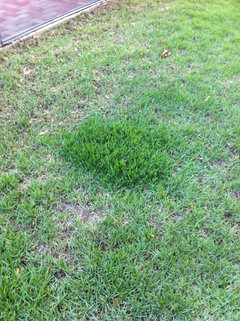
    Back when I joined GardenWeb in the early 2000s, there was a lady from Seattle in the lawns forum who fertilized her lawn exclusively with used coffee grounds, which we called UCG. The early 2000s were basically the dawn of the renaissance of organic gardening. This was the time when Rodale's influence was being eclipsed by recent DNA evidence of tens of thousands of species of microbes living in ordinary soil. All of a sudden(ish) there was science behind the explanation for why organic fertilizers worked. If you've ever tried to grow soil microbes in the laboratory, you can usually get up to a dozen species. It was postulated that there might be as many as 50 species, and that did not a level of understanding did not instill confidence that plant food could be created in the soil. But once the DNA was in, it was hypothesized that there were enough species in this new soil food web, that maybe plant food could be a byproduct of microbial action. As it turns out, the organic fertilizers containing wheat, flax, soybeans, alfalfa, corn, cottonseed, and other sources of protein worked much better than Rodale's compost-centric organic gardening plans from the 1930s and 40s. So yes, all nuts, beans, seeds, and other plant parts containing protein work as a raw material for the microbial production of nitrogen based plant food. The amino acids in protein contain nitrogen which gets reconfigured with every step in the soil food web. Eventually, about 3 weeks after introduction of the foodstuffs, plants start to improve in health showing signs of fertilization. Here is a picture I use all the time. Back in 2010 a gardenweb member going by mrmumbles posted this picture of a spot in his zoysia lawn where he dropped a handful of alfalfa pellets (rabbit chow).


    He applied the alfalfa pellets in mid May and took the picture in mid June. You can see the improved color, density, and growth. While this is not proof, it certainly is a convincing demonstration of organic fertilizer.

    What is coffee? It's a bean containing a measurable amount of protein. Coffee and corn have about the same amount of protein per dry pound. When applied as a meal to plants and grasses they work about the same. An application corn meal or coffee grounds at a rate of 15 to 20 pounds per 1,000 square feet gives an effect much like shown in the picture. If you have tried it and did not see much improvement, I'm guessing you did not wait 3 full weeks and/or did not have any control plants to compare to.

    10 kg per square meter is a fricking unholy application rate. Picture in your mind a 1-pound container of coffee. 10 kg is 22 pounds of coffee. Now picture a yardstick square area of ground upon which someone applied that 22 pounds of coffee. That application rate is over 2,000 pounds of coffee per 1,000 square feet. In online discussions about practical usage of organic fertilizers, 80 pounds per 1,000 square feet is thought to be the limit. That is about the point where you smother turf with organic fertilizer mulch. So it is not a surprise to me that they found coffee grounds to be detrimental if they did not know what they were doing with it. If I was a skeptic I might think that Big Fertilizer was buying research trying to disprove that organic fertilizers work.

    The worst part of using used coffee grounds is drying them out so they will go through a spreader - any spreader. I burned up two microwave ovens before I gave up trying to dry wet grounds. I tried spreading them out of newspaper and cardboard in the direct sunlight. They get to a certain moisture content and then seem to sustain that moisture content even in really hot sun. If you do manage to dry them further, they need to be sealed in an airtight container to keep humidity out. I could not get them dry enough to go through a spreader. So the practical use seems to be limited to using them on individual plants. A heaping handful of soggy coffee grounds, every month, under the dripline of roses and veggies works very well. For larger plants you can use more.

    Another consideration is the growth of a fungus on dried used coffee grounds. It casts a greenish color to the brown grounds and causes clumping. Someone suggested that it was the antifungal fungus, Trichoderma, but I've not seen anything confirming that and stopped looking 10 years ago.

  • 4 years ago

    I'm not sure the organic-ness has a lot to do with this. Nitrogen is a fundamental component of amino acids, which are the molecular building blocks of protein, and that nitrogen, when dissociated from the protein, is in a plant-usable form. But you can get plant usable nitrogen from a load of non-organic stuff. Ammonium nitrate has about twice the plant usable nitrogen than amino acids do. But certainly, if you want to do organic, proteins are the way to go, and proteins are mainly found in seeds. No surprise that animal foodstuffs are high in nitrogen. The protein is a key nutrient for them. Of course, coffee beans are seeds, so they will bring a lot of nitrogen to the soil.

  • 4 years ago

    Dan, can you help me get from what you just wrote back to the OP (can you put coffee grounds directly into garden and till into the soil?)

  • 4 years ago
    last modified: 4 years ago

    I was suggesting not to till coffee grounds into the soil, but rather to use as mulch. But the point was well made that if tilled into the soil well before planting, in situ composting and leaching would take care of the caffeine.

    It would be nice to have some real research references, but there is this

    https://www.gardeningknowhow.com/garden-how-to/soil-fertilizers/will-caffeine-affect-plant-growth.htm

    and for that matter, this

    https://www.theguardian.com/lifeandstyle/2016/oct/23/coffee-grounds-are-not-good-for-plants-its-a-myth

    Interestingly, they say that coffee plants are themselves allelopathic, in that the caffeine that comes out of the leaves that they drop hurts competing plants. So much for the idea of mulching! But, as noted, caffeine is highly water soluble, and so leaching (which happens with composting) should prevent this with coffee grounds. That is, help your plants use coffee grounds by doing up an extra brew in your garden. Could also stick to decaf grounds.

    I was not aware that earthworms like potassium, but I know that earthworms help degrade silicate rocks that release potassium.

    Let me add that 10 kg/m2 certainly sounds unholy in terms of getting loads of coffee grounds, but as I worked out, with a 15 cm depth, it corresponds to only about 5% concentration. Soil is heavy!

  • 4 years ago
    last modified: 4 years ago

    Just for reference 10kg/m2 is 22 lbs spread over 10.8 sq Ft.. I'm thinking a spade full of coffee grounds could weigh 2 or 3 pounds minimum. So I'd guess that 7 or 8 spade fulls spread over that much soil isn't very much, compared to say spreading mushroom compost.

  • 4 years ago

    John, if you want to use coffee as a mulch, that might be a good amount. My point was more about using it as a fertilizer.

  • 4 years ago

    Actually; a spade full of coffee grounds would likely weigh more than 2 or 3 pounds, that was a minimum. It would depend on how much moisture was in the UCG. When I spread mulch I want at least an inch thick layer, and I expect to get some fertilizer out of the mulch. I spread some horse manure over a bed of apple seedlings today. I expect that to supply fertilizer and stop weed seed germination.

  • 4 years ago

    Using straight coffee grounds as a mulch is not recommended. If the surface is allowed to dry out, they become crusty and hydrophobic and water will not penetrate the layer. This will happen with even a very thin layer but an inch thick could spell an irrigation disaster! Mix the UCG's with some other organic material first to prevent this.

  • 4 years ago
    last modified: 4 years ago

    That's a good point about a thick layer of coffee ground mulch forming a water-repellant crust. Another option, after putting down a layer of coffee grounds, is to just rake it to mix it with the topsoil. By the same token, if coffee grounds are thrown in a compost pile, make sure the lumps are broken up. If they go in as lumps, they'll come out as (poorly composted) lumps.

  • 4 years ago

    I wouldn't use it a mulch. I was pointing out what a small amount of material "10kg/m2" is.

  • 4 years ago

    I still see it as a lot. Picture 22 one-pound cans of coffee stacked up and covering a 3 ft x 3 ft (roughly) square. That is a bunch of coffee.

  • 4 years ago

    The problem is we don't know how wet the coffee grounds are. If we spread 3 spade fulls over a 3 ft X 3ft piece of ground It wouldn't cover it. If we raked it in.

  • 4 years ago


    Certainly, 22 pounds of coffee makes a lot to drink. But let's be clear. 1m x 1m x 15cm of garden bed is a really unholy amount of soil! At least 500 pounds. So mixing that amount of UCGs in that amount of soil makes for a pretty thin soup.

  • 4 years ago

    @John D Zn6a PIT Pa, when they give weights like this, I believe it almost always means dry weight.

  • 4 years ago

    Armored - That still ,means nothing to a gardener. Where do you find dry used coffee grounds. And who would dry them. I just emptied a covered pile of mixed horse/mushroom manure yesterday. It had been covered all winter and all of last season. But it wasn't dry.

  • PRO
    4 years ago

    I think it depends on what a lot from the coffee shop means. Like a little local place, or a local Starbucks? 50 lb a few days vs a couple shifts?

    If you got the time and space, set up a drying rack. Anywhere that is covered and has good air flow, and if it gets sun that's best. Get your grounds and dry store them- use them as scatter on the regular all around instead of piling them up.

    Still too much and got wet? Scatter/spread it around on your garden paths to get tamped down and also walked around the garden. Dump into your compost bin as some of your browns. Mix with leaves, straw, shredded paper to make molds. If you are into mushroooms, use them to grow yourself all you can eat.

  • 4 years ago

    @John, you could dry a small portion out ( weighing before and after) and do some math about how much to correct the weight of the stuff you have.

    Or take some dry grounds from a packet and measure the volume and correct that way (I don't think wet grounds would have much more volume).

    Or you could just use common sense and eyeball it.

  • 4 years ago

    I only have what we make here and it either gets thrown on the compost pile or directly into the garden. DW puts it into the trash. If it goes into the garden I let the rain rinse off the filters and collect the filters and trash them. And I would never consider drying them before adding to either of the above??

  • 4 years ago
    last modified: 4 years ago

    @John, the idea of drying was only relevant to trying to get a better sense of the amounts involved (in more precise dry weight terms). Your garden doesn't care much whether it's wet or dry when applied.

    I would guess it is essentially impossible for a normally-sized household (like, less than a dozen people) to consume so much coffee for it to exceed the amounts identified above as 'too much' for anything but a small plot. And you'd notice because it would be well more than several inches thick.

    (I'm assuming that any coffee applied outdoors in air will degrade and lose any of the identified negative aspects over a period of a couple of months, because it's obvious. Most households could keep applying their used grounds forever, if the amounts are within reason).

    I should note, I'm being a bit lazy in terms of math. If you're worried I'm wrong in doing no math whatsoever, spread it out a bit more.

    Seriously, this is a silly thing to worry about (IMHO). Common sense.

  • 4 years ago

    I started out my discussion on this subject with: "Just for reference". That was my only interest, so I think I'll bow out of this.

  • 4 years ago

    Yawl have beaten this coffee ground issue into the ground....


  • 4 years ago

    Worms LOVE coffee grounds. All worms. All coffees.

    It is almost impossible to overdo coffee grounds, especially if you compost them. I bet they make up 1/4 of some of my piles.

    I once gave my stepfather and my brother large garbage cans filled with nothing but coffee grounds and eggshells as a Christmas presents.