Software
Houzz Logo Print
katyajini

Are these seedlings shot?

4 years ago
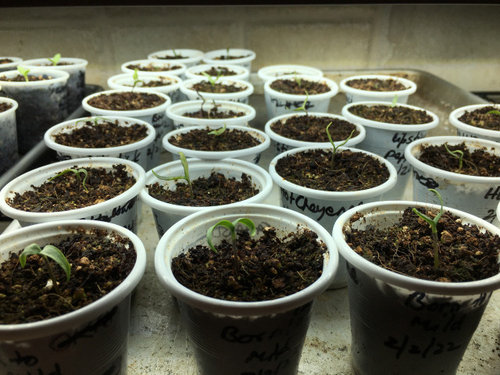
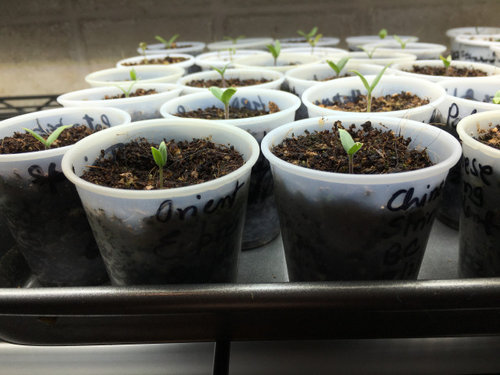
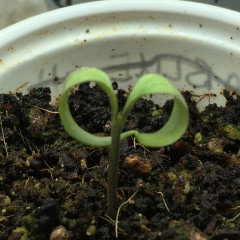
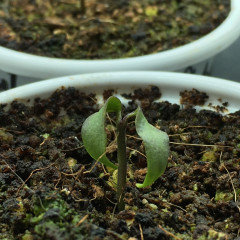
I am posting pictures of some pepper seedlings that germinated very recently 2/8/22 --2/10/22. The seed leaves are somewhat scrunched/folded every which way. What may not be discernible in the pictures is that these seed leaves also look a little bleached (?) and parched (?) not glossy or velvety. At least till now the seedlings are not dying but neither are they growing. The leaves are remaining scrunched in the shape they once became


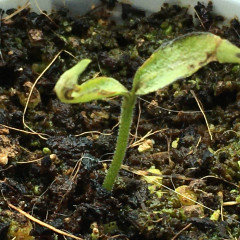
At the same time I started some eggplant seeds and those seedlings look good. The picture was taken a few days ago, the eggplant seedlings are beginning their first true leaves now (tiny!).


The hurting leaves


the eggplant seedlings


I am germinating and growing under LED lights for the first time ever. Could this be a light issue? Or a light plus heat mat issue? I am not sure why the eggplant seedlings are OK. Something spared them. Could the lights have been too close to the surface of the leaves when they emerged and opened?

I have since moved the lights up a bit, about 3 - 4 inches above the leaves. The lights were about one inch above when these were germinating.


The real question is will these seedlings recover? Or will they be stunted even if they live? Is it best just to start over?


The shelves are 18 inches deep and have three strips of 5000 lumen LED lights ( and 6500K, if that matters here). I was thinking of adding one more strip of lighting to each shelf so that essentially there are no shadows. Is that good or is that too much light?


For now, if I have these three lights per shelf what is a good distance for the lights to be above the seedlings?


Thanks!

Comments (20)

  • 4 years ago
    last modified: 4 years ago

    Your plants appear to be basically ok to me, but I have no experience with LEDs for starting seedlings indoors. A main concern would be to not over water the young seedlings as that could lead to damping off problems and sometimes a cue starts with droopy looking first leaves (cotyledons).

    katyajini thanked vgkg Z-7 Va
  • 4 years ago

    I agree with the previous comments, the seedlings in the photo are very young & look otherwise OK. Depending upon the target transplanting date for your area, you might not want the seedlings to grow much faster, or they will outgrow their pots.

    katyajini thanked zeedman Zone 5 Wisconsin
  • 4 years ago
    last modified: 4 years ago

    I should say that adding up lumens is not meaningful if we don't know the dimensions of your lamps. Vegetables need a few thousand lumens PER SQUARE FOOT of growing space. Seedlings might get away with somewhat less, since you aren't powering fruiting in those. If the lamps are one inch over the plants, you can say the illuminated width is a few inches. So one four foot long tube lamp illuminates about a square foot.

    Sunlight, with the sun straight overhead, is about 10,000 lumens per square foot. Given that the sun usually isn't straight overhead, and also allowing for cloudy days, that's pretty consistent with what veggies need.

    katyajini thanked daninthedirt (USDA 9a, HZ9, CentTX, Sunset z30, Cfa)
  • 4 years ago

    I assume those cups have drainage, you don't want them too wet inside. Otherwise, they look okay.


    The hard part is getting pepper seeds to sprout. Once they get growing, they can grow quite big in two months. When do you plant to put in the ground? Mid April?

    katyajini thanked robert567
  • 4 years ago
    last modified: 4 years ago

    Good points about when you intend to plant out. Do I recall you are in NY somewhere? Unprotected peppers won't survive outside before April or May there. That being the case, at 70F, those pepper seedlings will be several inches tall a month after planting, and getting too large for those cups. If so, you're either looking at a LOT of repotting, or protection against frost outside.

    My banana peppers are out already (welcome to the south!), four inches tall a month after planting and, with pots that size, they were already getting somewhat root-bound.

    katyajini thanked daninthedirt (USDA 9a, HZ9, CentTX, Sunset z30, Cfa)
  • 4 years ago
    last modified: 4 years ago

    I appreciate your comments so much guys!

    Now I cant even remember if I have ever grown peppers from seed so I dont know what a perfectly normal just emerged pepper seedling would look like. Some of them do look a little wonky to me, compared to my eggplant seedlings but I will differ to your getter experience.


    Sure those are OK? I am watching carefully. Things seemed to have stabilized, thankfully.

    @daninthedirt (USDA 9a, HZ9, CentTX, Sunset z30, Cfa) @robert567 the cups have great drainage, I poked many holes in the bottoms. My last frost date is April 25th so I am thinking mid to third week of May ish. Now you think I started them too early? I fully anticipated that I have to pot up these seedlings...maybe 3 or 4 weeks from now. For the moment I think I have space on the shelves inside under lights even with larger pots. But who knows.

    Dan, its really nice to have a long growing season. We are having a brutal winter. Since before Christmas every night temperatures have been in the twenties and teens except for one night. That does not happen around NYC.

    :)

  • 4 years ago

    If you're OK with potting up, you're good to go. You only started them too early if you didn't want to make that effort. Maybe planting out large plants is more optimal in a colder climate, to get a head start on a shorter growing season, but it's certainly a lot of work.

    katyajini thanked daninthedirt (USDA 9a, HZ9, CentTX, Sunset z30, Cfa)
  • 4 years ago

    Since you have plenty of time and are worried, I would reseed half and get rid of the worst seedlings. Your call on how many you want to save.


    If the last frost date is April 25, you don't need to wait until much after. Sometimes you can plant 7-14 days before then, check the forecast. Each Spring is different, sometimes there are no late frosts. All depends if it is easier to keep them inside, or plant them out and cover with fabric if there is a night with frost.


    Since it seems like you have close to 40 cups, you will have a lot of large plants, so try to plan how many you will have room.

    katyajini thanked robert567
  • 4 years ago
    last modified: 4 years ago

    Given that you have plenty of time, and also that cotyledons are rarely indicative of the mature plant, I'd wait until the first true leaves emerge. Another week or two. If those look funny, then replanting might make sense. I hear worries about funky cotyledons, and they usually don't turn out to mean that the plant is bad. Cotyledons do all kinds of strange stuff.

    Need to be careful about "last frost dates". Often those are just the average date of last frost, which means you have a 50% chance of getting frozen on that date. Those aren't good odds to play with. If those are the only numbers you have, I'd add a couple of weeks. Dave's has more useful stats. https://davesgarden.com/guides/freeze-frost-dates/, where you can choose the risk you want to accept.

    katyajini thanked daninthedirt (USDA 9a, HZ9, CentTX, Sunset z30, Cfa)
  • 4 years ago

    I've had those funky looking cotyledon leaves nearly every year on many of my pepper plants and it's because of cool temperatures. Wait for the true leaves to appear and give them time.

    katyajini thanked outpaientzero
  • 4 years ago

    I think I see green algae on the mix surface. If that’s the case it’s likely you’re keeping them too wet.

    katyajini thanked floral_uk z.8/9 SW UK
  • 4 years ago

    @daninthedirt (USDA 9a, HZ9, CentTX, Sunset z30, Cfa): thank you for that link. The frost probability tables are fantastic.

  • 4 years ago
    last modified: 4 years ago

    Hi Katy,

    Those last three photos are troublesome. There are a lot of long, very thin things visible that appear to be plant roots. Also, there does seem to be some green stuff in those three photos that looks like algae, and algae can "take over" a pot. Those last three photos show a significantly different situation from your previous photos. Do you have any idea when those thread-like roots showed up? Did you re-use some growing medium?

    ZM

    katyajini thanked zen_man
  • 4 years ago

    @zen_man thank you for taking such careful notice! Its hard to tell sometimes especially on my not so clear pictures....those fine hairy things are fibres in the coco coir of the seed starting mix. Were you thinking those were some kind of mold? Thankfully no. As @floral_uk z.8/9 SW UK pointed out earlier she noticed the green algae too. I will back off a little bit on the moisture. I did not know algae could eventually become a problem.

  • 4 years ago

    Green algae is certainly indicative of overwatering, but the algae isn't going to hurt your seedlings. It isn't, in itself, a problem. Yes, it uses soil nutrients, but the algae doesn't have roots, so it's just sucking nutrients from the top few milimeters of soil. Overwatering can, however, certainly induce fungal problems such as damping off. The thing to keep in mind is that your seedlings have roots that go down an inch or more. A wet surface isn't helping them.

    katyajini thanked daninthedirt (USDA 9a, HZ9, CentTX, Sunset z30, Cfa)
  • 4 years ago
    last modified: 4 years ago

    Hello Katy,

    " ...those fine hairy things are fibres in the coco coir of the seed starting mix. Were you thinking those were some kind of mold? "

    No, I was not thinking they were some kind of mold. I was thinking they were roots of previous seedlings. The "taproot" of one of my zinnia seedlings looks very much like them, only they are down in the medium where you can't see them unless you are repotting them.

    I was thinking those fibers were indicative that your medium had been used before. I have had problems when I reused my potting medium. And those "fibers" only show up in your last three photos. Your first photos don't even show a hint of them. Are those first seedlings not in coco coir medium? I am trying to understand why those "fibers" only appear in your last three photos. They are kind of conspicuous in your last three photos.

    ZM

    katyajini thanked zen_man
  • 4 years ago

    @zen_man thank you again. I just took a good look, those fine wire-y things are there and they are coco-coir. The seed starting mix is brand spanking new. Just imperfect photography.

  • 4 years ago
    last modified: 4 years ago

    Hi Katy,

    Do you use coco-coir because it is presumably a renewable resource? In contrast to peat moss-based products, which presumably will eventually exhaust the planet's supply of peat moss. I use peat-based products (ProMix BX) but am curious about coco-coir. Have you ever used Pro-Mix, and if so, how do the two compare in your experience?

    ZM

  • 4 years ago
    last modified: 4 years ago

    @zeedman Zone 5 Wisconsin I just happened upon coco coir a couple of seasons ago when my husband got me one of those little 8 oz bricks of seed starting coco coir by Burpee: Here try this. I am hooked. Coco coir is so much easier to use on its own or as a part of your DIY potting mix compared to peat. It does not fly everywhere and hydrates readily. The granularity is slightly coarser than peat. So it forms a matrix that is firm but still very well aerated and draining and does not compress. I do add additional perlite, about 15% by volume, and that works for me very, very well. Also you can break off chunks and hydrate as you need so you don't need much storage space. I am comparing to straight up peat not peat based potting mix. In a potting mix there may be additives that mitigate the negative qualities of peat.


    I absolutely love that it is a sustainable resource but thats not what got me on to it. Some say it creates a large carbon footprint because transportation is needed from tropical coconut growing regions. But if we worry about transportation we wont be able to use much of our world's resources. Just have to develop greener energy for transport vehicles. Then I have heard peat from Canada is sourced at a sustainable rate. So its a toss.


    Coir is more expensive than peat. I have been getting it from Home Depot online store about $15 for a 2.5 lb brick which is about 15 gallons. That is reasonable for seed starting and small scale potting up of seedlings (for me).

    I have not been able to find bulk seed starting or potting mix where I am. I need a lot of potting mix this season...I wish I knew where to go!