Software
Houzz Logo Print
bird_of_paradise

Please share your thoughts on MANDEVILLA

4 years ago
last modified: 4 years ago
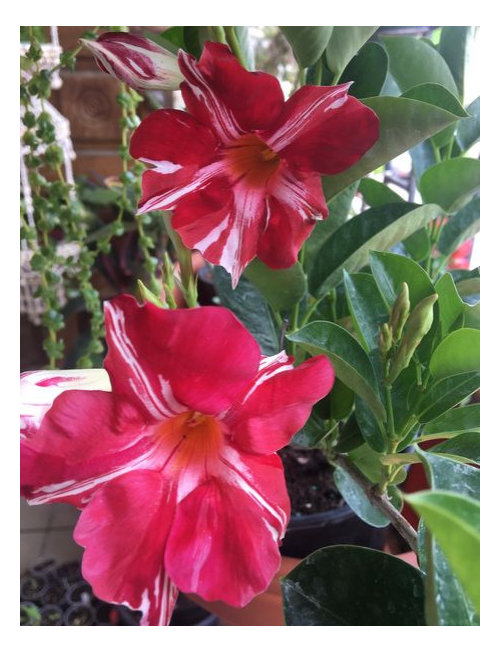
Greetings to all from the Caribbean. I purchased this 6'' pot of Mandevilla 'Stars and Stripes' just under a year ago. This is my first and I know they require mostly direct sun, well draining soil, approx 3 waterings per week [for my climate], and slow release fertilizer. I am surrounded by beach on 3 sides, so humidity is high and it's a windy and highly corrosive salt air zone. Lowest night temp [Jan/Feb] is 68 degrees F; avg daytime temp is 84 degrees F.

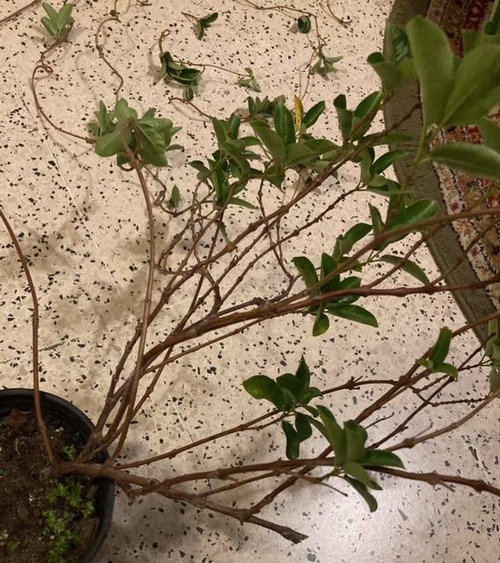
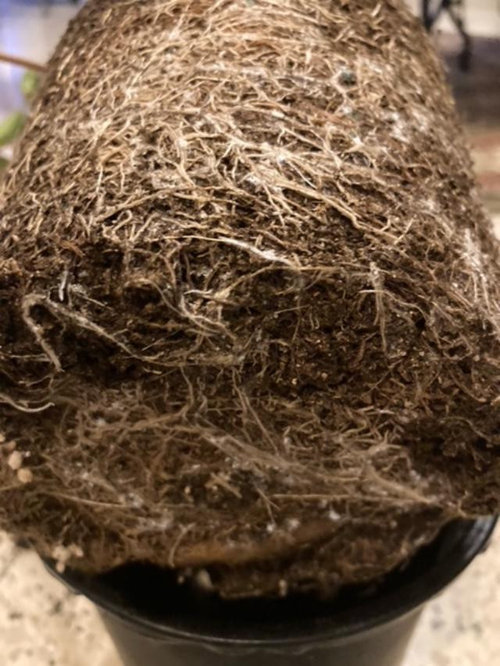
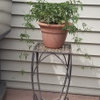
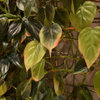
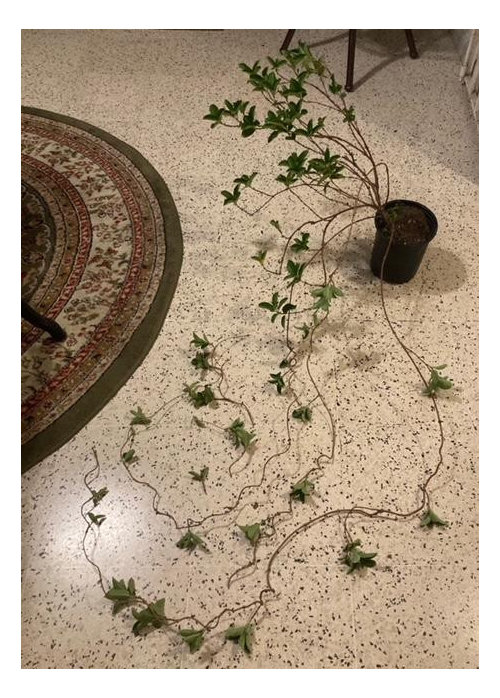
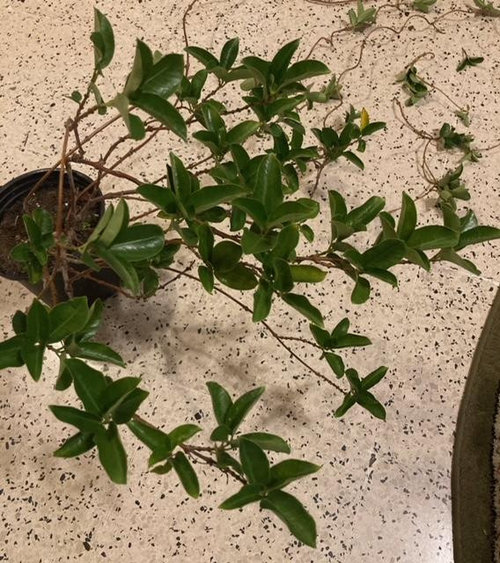
I placed this plant on my sunny balcony so it can vine along the [wrought iron] railing. I also have bougainvillea, adeniums, orchids, and various cactus and succulents on the balcony, where they do well. The Mandevilla bloomed all summer, about 5 months, then began to systematically drop leaves and vine out. Unfortunately, it has not bloomed in the last 6 months. As you can see, it has tufts of very healthy leaves on all its tips but very bare stems and a couple of yard-long vines. What is causing the leaf drop along the stems? Or is this normal? Also, the roots are tight and pot-bound.


Please share your thoughts on the following steps I plan to take and how I can generally do better with this plant. Thank you.

1. Repot from current 6'' pot to 9'' pot without disturbing root ball too much. Plant a little deeper.

2. Add fast draining soil with slow-release [14-14-14] fertilizer, tsp blood meal, and top dressing of earthworm castings.

3. Remove the 3 vines and root separately in 6-node sections.

4. Replace to the same location.

Comments (5)

  • 4 years ago
    last modified: 4 years ago
    i am not as far South as you are: in Miami FL. Mine is a Dipladenia (it is bushier and does not vine as much), but Mandevilla has the same requirements.

    i keep mine on the south balcony and it was outside for most of winter, except when it dropped below 60F i brought it inside at night, as i did not want it to go dormant. During the day it was mostly in 70s. It kept all of it's leaves, no dropping so far. It is producing new vines but no flowers yet. Supposedly they start in May. It blooms on new vines. So if you cut too far during summer it will bloom less, but pinching the vine ends is ok.

    i think that yours is in a very small pot and probably did not have enough water and fertilizer, so it could not support so many leaves.

    you can cut the vines to 1-2 feet and they should get busher and resprout soon. The cuttings root quite fast in water (2 weeks): mine broke off several branches in a storm and they all rooted even the wooded old ones without any leaves on them.

    It does to be fertilizer often when in pot. I give mine a liquid feed ev 2 weeks. and sometimes a bloom booster when it is blooming profusely.

  • 4 years ago
    last modified: 4 years ago
    You cultivar is just gorgeous! i have never seen this variegation in flowers.

    i think mine is either ’Red Velvet' or ’Deep Red’.

    it is in the same 3 gal pot i bought it in last spring.

    i would not separate yours : it looks better when bushier. and you can always make more from cuttings . but definitely uppot it into a larger pot.

    this is mine now : i do trim my vines as i have no trellis. it was even bigger by third before a huge branch broke last august.


  • 4 years ago

    It has strong roots, so after i see about 2” roots in water i drop perlite into water, it settles down. then i keep it very moist for a few weeks with 1-2” of water in the bottom.

    once the roots grow more i then transfer into a fast draing mix.

    one of my little pots dried up recently and dropped most of it’s leaves, butvit regrew fast. the other is still holding its older leaves..

    so i think that keepng it moist is very important especially in a pot.

  • 4 years ago

    Hi, Maria. Severe root congestion causes what is often called "the poodle or pompon look" the most conspicuous symptoms of which are concentrations of foliage immediately proximal to vine apical meristems/ apices, which are found at branch/ vine/ runner ends, and the function of which is to generate extension growth. Included as additional visual clues, would be markedly slowed extension growth, shorter and shorter internodes as the root congestion progresses, and diminishment of that glow of vitality we all strive to achieve. It doesn't matter much how faithful one might be about trying to keep up with the plant's nutritional and moisture needs as they will not prevent or alleviate the limitations levied by tight roots.

    There are 2 ways to relieve the stress of tight roots. The most common is by potting up, which I'm sure you're familiar with. It consists of lifting the root/soil mass from pot A and situating it in a somewhat larger bot B, then filling around the bottom and perimeter of the root mass with fresh soil. This is a half measure and provides only a little improvement in vitality, growth rate, and possibly appearance. The reason I identify potting up as a half measure is because it ensures the stress of congested roots remains as a limiting factor interminably, or at least until a pair of human hands gets into the root mass to correct the congestion and the wayward roots it causes.

    A full repot, OTOH, consists of (usually) bare-rooting the plant, pruning the roots with a focus on removing the largest of roots not attached to the base of the root-to-shoot transition zone and other 'problem' roots (encircling/ girdling/ crossing/ damaged/ j-hooked roots, or roots growing straight up/ down, and roots growing back toward the center of the root mass. A full repot frees up space which fine roots, the ones that do all of the plant's heavy lifting, can colonize, and works to ensure all roots get their share of moisture and nutrients.

    My experience with mandavilla is limited to a few plants grown as individual specimens and a few included in mixed plantings. Those plants I over-wintered were kept quite dry on the floor of a cool basement in low light. I very quickly learned that if I was to expect the plants to perform well year after year, they would need to be repotted every spring (hibiscus, too). A plant with a badly congested root system is much like a runner with a degenerative muscle or nerve disease in the feet or lower legs. No matter how much Gatorade (s)he drinks or supplemental nutrition bars (s)he eats, the disease is going to limit performance - same with a plant and root congestion. A healthy root system is a prerequisite to any hope for a healthy plant.

    A normal part of Mandeville's morphology are the preformed root primordia at every node, which places them among the easiest of plants to root. I wouldn't use water to root cuttings as the roots which form in water are structured much differently that roots that form in a solid medium. Water roots are filled with an airy substance (aerenchyma) which allows oxygen essential to root function to diffuse through the specialized root tissue from plant parts above the water line. This can be a problem in transitioning from a liquid to a solid medium because roots which form in water are very brittle, so they break easily, and they are inefficient at absorbing water from a solid medium, so they often die while transitioning between media types. This represents wasted energy because the propagule, now in a solid medium, is often asked to generate a second set of roots when most of its energy reserves will have been spent on the first roots to form, so at a minimum, it increases the likelihood of propagule collapse due to low energy reserves. Too, rooting a cutting is a race to determine whether or not roots can form and make connection with the propagules existing vasculature before fungal or bacterial, or even abiotic pathogens clog the plumbing and make the connection impossible. Anything that increases the time it takes for that connection to occur increases the probability of failure.

    Al

    Maria Elena (Caribbean - USDA Zone 13a) thanked tapla (mid-Michigan, USDA z5b-6a)
  • 4 years ago

    Hello, Al ... It's so good to hear from you. Your input is always a welcome education.

    Got it. Thank you for explaining the apical clumping. The roots had some wiggle room, so I just repotted it, following the other measures outlined. Let's see if this remedies the issue and we see these beautiful blooms again. Next spring I will definitely root prune. I absolutely understand the concept. One of my orchids produces similarly congested roots and I actually divide it into 2-3 plants, removing the lower 1/3 of the tangled root ball. They take off and bloom often.

    I've soaked the cuttings 6 hrs in water with a little rooting hormone. They are now planted [node underground] in the same substrate with added nutrients. I didn't cut the leaves because there are only 1-6 on each cutting. I'll keep these out of direct sunlight and moist until they root. Once rooted, I will divide into individual pots to give away. I'll keep 1 to see if I can completely prevent that apical clumping by paying close attention to the root system.


    Maria Elena

Sponsored
Peabody Landscape Group
Average rating: 3.5 out of 5 stars8 Reviews
Franklin County's Reliable Landscape Design & Contracting