Software
Houzz Logo Print
steven_kramer60

When is a container not a container?

4 years ago

Hello all. I'm a beginner and have been learning a lot from this site. My question is about containers vs. raised beds and whether and how shape, size and contact with the ground influence whether a container is acting like a container, or like a raised bed. Specifically if it should determine what media to use.


Main question: I have a couple citrus trees in large pots that I have placed on top of an in-ground bed. The containers have bottoms with the usual drainage holes. Since they have some (minimal) contact with the earth through the drainage hole, should I be treating these like containers or raised beds in terms of the media I use?


Some other (somewhat silly) hypothetical scenarios:


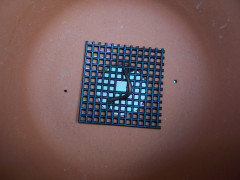
1. A pot with no solid bottom, just a screen to keep the mix in, elevated on stilts. Does the lack of bottom affect perched water at all? My guess is no.


2. Same bottomless (screened) pot placed in contact with ground soil. Would this behave significantly differently than a pot with only a single drainage whole in contact with the ground? i.e. how much does the amount of contact between the pot soil and the ground soil matter?


3. An oddly shaped tall raised bed in contact with the earth. E.g., would a tall bottomless "bed" like a 1' x 1' square column that is 6' tall behave differently than a 6'x6' square bed that is 1' tall?


4. A swimming pool filled with soil, surface planted with small plants. Still a container?


Thanks for playing!


Comments (13)

  • 4 years ago

    I'm not sure what game I might be playing but a container is an article with a solid bottom that holds a volume of soil (and hopefully one with drain holes). Anything lacking a solid bottom is either a raised bed or a planter, elevated or not, ground contact or not.

  • 4 years ago

    Ok thanks, so if a pot with drainage holes is sitting in contact with ground soil, it should still be filled with container media since it still acts like a container despite having some contact with ground soil, right?

  • 4 years ago

    Yes. Although it is always a good idea to elevate the container slightly above the ground with pot feet or bricks or rocks as that will facilitate better drainage. A saturated pot sitting on saturated ground is not going to drain well :-(

  • 4 years ago

    Thanks that makes sense. I guess one thing I'm just wondering about / overthinking for no practical reason is: if you have a pot in contact with the ground soil, how much contact between the container soil and ground soil is needed before it starts to function more like a raised bed. A 100% sealed bottom is container, and a 100% open bottom is a raised bed, but is there any middle-ground? Like what if the bottom of the pot was about 50% material and 50% holes? Is there a certain amount of "holey-ness" that produces an amount of contact between the container soil and the ground that would cause it to be treated as a raised bed? Not that there would be much practical use for such a pot, but it just struck me as curious.

  • 4 years ago
    last modified: 4 years ago

    If, over time, roots grow out of the bottom of the container through drainage holes and into the soil beneath it might be considered somewhat of a raised bed at that point.

    I've had that happen on a few hardy perennials in large half barrel containers that were left in the same spot for a few years. When I finally tried to move them they wanted no part of it. Since then I do as GG suggests and prop the containers up on bricks.

  • 4 years ago

    If we view a containerized planting from the perspective of how water behaves in that container (hydrology), we'll find water behaves differently under certain conditions.

    If you have a planting with an attached collection saucer and you set it on top of the soil in a yard/ garden/ bed, the water in that pot behaves like any conventional container planting. If we detach the collection saucer and set the pot on a deck or a cement slab, water in the pot still behaves like it would in any conventional container planting. If, however, we position the container on top of the soil in our yard/ garden/ bed, such that there is an unbroken soil column connecting the medium in the container to the mineral soil beneath the container, it becomes a raised bed from the perspective of hydrology; this, because water in the medium is free to move downward through the bridge connecting the grow medium to the earth.

    Why: If a pot is suspended in the air and the soil fully saturated, water drains from the pot only until the point where the force of gravity (gravitational flow potential) is equal to the countering forces of water's tendency to adhere to soil particles and pot walls + water's tendency to stick to itself (cohesion). Water has almost no tendency to adhere to the air molecules beneath the pot, but as soon as the grow medium is connected to the earth by the bridge between the medium and the mineral soil below, the adhesive attraction of the mineral soil becomes a relative force which increases the gravitational flow potential of water in the pot by the force of the added capillary pull of the earth's soil particles.

    Capillarity doesn't work only to pull water upward, it also pulls water downward and laterally. The bridge between the grow medium in pots and the mineral soil below can pull all water from the pores between the grow medium's particles, allowing us to use grow media that would otherwise be considered virtually unusable by most experienced gardeners.

    Al

    Steven thanked tapla (mid-Michigan, USDA z5b-6a)
  • 4 years ago

    Thank you Al, that's exactly what I was wondering. Am I understanding correctly that the connection between the container medium and the earth can be as small as just through the drainage hole in order for water to behave like a raised bed?

  • 4 years ago

    great question! Now I woukd like to know about the extent of soil contact and fertilizer!

  • 4 years ago
    last modified: 4 years ago

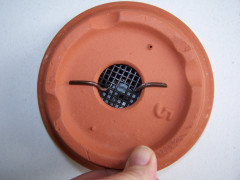
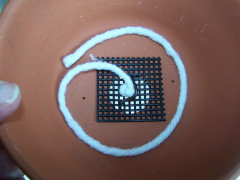
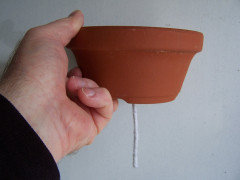
    Steven asks: Am I understanding correctly that the connection between the container medium and the earth can be as small as just through the drainage hole in order for water to behave like a raised bed? Correct ..... and a wick will work equally well in lieu of an uninterrupted soil column/ bridge between the grow medium and the mineral soil (earth) beneath the pot, though it might have some impact on how quickly the excess water drains from the pot - which is a minor consideration. It matters very little if it takes 1 minute or 10 minutes for the water between the particles in the grow medium to leave the pot.


    If the wick you see hanging beneath the drain hole is in contact with the soil beneath the pot, it serves the same purpose as an uninterrupted soil bridge.

    Kitasai2 said: Now I would like to know about ..... fertilizer! This link will take you to something I wrote re Fertilizing Containerized Plants. If you still have questions, please ask there ..... as opposed to piggy-backing on Steven's thread, or if you prefer, you can start a new thread.

    Al

  • 4 years ago

    Al, I don‘t think Steve’s question was just about hydrology but more generally about media in hybrid container/raised bed situations. Your answer responded to the first very thoroughly but some of us (even Steve) may be wondering whether the media can contain organic material like compost or be fertilized as if it were soil.

    I find gardenweb threads to be most helpful when they are discussions because I learn the most from the questions I dont know enough to ask. But apologies for inserting myself.

  • 4 years ago

    1. A pot with no solid bottom, just a screen to keep the mix in, elevated on stilts. Does the lack of bottom affect perched water at all? My guess is no. Other than the fact the arrangement would increase evaporative water loss, there would be no difference in the maximum ht of the PWT at container capacity, which is a measure of how much water the grow medium in a pot or container holds at the moment it has stopped draining, after having been watered to the point of complete saturation. When plants are at 'container capacity', the medium often supports a layer of grow medium that remains 100% saturated (a perched water table [PWT]) which occupies a layer of grow medium at the bottom of the pot, defying the force of gravity and refusing to drain. The ht of the PWT and how long it affects root function is usually key/critical in determining what opportunity a plant will have to realize as much of its genetic potential as possible (within the limiting effects of other cultural influences). The factor that most affects the ht of a PWT is the size of the particles from which the medium is made.

    2. Same bottomless (screened) pot placed in contact with ground soil. Would this behave significantly differently than a pot with only a single drainage whole in contact with the ground? i.e. how much does the amount of contact between the pot soil and the ground soil matter? It would be the same other than the pot would drain a little bit faster.

    3. An oddly shaped tall raised bed in contact with the earth. E.g., would a tall bottomless "bed" like a 1' x 1' square column that is 6' tall behave differently than a 6'x6' square bed that is 1' tall? They would behave essentially the same.

    4. A swimming pool filled with soil, surface planted with small plants. Still a container? That would depend on the ht (or depth) of the local water table. If you have a swimming pool 8ft deep with a hole in the bottom, and the water table sits at 4 ft below grade, the level of soil saturation inside the pool should be equal in ht to the level of the water table outside of the pool.

    Al

  • 4 years ago

    "..... given that the water in a container behaves as it would in a raised bed when there is contact with the ground through the drainage hole, how does that impact the recommendations for media and fertilizer. Is it no longer beneficial to use a structured container medium, and should we be adding organics / compost other kinds of organic fertilizer in this situation?"

    Once roots havemoved into the soil beneath the pot, fertilizing the media within the confines of the pot decreases in importance as more and more roots find a pathway into the earth. When you have a set-up such as pot-in-pot or pot-in-trench, where there is an unbroken soil bridge between the grow medium and the mineral soil below the pot, soil structure becomes less critical due to the fact the medium in the pot containing the plant should be unable to hold perched water.

    Al