Software
Houzz Logo Print
jason_carlton26

Greenbrier removal

Any suggestions on permanently removing greenbrier, other than cutting it to the ground and then spraying or painting the remainder with Round Up?


I know that it's all over my region so birds are going to constantly bring it back, I've made my peace with that. My issue is specifically around the perimeter of my lawn where I plan to plant new trees and shrubs, and greenbrier is everywhere!!! I went through today and cut a bunch of it out, then ran the cuttings through my shredder and filled a 50G yard waste bag with it! I'm maybe 1/6th of the way done :-/

Comments (13)

  • 4 years ago

    youre going need a little more than some weed killer to get rid of this thing:


    https://duckduckgo.com/?t=ffcm&q=Greenbrier&iax=images&ia=images


    spraying bramble or shrubs usually doesnt work ...


    what i mention here will work ...


    ken


    https://www.houzz.com/discussions/6249684/getting-rid-of-ditch-lily#n=7

  • 4 years ago

    I've never tried getting rid of greenbrier but I have had great luck removing invasive bush honeysuckle by cutting the stem off almost flush with the ground and IMMEDIATELY (within a minute or two) apply undiluted glyphosate (round up). Spray or paint on a thick coating all around/on the stems and it should at least hamper regrowth...

  • 4 years ago

    @ken_adrian Adrian MI cold Z5, I'm not sure that the link you posted is showing me what you intended. All it gives is a bunch of pictures of The Greenbrier! LOL


    In your earlier post, did you really mean to apply yellow mustard? That's a trick I hadn't heard of!!


    @Daniel B central Indiana zone 6a/5b, thanks for the input! That's pretty much what I'm doing. I was really hoping there would be an easier way, though, because I've cut literally thousands!!! Cutting them back would only take a few hours, but stooping and painting each of them afterward has turned the job in to about a month :-O And I still have a looooooong way to go! This method is going to take at least the rest of the year. If not longer.


    I'm manually pulling out what I can by the roots, but that's back-breaking work. And less than half of what I've removed could actually be pulled out, so it's a lot of blood and sweat for (probably) minimal impact.

  • 4 years ago

    I'm not sure that the link you posted is showing me what you intended. All it gives is a bunch of pictures of The Greenbrier! LOL


    ==>>>


    nooo.. thats exactly what i meant to post.. meaning.. i dont know what plant you are talking about.. so i cant help you more specifically... and common names ... like this one.. can mean different things ...


    and of course.. you dispose of the mustard and fill the applicator with un-diluted RU ... you were pulling my leg on that one.. right???


    ken


    ps: hey i dint realize this when i posted it.. but i might have been a day early on an april fools .. lol...

  • 4 years ago

    Hahaha, happy April Fools! ;-P


    I'm about to go outside and start cutting, I'll take a pic of the briars I'm working with and post back this evening. They're just green thorny vines with no leaves, they tend to climb trees, and there's just as much under the ground as there is above ground.

  • 4 years ago

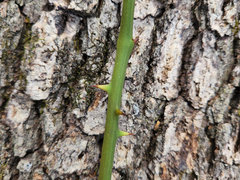
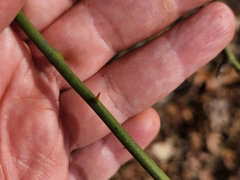
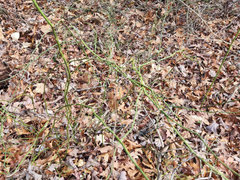
    I looked that up, @cecily 7A, you're probably right. Here are some pics of what I have:


  • 4 years ago

    The South is blessed with a multitude of brambles which thrive along the edge of wooded areas. In addition to greenbrier I'd also expect to find mutiflora rose, blackberries and wineberries. Japanese honeysuckle then grows up through the brambles. You may also see kudzu. Bottom line is you're going to weedwhack along the forested edges of your property several times per year or learn to appreciate the brambles as wildlife habitat.

  • 4 years ago

    I don't mind the brambles at all if it's a little farther back! I love my wildlife, and I know it's a good habitat (and sometimes food) for them. But along the perimeter is a little different, it could potentially damage the trees that I'll be planting :-(


    Kudzu here is all over the highways, but I don't see it at all at my house. What I have is greenbrier, blackberries, and muscadine vine. I'm OK with blackberries, they stay short and are out of the way. Same with muscadine, they get long but they don't seem to hurt anything. Greenbrier, though, can do some damage.


    For the sake of time, I guess that I'll just continue cutting them all down to get it cleared out, then walk around each month and look for new growth. Whatever comes up, I'll chop back down and paint with Round Up. I'll probably be doing that for the rest of my life, but hey, at least it's a little exercise! LOL

  • 4 years ago

    I'll chop back down and paint with Round Up.


    ==>> so you reject the single drip method?

  • 4 years ago

    I actually loved the method idea! It's burger season, so I'll have an empty bottle of mustard in the near future :-D


    At this point, though, it's more an issue of time... and my back! LOL I'm kinda hoping that half of what I cut down will magically disappear, and then I can work on them one at a time over the year.

  • 4 years ago

    I think your method could work better with brush killer, not RU, which is meant to be absorbed by foliage. Instead of cutting the vines, you could stick the growing tips in a jar of RU to allow maximum absorbance down into the tuber/roots. Cover with something to keep the rain out.


    Using a tiny paintbrush to immediately paint a single drop of brush killer on just-cut baby tree stumps works well.


    For Smilax in particular, you should be able to trace vines to a tuber. We dug up one as big as a basketball once. If you can find that tuber and chop or drill a hole in it, a few drops of brush killer would have the best chance to do lethal damage.

  • 4 years ago

    Use the method Tiffany describes above using brush killer. Work slowly, carefully and always wearing plastic gloves.